Chief Sanitary Inspectorate establishes the first Behavioural Science Team for Public Health in Poland

- English
- Українська
- Polish
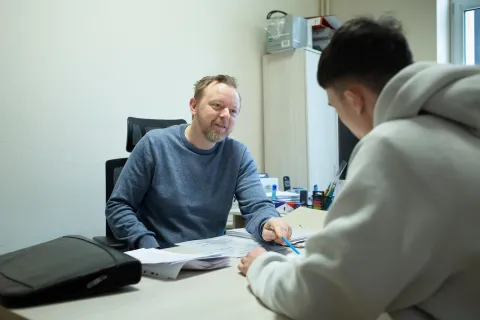
With support from the UNICEF Refugee Response Office in Poland, the Chief Sanitary Inspectorate has just established a new Behavioural Science Team for Public Health “BOND”. The goal of the Team is to integrate the science of human behavior with the design of health policies.
Behavioural science is an effective alternative to traditional public policies, which often assume that people make rational decisions based on available information. In reality, even the best-designed solutions can fail. This is where behavioural science comes in - offering tools that help better understand people’s everyday choices and design policies that are more closely aligned with actual needs. Through smarter messaging and simplified procedures, it becomes possible to more effectively support citizens in making healthier, safer, and more beneficial decisions for their well-being.
Expert collaboration
The establishment of the Team by the Chief Sanitary Inspectorate (GIS) and the UNICEF Refugee Response Office in Poland is the result of months of collaboration between these two entities.
In addition to staff from the Chief Sanitary Inspectorate, the Team “BOND” (Behavioural Outcomes in Neuroscience & Decisions) includes representatives from institutions such as: the Medical University of Gdansk, the Institute of Mother and Child, the Foundation of the Institute of Mother and Child, the National Institute of Public Health PZH-BIP, the National Health Fund, and the National Centre for Addiction Prevention. Together, they form an interdisciplinary group of specialists who will design effective and scientifically grounded health interventions in the field of public health.
‘In an age of disinformation and growing health challenges, we must better understand what truly drives human decisions. It’s not enough to simply talk about what is healthy - we need to understand why, despite this knowledge, many people choose otherwise. Applying behavioural science will help create strategies that support people in making better health decisions,’ emphasized Chief Sanitary Inspector, Dr. Paweł Grzesiowski.
‘Effective health policy should begin with understanding the real needs and barriers people face in their everyday health decisions - especially those from the most vulnerable groups. Through behavior analysis and an evidence-based approach, it is possible to design policies and programs that are effective and tailored to different social groups, including refugees and migrants. I’m glad that through sharing our knowledge and experience UNICEF could contribute to the sustainable use of behavioral science to improve the health and well-being of children and families here in Poland,’ said Nona Zicherman, Country Coordinator of the UNICEF Refugee Response Office in Poland.
Trainings
The formation of the team was preceded by a series of intensive training sessions conducted by experts from UNICEF, Yale School of Medicine, the European Centre for Disease Prevention and Control, the London School of Economics and Political Science, the National Health Service, and many others. During these sessions, participants became familiar, among other things, with:
- best practices drawn from the experiences of other behavioural teams, including those from France and the United Kingdom,
- the methodology for designing and implementing behavioural interventions,
- the application of behavioural science in public policy,
- ethical action and a human-centered approach,
- qualitative and quantitative methods in behavioural research.
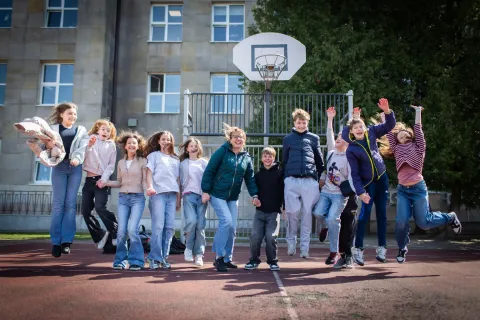
Thanks to these trainings and the knowledge gained, the Team is beginning work on solutions that will truly respond to the needs of society - based not only on medical knowledge but also on an understanding of human decision-making. The first joint intervention will focus on promoting routine vaccinations among both Polish and refugee children.
***
Media contacts:
Chief Sanitary Inspectorate:
Marek Waszczewski
Spokesperson
E-mail: [email protected]
Telefon: +48 539 390 313
UNICEF Refugee Response Office in Poland:
Monika Kacprzak
Head of Communication Section
E-mail: [email protected]
Tel.: +48 604 226 866
Media contacts
About UNICEF
UNICEF promotes the rights and wellbeing of every child, in everything we do. Together with our partners, we work in 190 countries and territories to translate that commitment into practical action, focusing special effort on reaching the most vulnerable and excluded children, to the benefit of all children, everywhere.
For more information about UNICEF and its work for children, visit https://www.unicef.org/eca/.