A Social Media Series Changes a Life: Plamedi Transforms Her Community Through “La Famille Mosantu”
Plamedi makes a difference in her neighborhood thanks to the Mosantu Family

- Français
- English
In the streets of Mbanza Lemba, a neighborhood on the outskirts of Kinshasa, a 22-year-old nutritionist is revolutionizing the way child health information is shared, armed only with a smartphone and a contagious passion.
Every evening in her modest home, Plamedi Mbu follows a ritual that has become sacred. Sitting beside her grandmother, she scrolls through TikTok videos on her smartphone.
One series, La Famille Mosantu, a government-supported production backed by UNICEF and other partners, profoundly changed her perspective on the profession she has practiced since graduating from the Institute of Public Health.
The story began by chance in August 2026, as many life-changing journeys do.
I was on TikTok when I came across the series, Plamedi recalls, her eyes lighting up. At first, it was just curiosity. Then it changed everything
One particular episode left a lasting impression on her. In a simple yet powerful scene, a breastfeeding mother explains to a curious visitor what exclusive breastfeeding means.
“That simplicity struck me. Finally, someone was talking about nutrition without complicated jargon!”
Before discovering La Famille Mosantu, Plamedi struggled to share her knowledge. Although she had recently completed her studies and successfully sold nutritious porridge door-to-door, she often found it difficult to communicate effectively with mothers in her community.
“I had the science, but not the confidence,” she says with a smile. “The series gave me the assurance I was missing. Now I talk to mothers as if I were their sister.”
The transformation was immediate. Plamedi started by advising a neighbor and gradually became a trusted nutrition resource in the community.
“Mothers come to see me before preschool consultations. They trust me.”
Today, her commitment extends far beyond offering advice. She actively monitors the nutritional well-being of children in the neighborhood, turning her expertise into a grassroots public health mission.
“I no longer just sell my porridge,” she explains while walking through the narrow streets of Mbanza Lemba. “I monitor, support, and educate. And I owe all of this to a series that opened my eyes.”
The impact has even reached her own health. By applying the nutrition tips featured in the episodes, Plamedi says she feels stronger and healthier than ever.
“My grandmother tells me I have regained my old strength. She’s right. I feel unstoppable!”
Today, Plamedi is more than a viewer of La Famille Mosantu; she is one of its strongest ambassadors. She shares every episode on her social media accounts and encourages neighbors to watch the series on YouTube.
“Do you know what makes me proud?” she asks while showing WhatsApp conversations with mothers from the neighborhood. “It’s when a mother tells me, ‘Plamedi, I watched the episode you recommended, and now I understand why my baby refuses to eat!’”
Her next dream is to organize community screenings of the episodes in local churches.
“Imagine the impact if we could reach a hundred families at once!” she says enthusiastically. “This series speaks to everyone, even those who cannot read. The images tell the story on their own.”
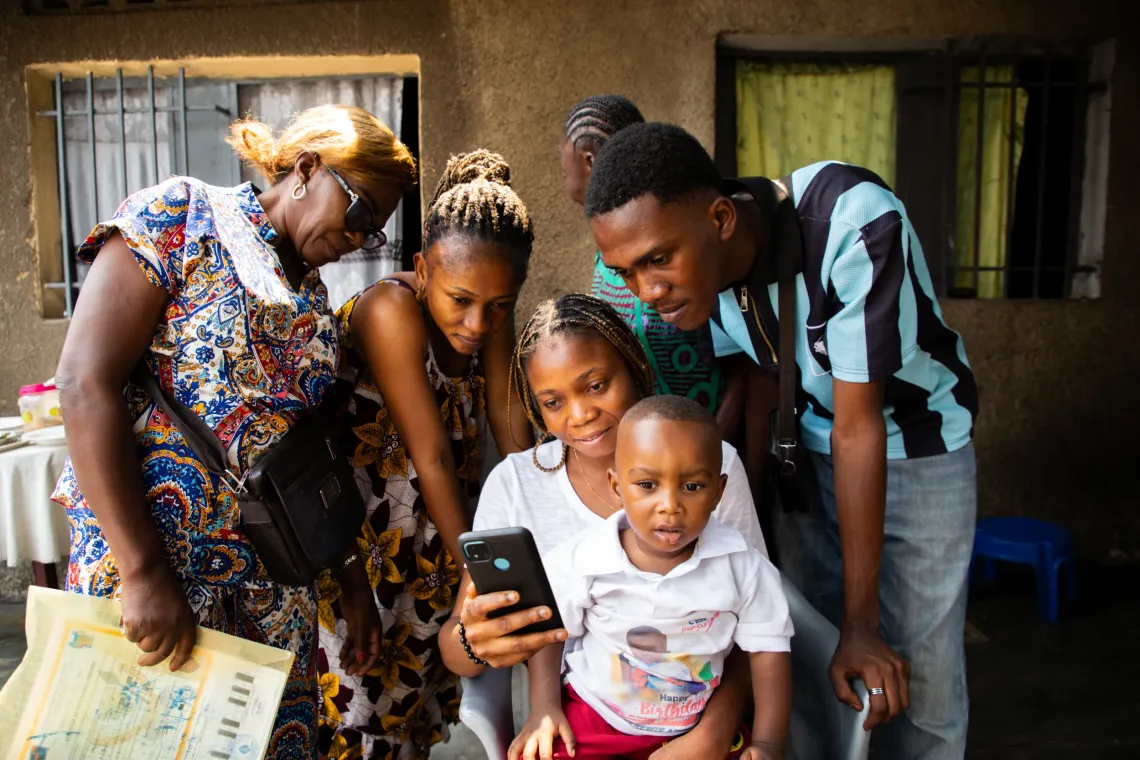
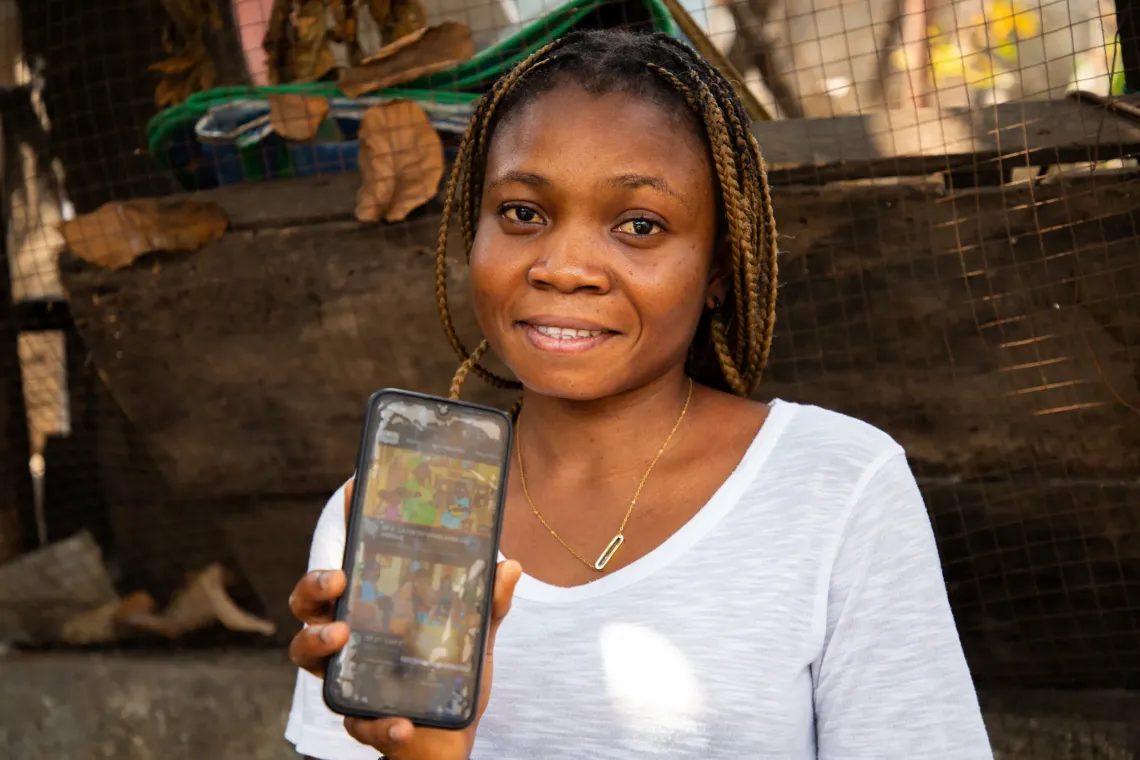
In this peripheral area of Kinshasa, where access to reliable health information remains a challenge, Plamedi represents a new generation of change-makers. Equipped with nothing more than a smartphone and determination, she demonstrates how a TikTok series can become a powerful tool for social transformation.
“Before, people saw me as ‘the young girl who sells porridge,” she says while preparing for her daily rounds. “Today, I have become ‘Mama Plamedi,’ the one who knows the secrets of good nutrition.”
Her story perfectly illustrates how digital technologies can democratize access to knowledge. What began as a chance discovery on TikTok has evolved into a life mission.
“My customers have become my students,” she reflects. “They no longer come just to buy my porridge. They come to learn, understand, and exchange ideas. That is real change.”
Her grandmother, who has witnessed this transformation firsthand, sums it up with a knowing smile:
“Plamedi has always had a generous heart. Now she has found the words to express it.”
As the sun sets over Mbanza Lemba, Plamedi is already planning her next initiatives: mothers’ support groups, awareness sessions, and an expanded community network. Her smartphone keeps buzzing with messages from grateful mothers
La Famille Mosantu’ gave me more than education,” she concludes while scrolling through episodes on her screen. “It gave me a voice, a mission, and above all, the conviction that every child deserves a chance to grow up healthy.
In a world where information travels at the speed of light, the story of Plamedi Mbu reminds us that behind every screen lies extraordinary human potential. One young woman, one smartphone, one series and an entire movement can begin within a community.
Sometimes, all it takes is a single click to transform a life and, in turn, a whole neighborhood.
Thanks to funding from The Church of Jesus Christ of Latter-day Saints, UNICEF is helping communities and families adopt optimal nutrition and health practices through innovative communication approaches. Like Plamedi, many people have benefited from the messages shared through the series.
Since its launch in June 2026, the La Famille Mosantu page has attracted more than 30,000 followers and generated over 3 million views in Kinshasa, across the Democratic Republic of the Congo, and in other African countries.
The Church of Jesus Christ of Latter-day Saints’ $25 million contribution to the UNICEF-led Child Nutrition Fund (CNF) – a contribution that will unlock an additional $25 million through the CNF Match Challenge, will support nutrition programs in the Democratic Republic of the Congo, Kenya, Nigeria, the Philippines and Sierra Leone. The Church’s support will help deliver evidence-based interventions while strengthening government systems to ensure these essential services are sustainably provided to women and children with the greatest needs.
UNICEF does not endorse any brand, company, organization, product or service.