“I see a future I can build myself”
In Kananga, vocational training offers adolescent girls concrete opportunities for empowerment
- Français
- English
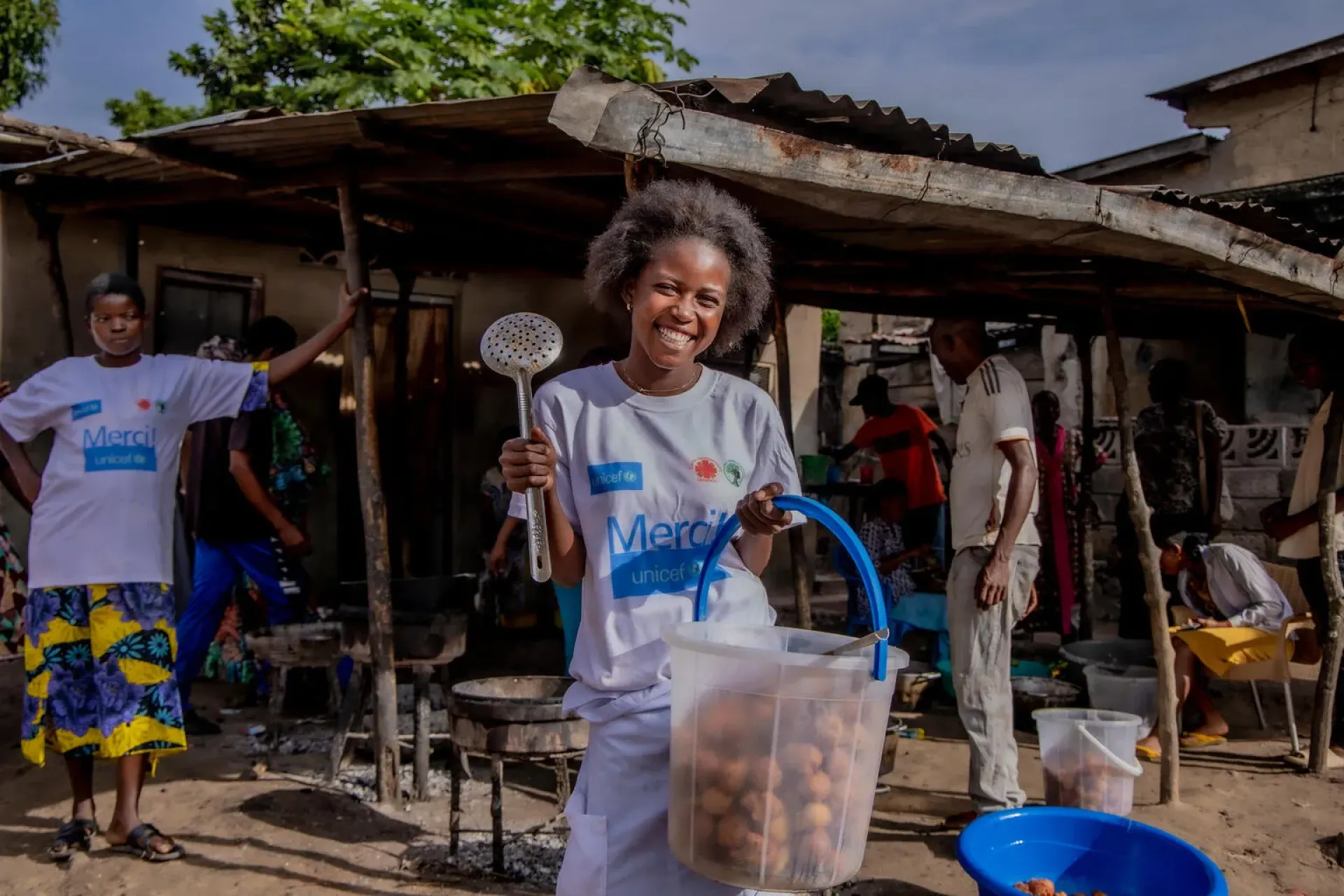
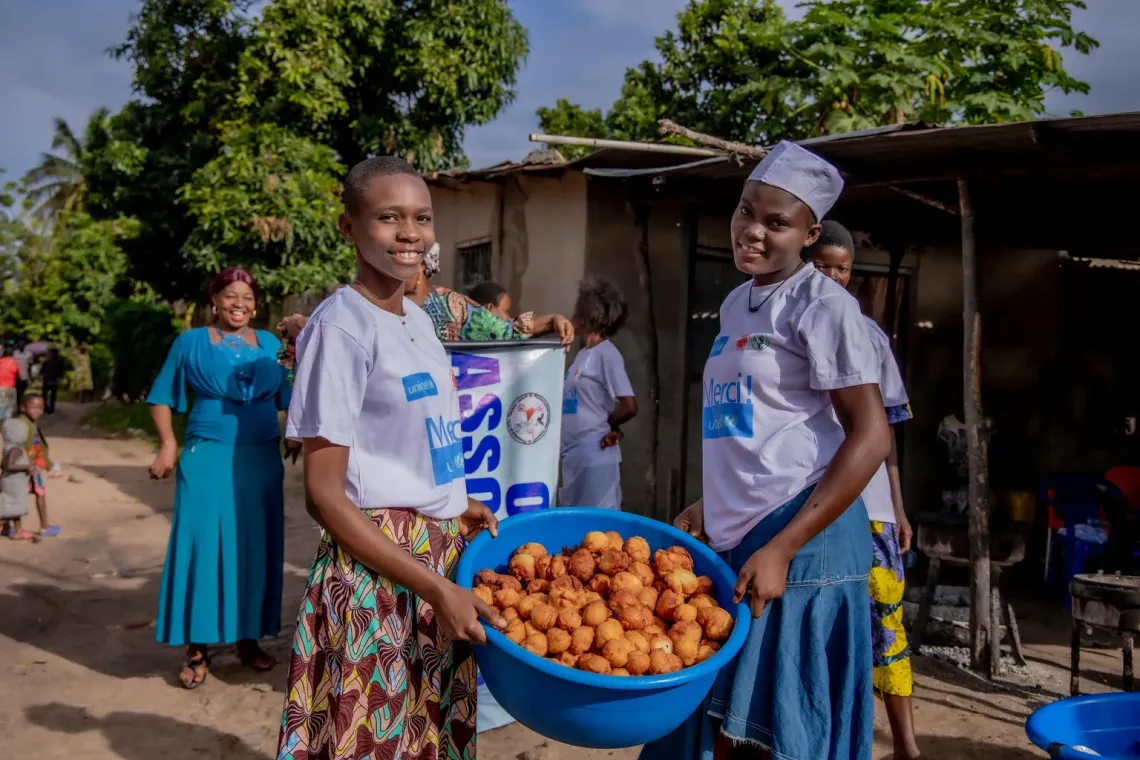
With a smile on her face and a bucket of doughnuts in her hands, Mado proudly presents the result of her work. At 19, she is one of 150 adolescent girls who recently completed training in tailoring, pastry-making, soap production and hairdressing in Kananga, Kasaï-Central Province, Democratic Republic of the Congo.
After three months of training, these girls now have practical skills to generate income, strengthen their empowerment and meet their own needs.
This initiative is part of a broader UNICEF approach to reinforce the socio-economic empowerment and leadership of adolescent girls through education, protection, health and economic inclusion.
In Kasaï Central, child marriage, sexual and gender-based violence, adolescent pregnancies and limited access to education continue to restrict the prospects of thousands of girls.
For many, opportunities for training and professional integration remain scarce. In some communities, the status of girls is still narrowly defined by their reproductive role, and they are often perceived as a source of income through child marriage.
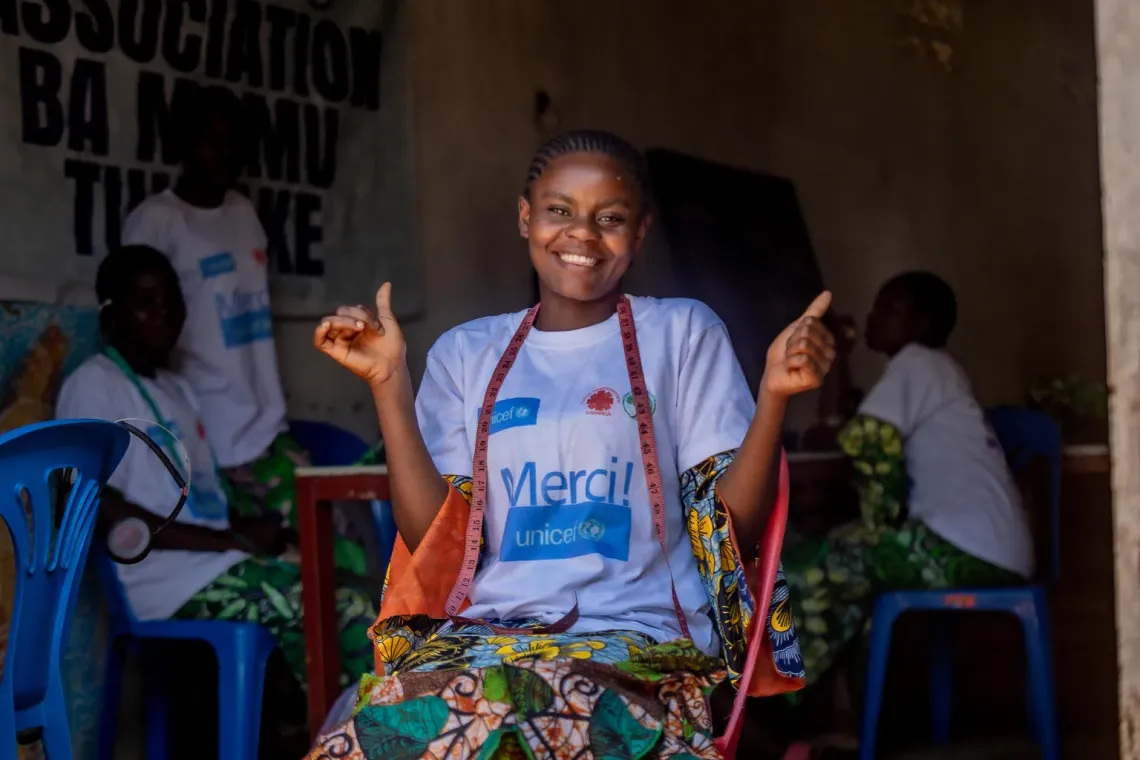
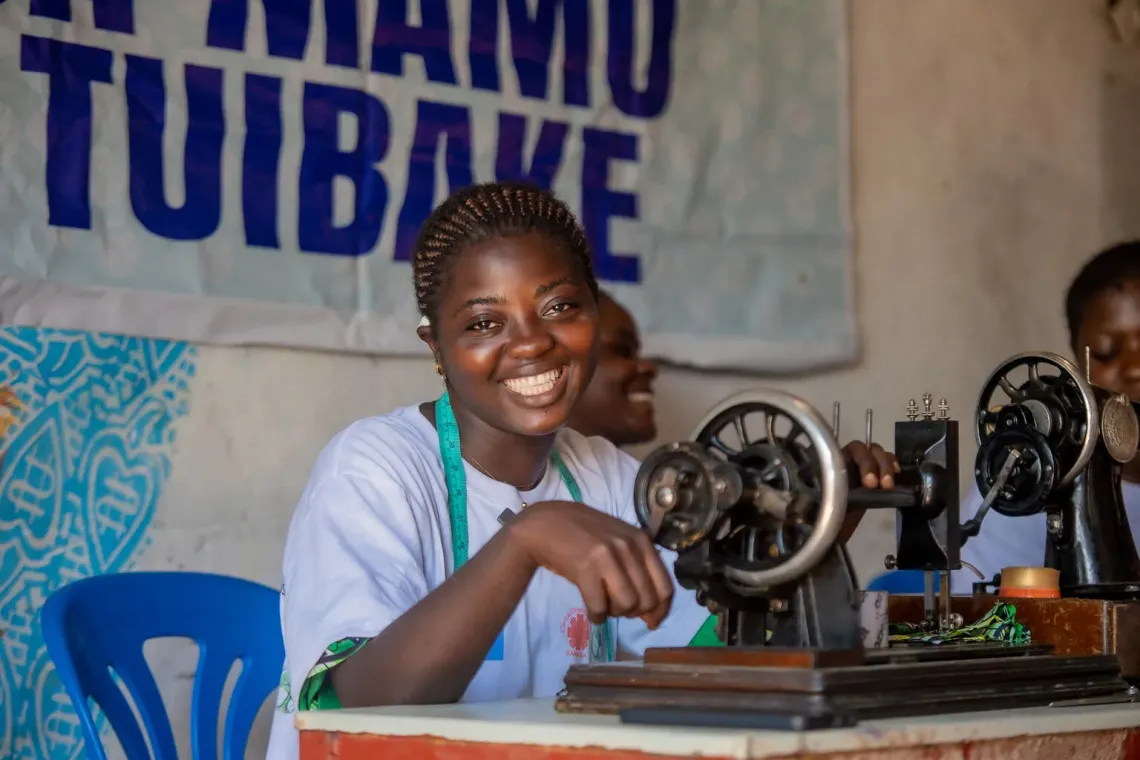
In a tailoring workshop, Vero, 20, raises her thumbs in victory, a measuring tape around her neck. As she learned new skills, her perception of herself began to change.
“Today, I no longer see just the fabric… I see a future I can build myself.”
This feeling is shared by Elise, 18, who is also discovering her potential.
“Each garment I make is proof that I can build a dignified future.”
Beyond technical skills, the programme integrates sessions on girls’ rights, prevention of sexual exploitation and abuse, girls’ education, prevention of gender-based violence, online protection, ending child marriage and more. These sessions help participants to better understand their rights, strengthen their self-confidence and make more informed decisions about their future.
This approach is at the heart of UNICEF-supported programmes, which aim to give adolescent girls the means to become agents of their own journey. For many participants, the training comes after years marked by vulnerability and violence.
Berth, 19, lost her mother at a young age. To survive, she sold cassava and palm nuts after leaving school. Today, thanks to tailoring, she is beginning to see her future differently.
“I am proud of myself because I am able to make clothes for clients.”
Nancy, 20, also had to grow up too quickly. After losing her father during the Kamuina Nsapu conflict and the disappearance of her mother, she survived through small jobs. Today, she sees herself differently.
“I have mastered doughnut-making and I am proud of who I have become.”
Investing in adolescent girls’ training not only develops skills but also opens up economic and social opportunities that are often non-existent.
Gradually, learning is being transformed into concrete activities. Nancy and her friend Getty are already selling doughnuts in their community and now dream of producing larger quantities for events such as weddings.
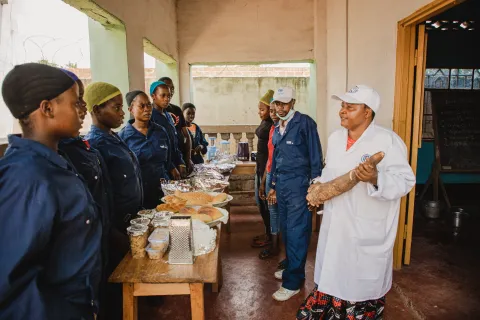
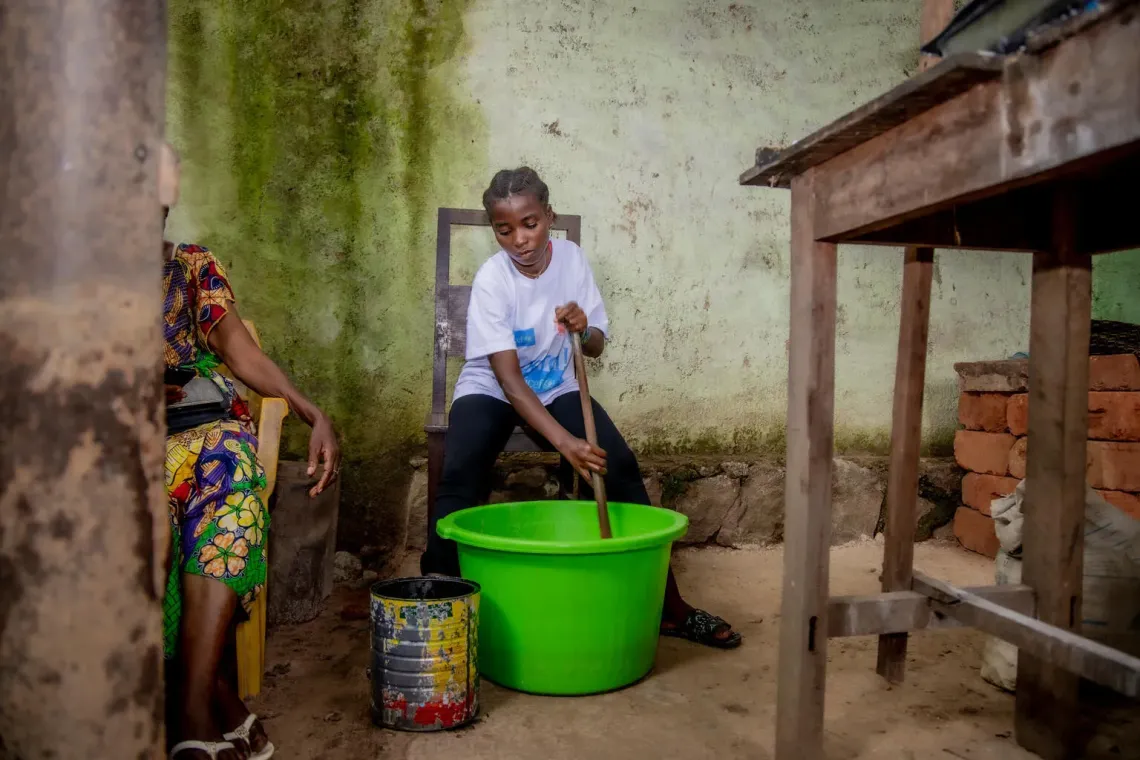
Pierrette, meanwhile, chose soap-making as her path to independence. She learned how to produce soap that she can now sell. In the workshop, she carefully follows each step of the process, from mixing ingredients to cutting the bars of soap.
“I am proud of the progress I have made.”
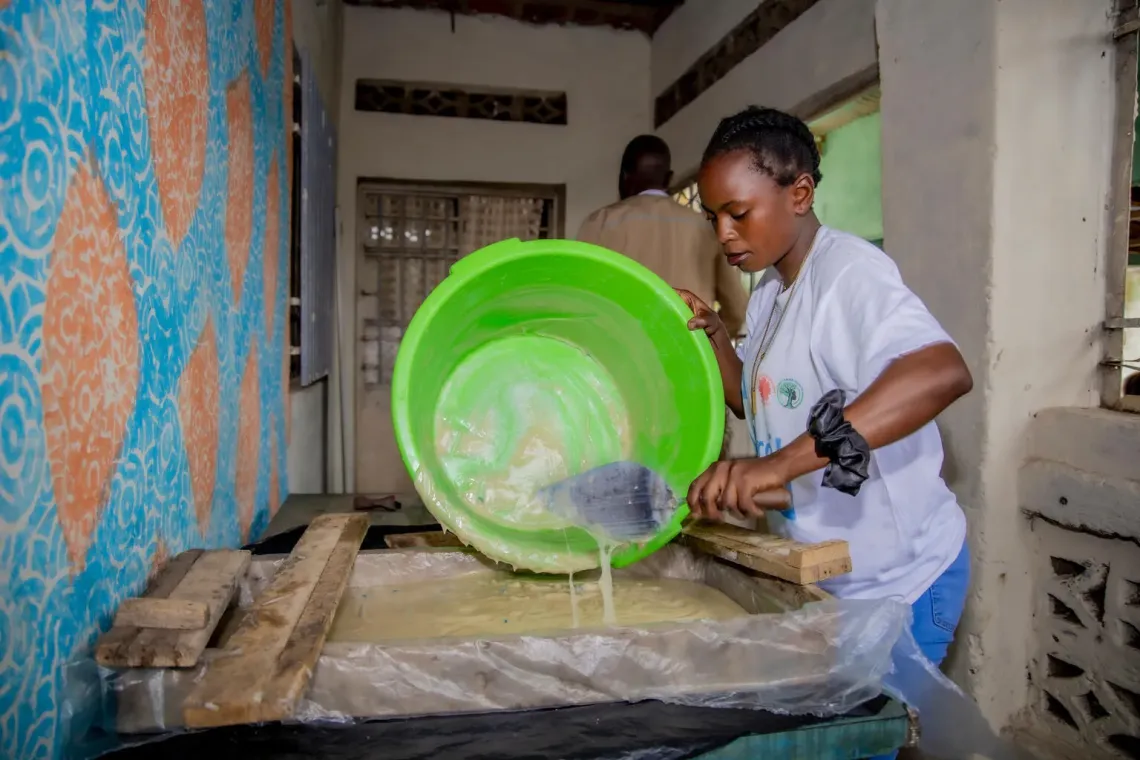
Following their training, participants have begun to develop income-generating activities. Even modest, these earnings often represent a first step towards independence and reduce the risks adolescent girls face when they have neither resources nor prospects.
Support for trained girls will continue beyond the training so they can see their activities grow and generate better income for themselves and their families. Exit kits will be provided to enable them to fully put their skills into practice, expand their activities and continue building their future.
In Kananga, these trainings have given adolescent girls much more than technical know-how. They have started to generate income, regain confidence in themselves and envision their future differently.