When a community becomes a driving force for change
In Kaniola, families unite to give children a healthier life and build a sustainable future

- Français
- English
In the village of Kaniola in Walungu territory in South Kivu province, Marina Mwabakolenyanja gently cradles her two-year-old grandson Patrick. Just three months ago, Patrick’s life hung in the balance as he battled severe malnutrition.
A community health worker visiting their village noticed Patrick’s alarming condition and urged Marina to take him straight to the hospital.
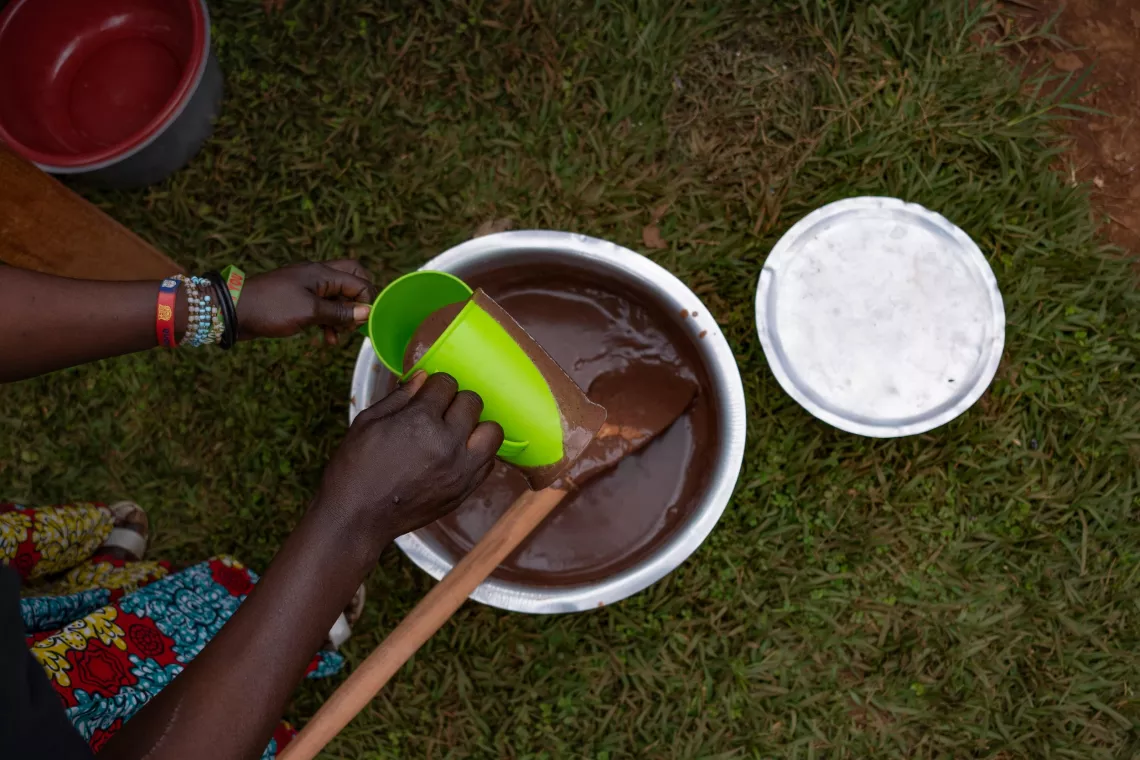
After weeks of free treatment, Patrick slowly regained his health. But for Marina, this was only the beginning. Determined to make sure that Patrick was as healthy as possible, she joined a community support group where she learned how to prepare nutritious “four-star meals:” made from locally available produce incorporating all four food groups: animal protein, beans, carbohydrates, and fruit and vegetables.
She also received a few guinea pigs to be able to generate a small income and diversify her family’s diet. Three months later, Marina is doing well: she now owns more than 30 guinea pigs.
Marina’s story illustrates the collective commitment of Kaniola’s families to fight malnutrition and improve children's well-being. With support from the German Federal Ministry for Economic Cooperation and Development (BMZ) through the German Development Bank (KfW), community support groups are leading the charge.
Nearly 500 such groups educate parents on the importance of nutrition and guide them through practical activities like cooking demonstrations.
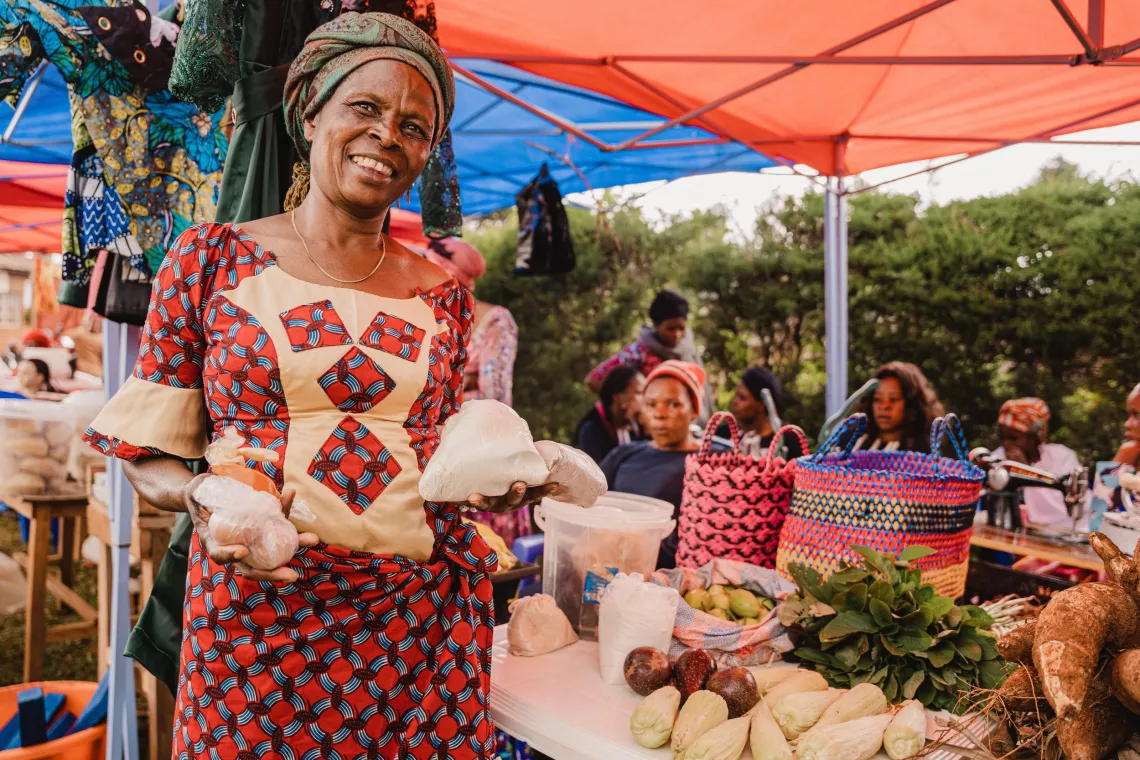
Women like Wilfrid Mwabarazigirwa, a community facilitator, are central to this initiative. Wilfrid’s mission is clear: to show parents that simple, locally available solutions can transform their children’s lives.
One of the families she works with is headed by Agnès Mapenzi, a mother of three. Thanks to the rabbits and guinea pigs she received, along with seeds to grow vegetables, Agnès has been able to diversify her family’s diet.
“Since I started raising animals, my life has changed for the better,” Agnès says. “I can pay my children’s school fees, and I hope to expand my business.”

But the change in Kaniola doesn’t stop at fighting malnutrition. Young people, often out of school, are at the heart of a socioeconomic reintegration programme that has already provided new skills to 1,890 girls and 750 boys across South Kivu.
Eighteen-year-old Kahasha, who trained as a mechanic at a UNICEF-supported garage, is now one of Kaniola’s most skilled mechanics.
“Thanks to this training, I can now support myself. I’ve even started a pig farm with my savings,” he says proudly.

Meanwhile, Julienne Bashige, an experienced seamstress, is passing on her expertise to young apprentices eager to learn.
“It’s deeply fulfilling to help empower these young people,” she says, sitting behind her sewing machine.
Another force for change in Kaniola is the promotion of positive masculinity.
With support from UNICEF, community facilitators like Augustin Matabaro are encouraging men to play active roles in tackling malnutrition and sharing domestic responsibilities.

“This project has transformed me,” says Augustin. “I now help with household chores and make daily efforts to support the wider community.”
Thanks to these collective efforts, Kaniola is blossoming. With support from UNICEF, the World Food Programme (WFP), and the Food and Agriculture Organization (FAO), families are actively protecting children’s rights and shifting mindsets. Together, they are building a more resilient, equitable, and secure community for everyone.