Radio rekindles children’s love for learning in Minova
Far from traditional classrooms, education is being reimagined to help children keep learning during times of crisis
- Français
- English
It’s just after 1 p.m. when the first children begin to arrive, notebooks under their arms and smiles on their faces.
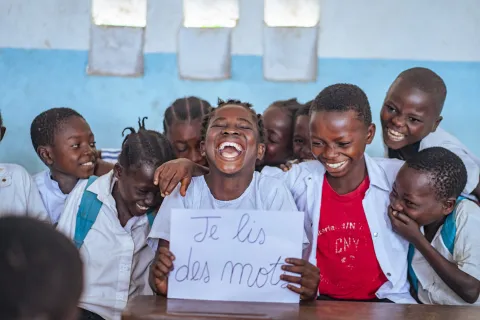
In the heart of Minova, in Kalehe Territory, South Kivu, a simple courtyard has been transformed into a learning space like no other.
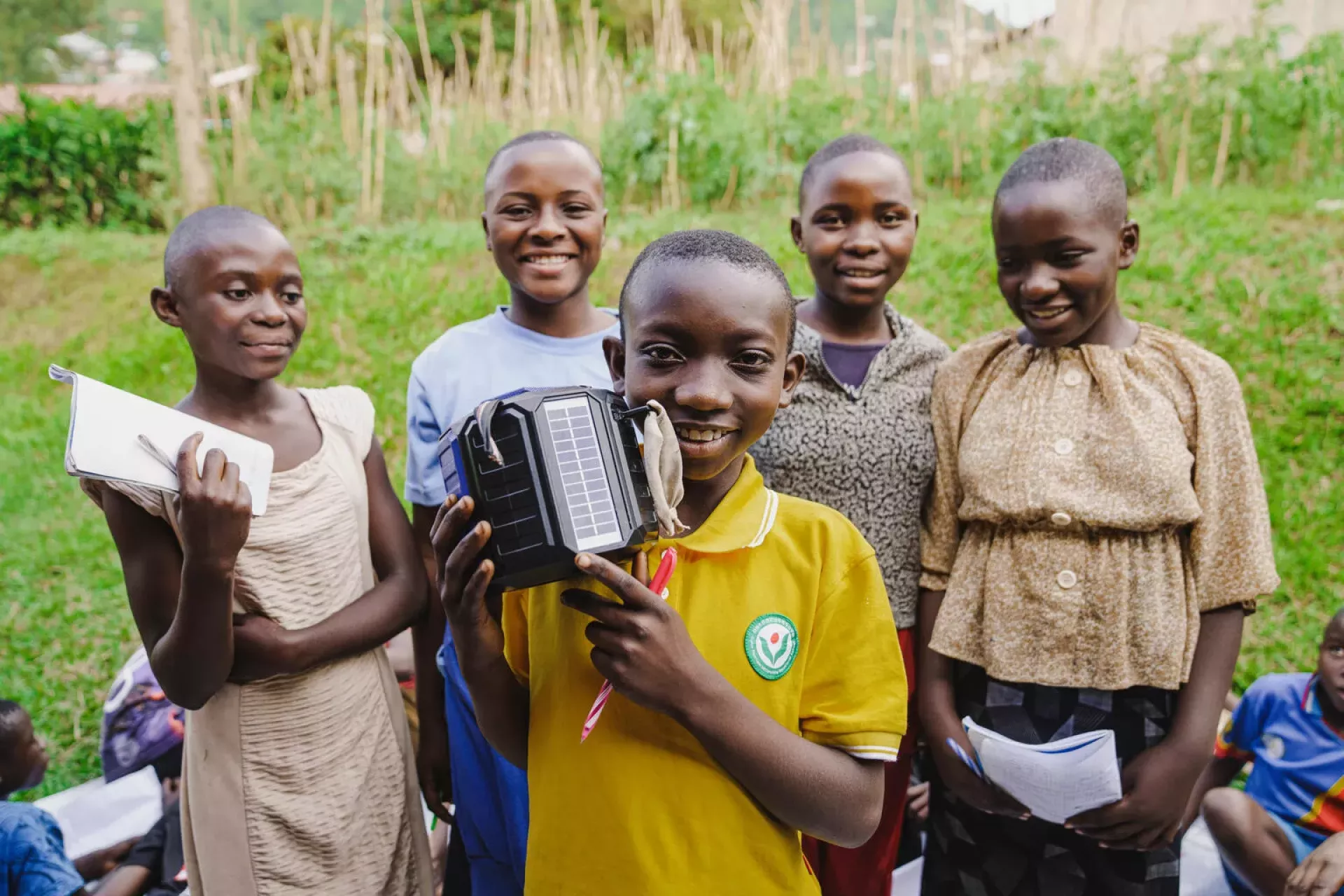
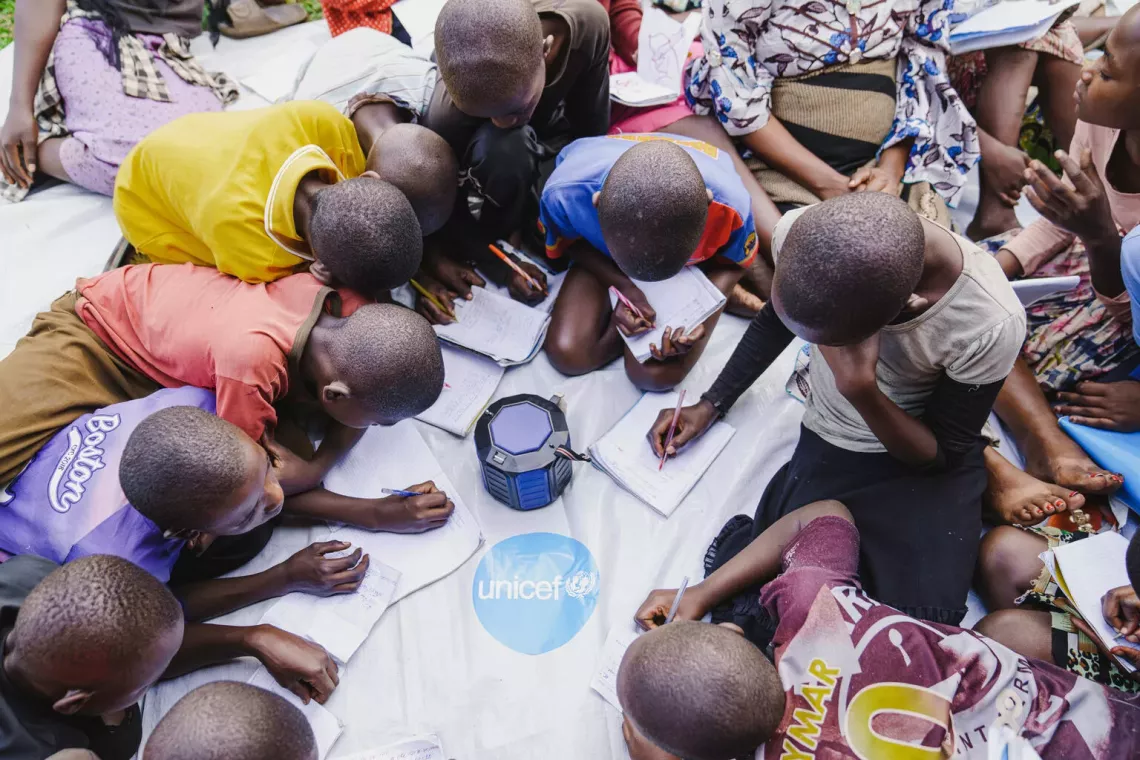
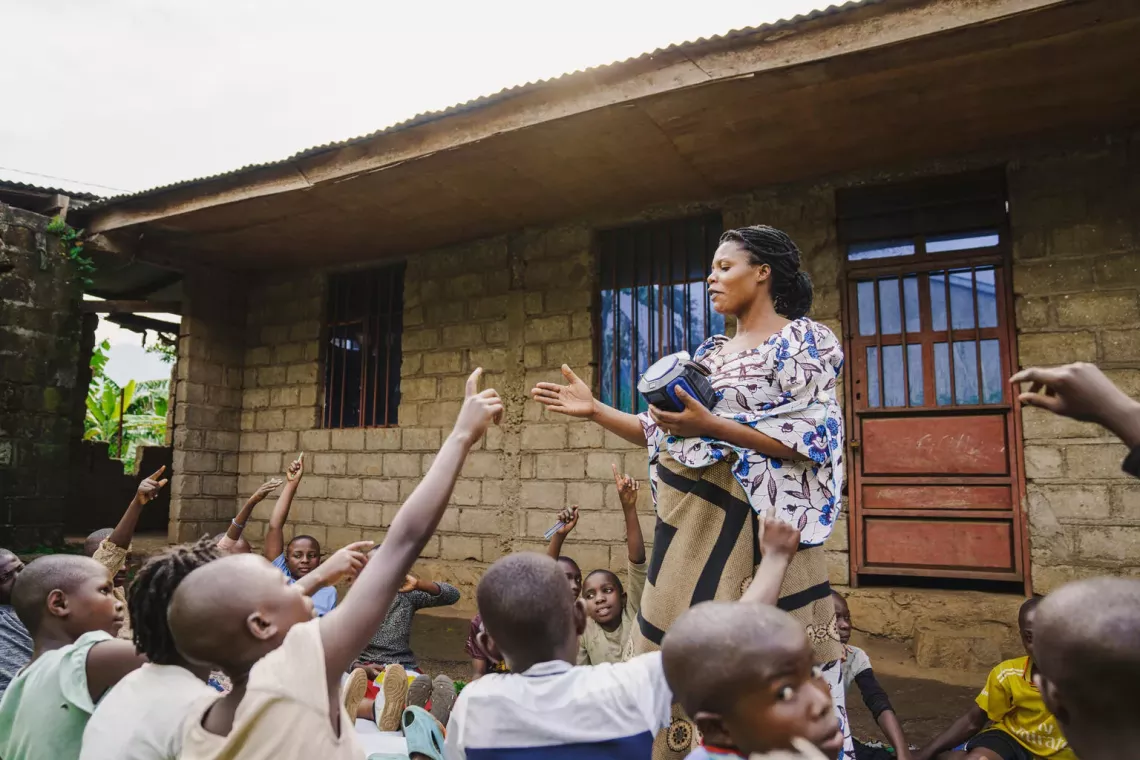
There’s no blackboard or school desks here. Just a small radio in the centre, and about 30 attentive children gathered around a teacher.
Among them is Amini, 12, brimming with enthusiasm. She went several months without being able to study.
Like her, over 1.8 million children affected by violence in eastern Democratic Republic of the Congo are out of school.
“Learning through the radio helps me a lot because if I go back to regular school, I won’t be behind,” Amini explains proudly, holding the radio.
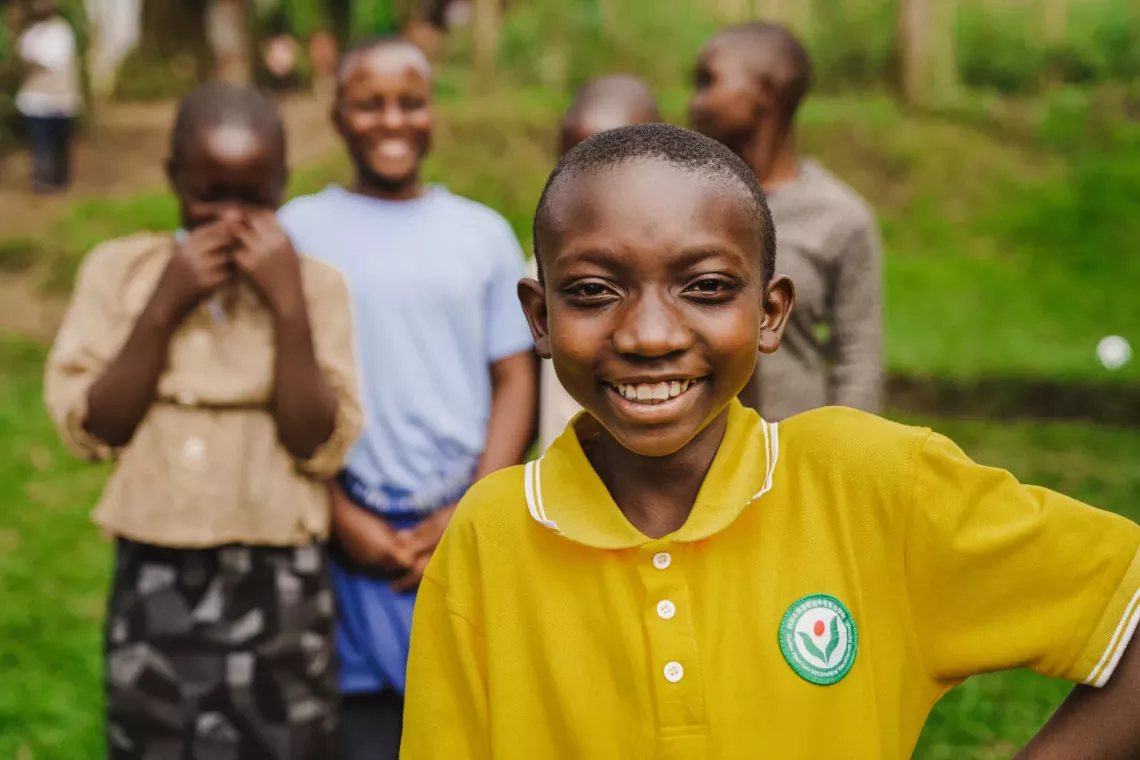
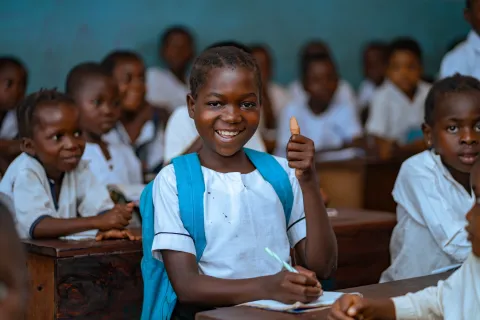
She has now been attending Level 3 lessons for three months – equivalent to Years 5 and 6 in the national primary school curriculum.
Each day, pre-recorded lessons prepared by the Ministry of National Education and New Citizenship and the Ministry of Social Affairs are broadcast via a small radio set.
Thanks to this initiative supported by Education Cannot Wait (ECW), children come together to learn in groups, guided by a facilitator specially trained in this form of teaching.
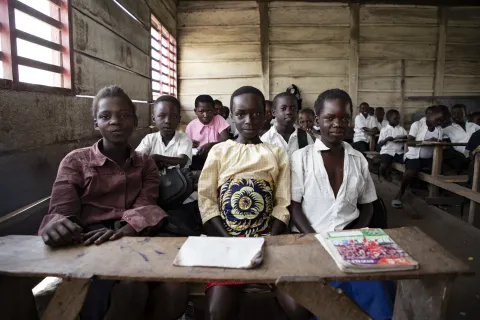
Most of the children here were forced to stop attending school. Some fled violence, others dropped out due to financial hardship or lack of school spaces.
Amini is one of them. Her schooling was abruptly interrupted when she had to flee the conflict. Upon returning to Minova, her mother – unable to afford school fees for both daughters – made the difficult decision to prioritise the eldest, who is about to sit her final exams.
For Grace Lenjika, the Level 3 teacher, supporting these children is a natural choice: “These children are intelligent. If they were in a normal school, they would truly be excellent students,” she says.
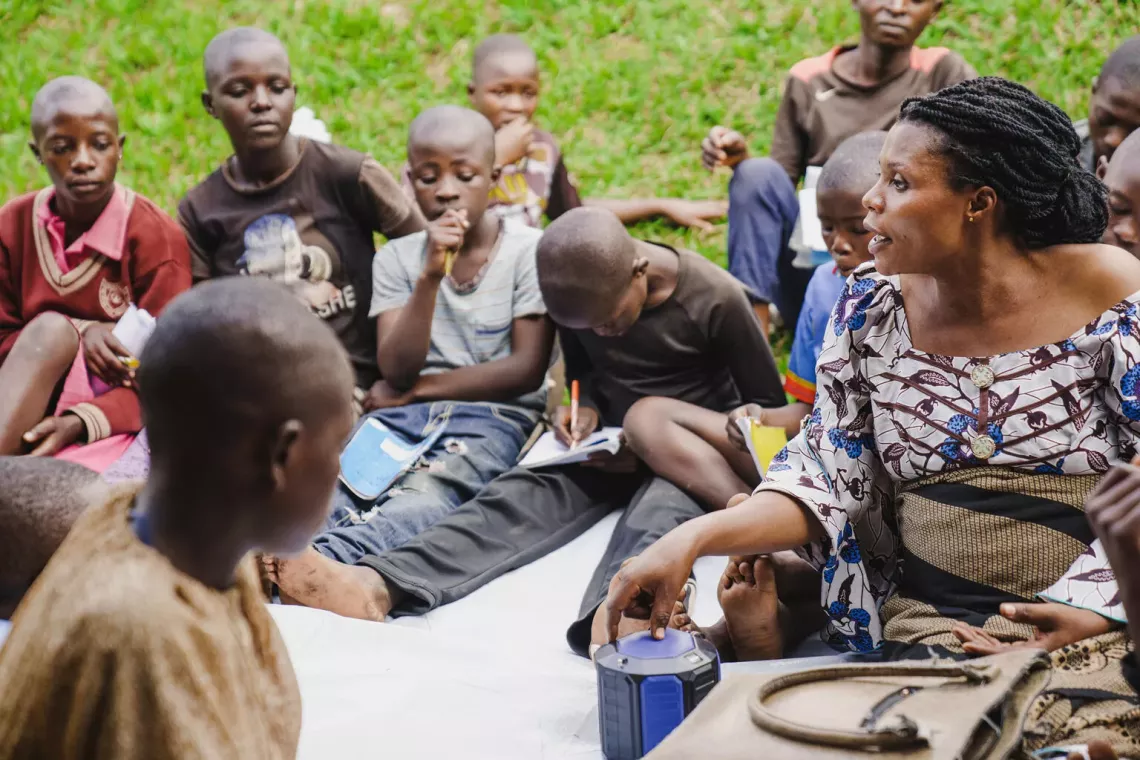
This learning space, known as a “circle group” – as children sit in a circle around the radio – is much more than a place to study. It’s a space of comfort and rebuilding, where children find the structure and support they desperately need.
At the end of the day, learning continues at home. For 30 minutes, a class is broadcast on a local radio station, giving children the chance to revise.
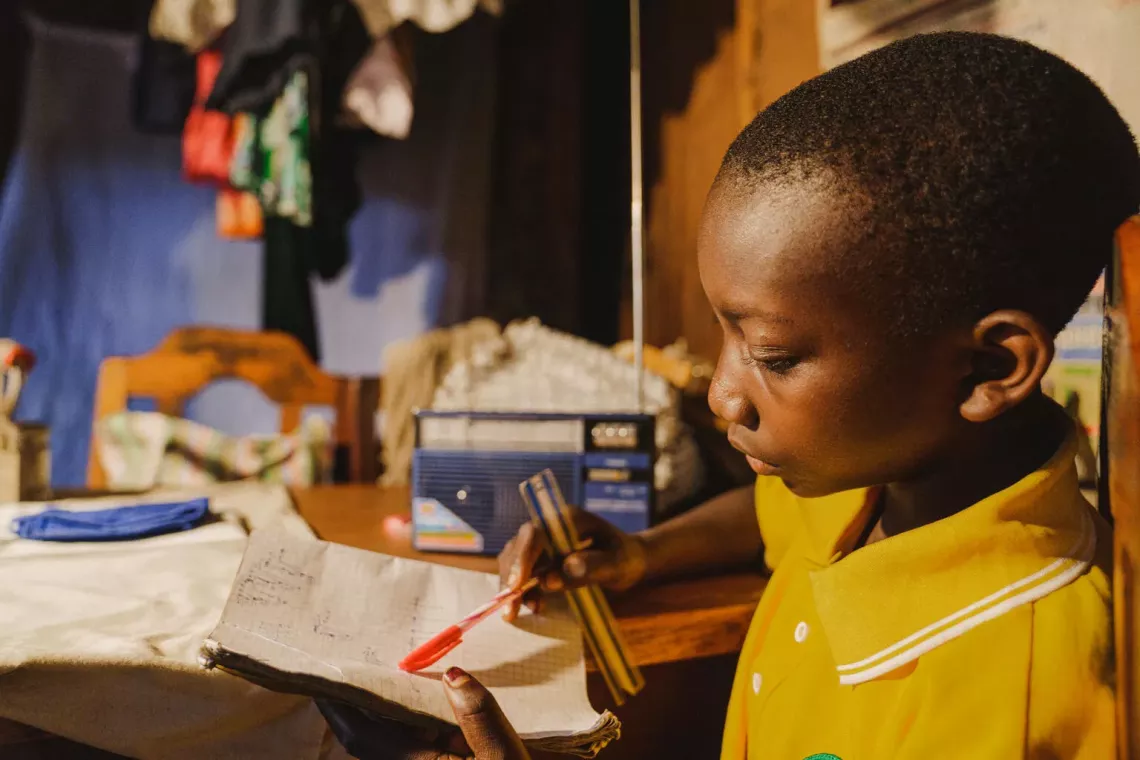
That’s exactly what Amani does this evening, with her mother and older sister supervising.
“When [Amani] returns from the radio class, she takes out her notebook to study. When we see her getting good marks, we feel very proud,” says Amani’s mother.
By combining circle groups, catch-up education programmes and radio broadcasts, UNICEF and partners are helping thousands of children like Amini continue learning, even during times of crisis.
Thanks to funding from ECW, this educational response in Kalehe Territory has already enabled over 1,000 conflict-affected children to benefit from distance learning. More than 7,500 have received individual school kits, and over 100 teachers have been trained in inclusive education, gender-based violence prevention and psychosocial support. These efforts aim to ensure equitable, quality education for children affected by crisis – children who, despite adversity, show remarkable resilience and an unwavering desire to learn.