A new start for children who have come off the streets
UNICEF works with the Congolese government to create a protective environment and to ensure the safety of the most vulnerable children.

- Français
- English
At an emergency reception center in Bandalungwa, around twenty children form a circle around their support worker and discuss best practices for community living. Although these children have had different journeys, they share similar experiences. Only a few days ago, the majority of them were living on the streets of Kinshasa.

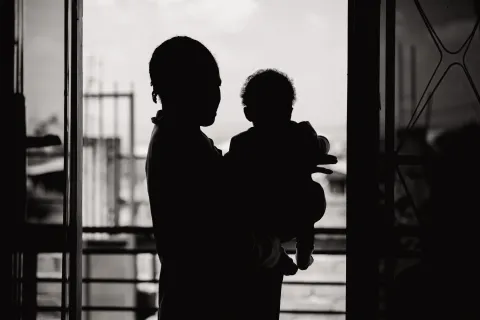
Ketia, 16 years old, lived on the street for a year with her mother before the latter died. Ketia was left alone on the street and faced daily abuse and violence that led to her unplanned pregnancy. Former street children, trained as para-social workers, identified and referred her to the appropriate healthcare services.

At the center, children are sheltered from the streets and from abuse for up to a month before being reunified with their families or placed with temporary foster families, or long-term care centres. Subject to their aspirations and future plans, all the children are encouraged to continue their education or to start a vocational training course.

Hoping to support his family, Richard left the city of Tshikapa at the age of 12 to find work in Kinshasa. Being isolated, the young boy became a victim of economic exploitation in the Congolese capital. Following a family tracing process, Richard will be reunited with his parents in Tshikapa and will continue to be accompanied by para social workers locally.

UNICEF supports the Ministry of Social Affairs, Humanitarian Action and National Solidarity in the establishment of child protection mechanisms. Last year, two care centers were set up in Kinshasa and more than 3,000 children were cared for thanks to the support of the Canadian government.