My voice is our voice
Young singer Céline Banza joins forces with UNICEF for the well-being and empowerment of Congolese girls.

- Français
- English
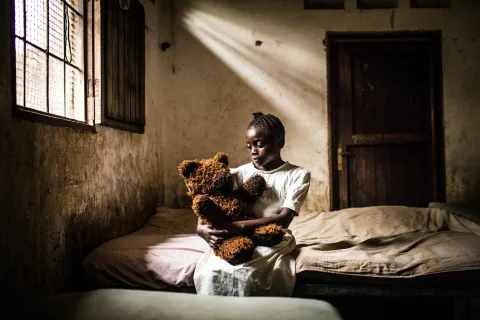
Although Women’s Month has come to an end, the fight for women’s rights is a daily task. In the Democratic Republic of the Congo (DRC), gender-based violence is widespread and deeply rooted in social and cultural norms. Across the country, 40% of women living in rural areas have been victims of marriage before the age of 18, and 11% before the age of 15. Child marriage is the most widespread form of sexual abuse and exploitation of girls.
As part of UNICEF’s “Girl’s Well-Being and Empowerment: My Voice is Our Voice” campaign, Céline Banza is working with women and UNICEF to combat gender-based violence and its impacts. The winner of the 2019 RFI Discovery Prize travelled to Equateur province to hold discussion forums with teenage girls and Women.
“The health of young girls is decidedly endangered and they are confronted with abuse,” said Céline Banza. The DRC is one of the countries in the world with the largest number of children affected by early pregnancy. Gender inequalities are also present in education, with only 33% of girls attending secondary school. Nearly 30% of women and girls aged 15 - 19 have been sexually abused and almost half of the female population has experienced one or more forms of domestic violence.
As in many countries around the world, the measures taken to contain the coronavirus pandemic have had a negative impact on the safety and well-being of women and girls. Emergencies and conflicts exacerbate sexual violence as well as sexual exploitation and abuse.
As the DRC faces one of the world’s most serious humanitarian crises, children, women and young girls are the primary victims. This violence has significant physical and psychological consequences, but also devastating social consequences.
Céline Banza, has long been a voice for women through her songs, and is now working with UNICEF to put child marriage, girls’ secondary education, adolescent health, menstrual hygiene and health, and gender-based violence, particularly in the context of the humanitarian crisis, at the heart of the debate.