Keep Ebola out of schools
In September, more than two million children living in communities affected by Ebola went back to school.
- Français
- English
Break time will have to wait as all the pupils at the Kalamo School Complex are attending an assembly at the heart of the school. "Wash your hands with water and soap," sings a choir of 335 pupils at the school located in Goma, in the east of the Democratic Republic of the Congo (DRC).
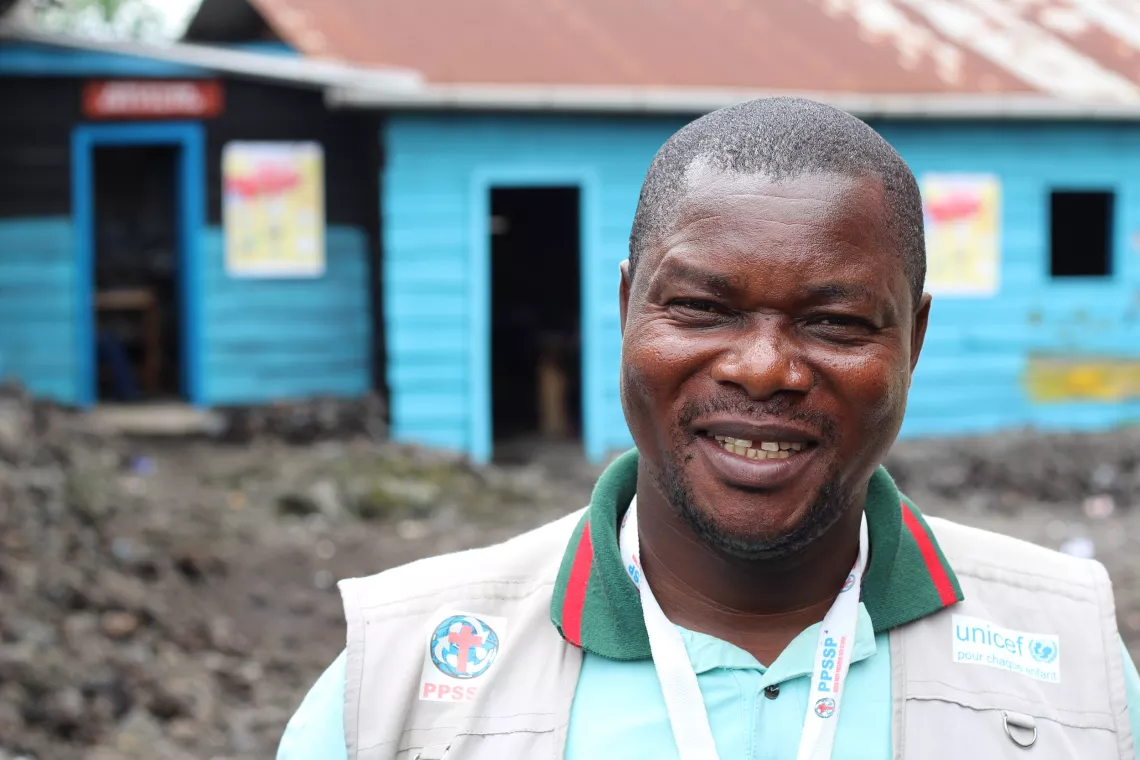
Blaise Masemo, a facilitator from a UNICEF partner organization, keeps the beat of the song. Blaise goes from school to school with his megaphone to raise pupils' awareness of the hygiene rules to follow to avoid catching the Ebola virus. "We use the songs to help the pupils to memorize the hygiene measures," explains Blaise. When children learn a song, they sing it at home and with their friends, raising more people's awareness of what to do to prevent the disease.
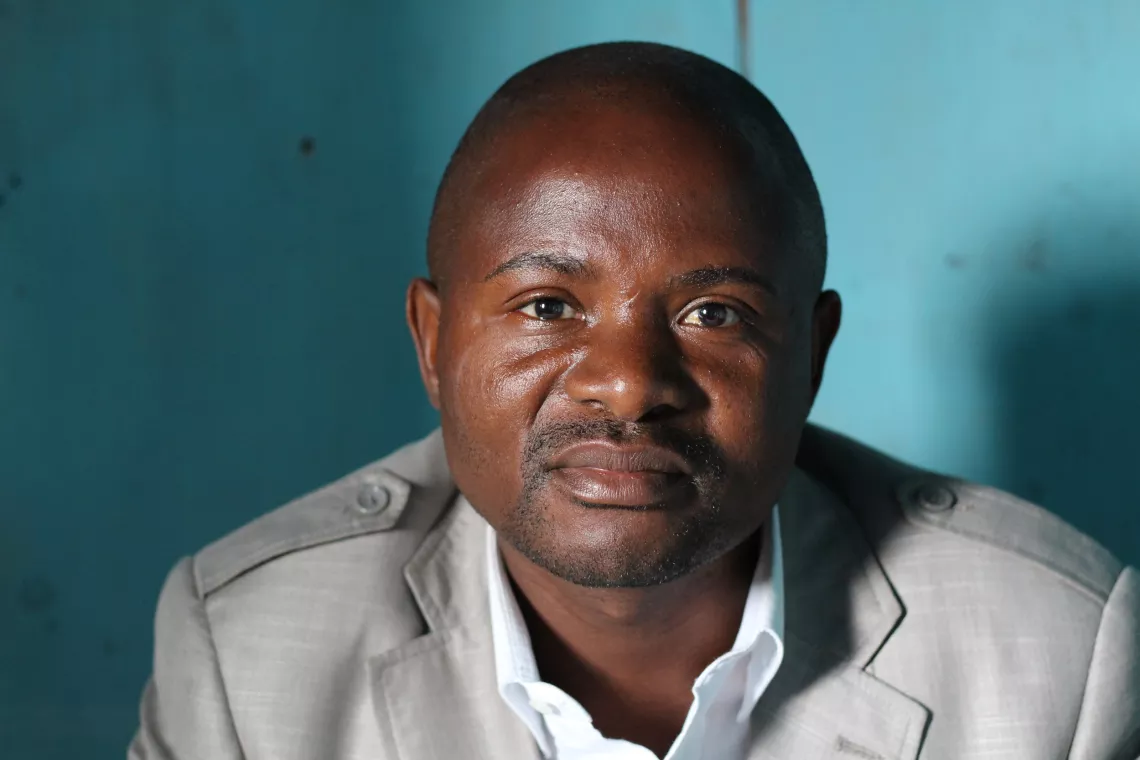
UNICEF and its partners are working to make schools safe learning environments for children and teachers. "Since last year, we have been talking to children about Ebola," says Banyene Mitamo, Principal of the Kalamo School Complex, located in an area of Goma affected by the disease.
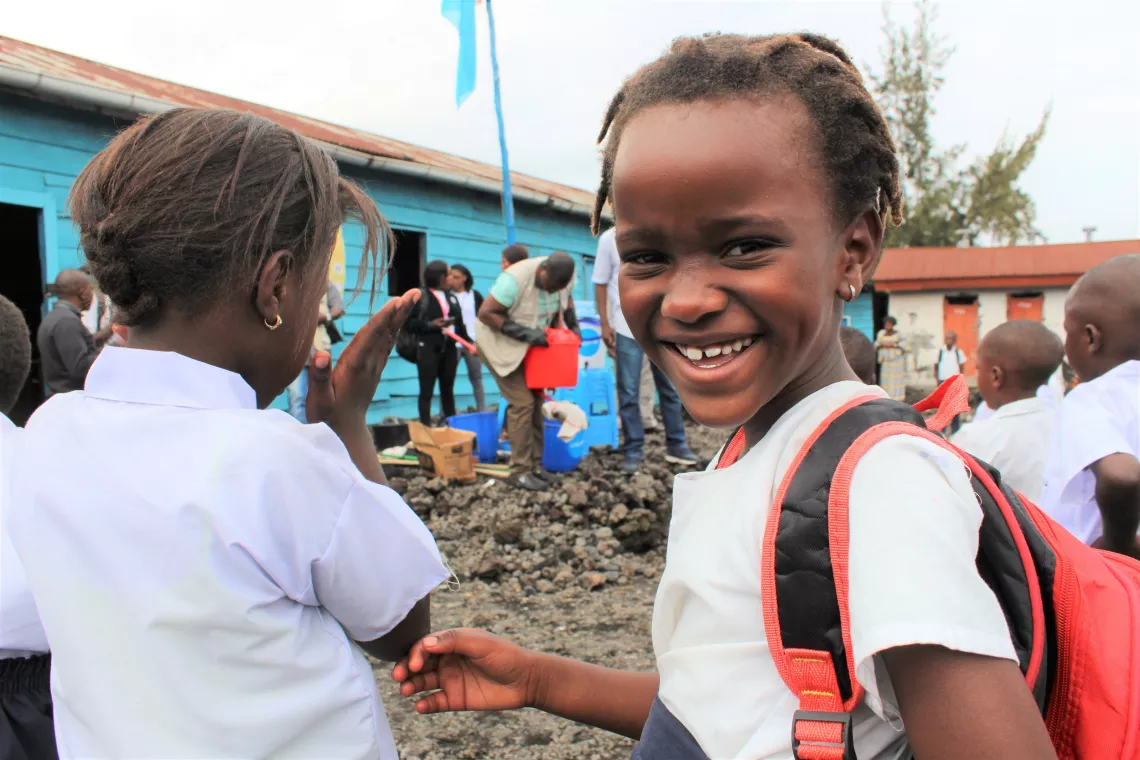
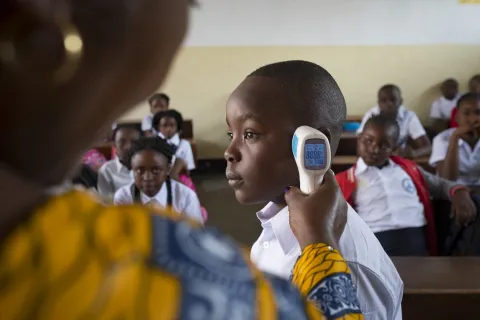
"We have to wash our hands to avoid Ebola," Rihanna, aged 8, explains proudly as she unveils the new handwashing station installed by Blaise. Like the Kalamo School Complex, more than 2,400 schools in high-risk areas have been provided with thermometers and hygiene and sanitation equipment.
The facilitators are working hard to raise the awareness of school directors, teachers and pupils about the disease, how it is transmitted, hygiene measures to take and what to do if there is a suspected case of the disease. To date, more than 975,000 pupils have been informed and made aware of the disease in the provinces of North Kivu, South Kivu and Ituri.
UNICEF's response to the epidemic is supported by the European Commission - European Civil Protection and Humanitarian Aid Operations, Gavi, the Vaccine Alliance, the United States Agency for International Development (USAID), the Central Emergency Response Fund and the Japanese Government. UNICEF also benefits from the support of the German Committee for UNICEF, the Pandemic Emergency Financing Facility, the British Government and the Paul G. Allen Family Foundation.