“We are determined to save lives”
In South Kivu, it’s all hands on deck to stop the spread of mpox
- Français
- English
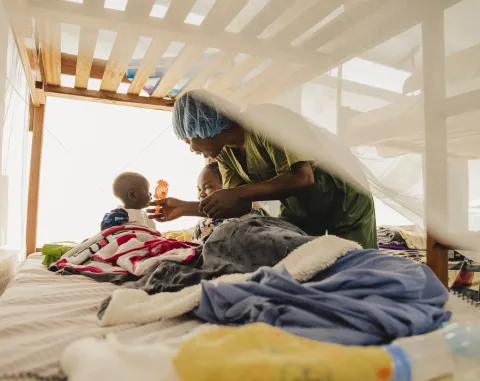
At the mpox treatment centre in Lwiro in South Kivu province, the medical team has been working tirelessly since it opened in August 2024, in response to the growing influx of patients. Despite limited resources, staff are resolute.
“We are offing medical care as well as meals,” explains Dr Alfred Kesheni Bisimwa, proudly pointing out that the centre has not recorded a single death since the epidemic began.

One of the centre's patients, 16-year-old Esther, is looking forward to getting on with her life.
“I want to go back to school,” she says enthusiastically. “I like learning new things and I want to become a doctor when I grow up so I can treat all sorts of illnesses.”
Since the beginning of the year, more than 15,000 suspected cases of mpox have been reported in South Kivu, with children accounting for a large proportion of the cases.


UNICEF is providing medical kits for the mpox treatment centres in South Kivu province and meals for the patients being cared for.
As well as providing treatment, the teams are also teaching patients and their families to adopt the right measures to limit the spread of the disease.
“I'm going to observe the protective measures so as not to fall ill again,” says Neema Nyamuningu, who is at the centre with her daughter.

Rigorous hygiene, such as frequent hand-washing and surface disinfection, is important to reduce the risk of transmission.
To stop the spread of the disease in and around treatment centres, UNICEF has provide training in infection prevention and control to improve the skills of 300 care providers, 420 hygienists and 60 Red Cross volunteers.
Health workers have also been trained to ensure they are providing quality medical care.


Bayongwa Balezi, who has been a hygienist for 27 years, says: “My role is essential to protect patients and my own family. I do everything I can to avoid bringing the disease home.”
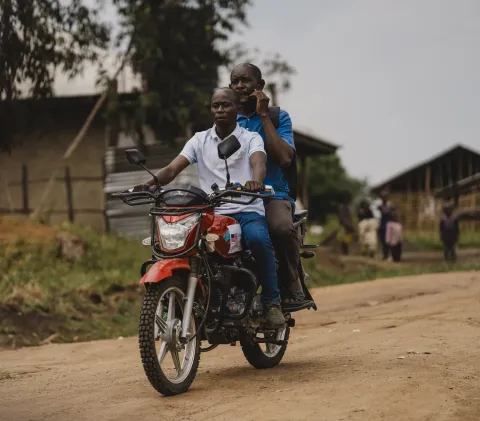
The fight against mpox is not limited to treatment centres. On the ground, community workers like Estella Bisimwa are working to make sure families know what mpox symptoms are and what to do if they suspect they are ill.

“Thanks to our efforts, many people have been treated in time, which has considerably reduced the spread of the disease,” she explains.
Awareness campaigns carried out with UNICEF support have helped 2.6 million people in the province's towns and villages to get the information they need.
Young people are also playing a key role in the fight against mpox. Supported by UNICEF, U-Reporters are working online and in the field, passing on key information about how to avoid the disease.

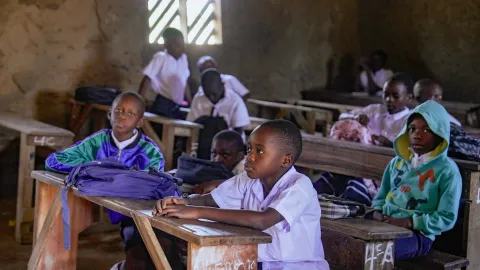
“Making pupils aware of mpox helps them to adopt the right habits and creates safer schools,” says Asha Sadi after visiting a school in Bukavu to talk to pupils.
In October 2024, a vaccination campaign against mpox was launched in South Kivu, reinforcing the efforts already being made to halt the spread of the disease. The vaccine is being given to those who are considered to be at a higher risk of catching the disease, including frontline healthcare workers and people who have been in contact with patients who have or who are suspected to have mpox – and people who have been in contact with those people.
More than 25,000 people in four key health zones have received their first dose of the vaccine.
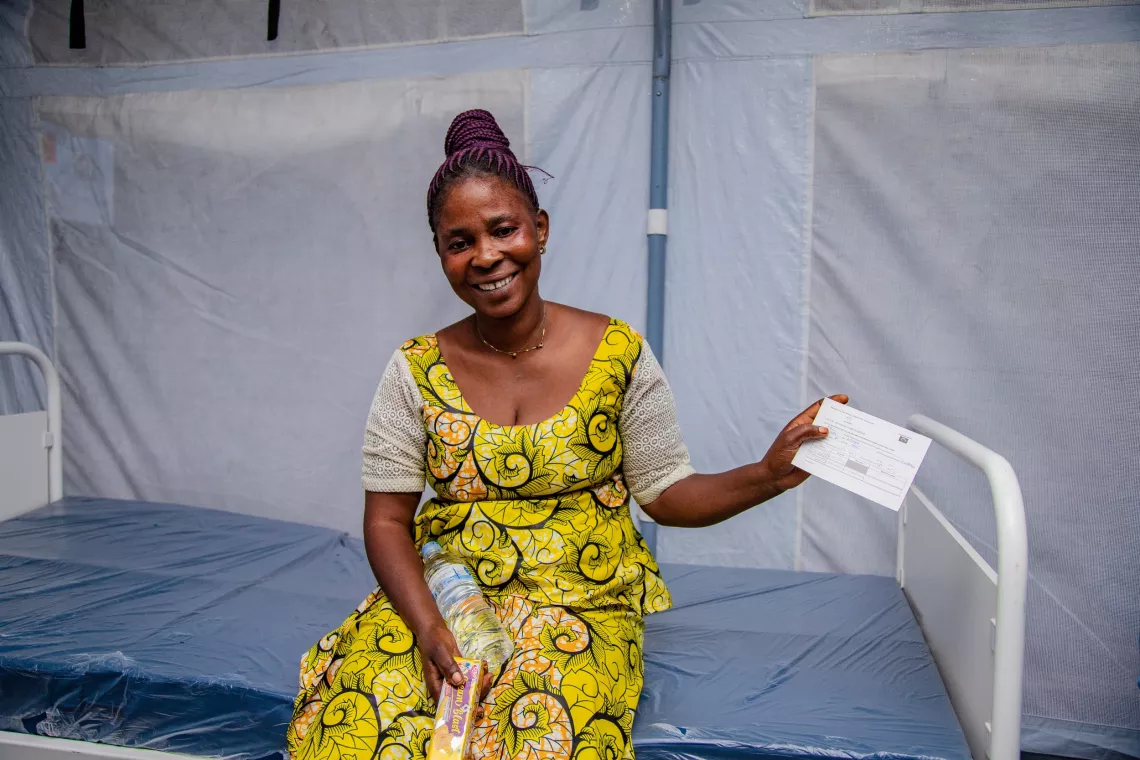
Among them is Sifa Bahati, who explains: “I was vaccinated to protect myself against mpox. My husband and 4-year-old daughter were infected.”
The second phase of the campaign – providing the second dose of the vaccine – began on 17 December.
With support from USAID's Bureau for Humanitarian Assistance (BHA), the Foreign, Commonwealth and Development Office (FCDO), the Swiss Agency for Development and Cooperation (SDC) and Mastercard Foundation, UNICEF and its partners continue to strengthen the response to the epidemic to protect the most vulnerable populations.