Combatting the stigmatization of Ebola survivors
When each patient is discharged, Swing hopes to be able to throw a party, with everyone in the community invited.

- Français
- English
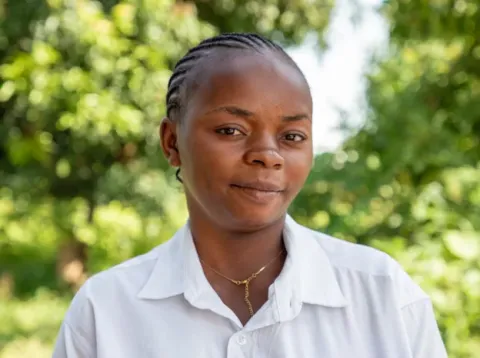
"Organizing a party to celebrate the return of Ebola survivors facilitates their reintegration into the community," explains Swing Muhuyu, a psycho-social assistant at the Beni Ebola treatment centre in the east of the Democratic Republic of the Congo (DRC).
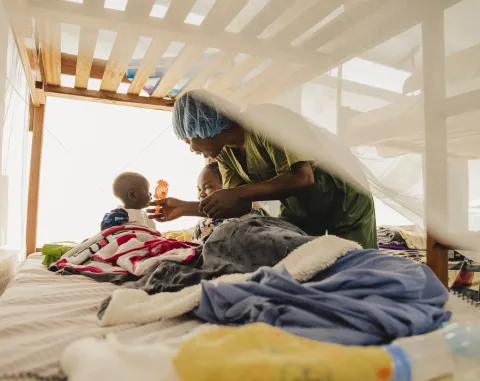
When a patient is discharged from the treatment centre, they must go to Swing or one of the other psycho-social assistants to receive a document certifying that they no long pose a risk to their community. This meeting is also an opportunity to organize their return to their community. While some survivors receive a warm welcome, the majority are confronted with discrimination, stigmatization and rejection by their community. The role of the psycho-social assistants trained by UNICEF is to guide the cured people through their return to their communities.
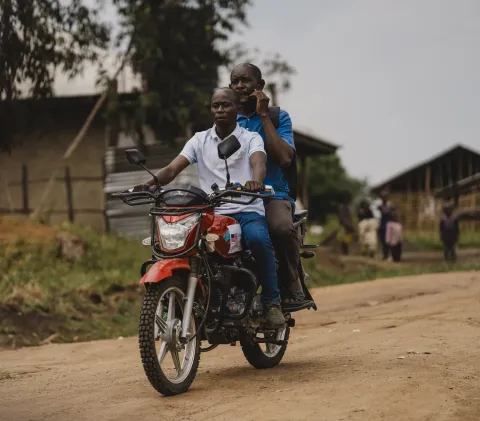
When each patient is discharged, Swing hopes to be able to throw a party, with everyone in the community invited. "I go to the community in my car with loud speakers," explains Swing. The psycho-social assistant then becomes a host and crowd-warmer to announce the good news to the whole community: a survivor is coming home! Beyond helping the survivors to get a fresh start, the party is an opportunity to show everyone that the early treatment of disease can save lives. "The community needs to see people returning who are cured of Ebola," says Swing, conscious that many people are still afraid of attending the treatment centre.
Some survivors of Ebola want to return quietly to their community. Swing and his psycho-social assistant colleagues then focus on preparing their immediate family to welcome them but their work doesn't end there. "The fact that a person doesn't want a party is often an indication that the person is still suffering," expains Swing. The psycho-social assistant then knows that he must pay special attention when monitoring this person's progress.
Since August 2018, Swing has guided dozens of patients through leaving the treatment centre, helping them to rebuild a life in their community.
UNICEF’s response to the Ebola epidemic is supported by the World Bank Pandemic Emergency Financing Facility, the European Commission – European Civil Protection and Humanitarian Aid Operations, the Vaccine Alliance, the United States Agency for International Development, the Central Emergency Response Fund and the Government of Japan. UNICEF is also supported by the German Committee for UNICEF.