“Climate change is real: come and see it for yourself”
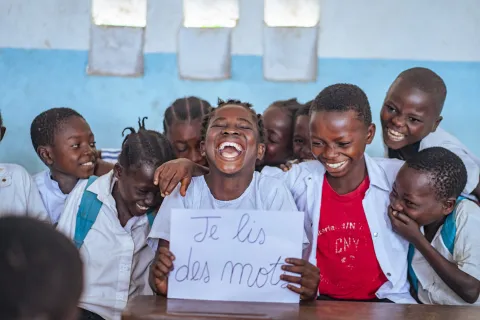
In Kalemie, children at Lake Primary School watch their school being swallowed by rising waters

- Français
- English
For children in Kalemie, the provincial capital of Tanganyika province in eastern Democratic Republic of the Congo (DRC), climate change isn’t just an abstract threat — it’s a clear, harsh reality. At Lake Primary School, Lake Tanganyika’s rising waters are slowly eating away at the classrooms.
The school was built in 1975, over 300 meters from the shore of Lake Tanganyika, one of Africa’s biggest lakes. Now, eight of the twelve classrooms have been flooded, and the children see their future slipping away along with their school.
School Principal Musinge Nonda remembers the school’s first collective response when the waters started rising: teachers and students filled sandbags to try and stop the lake from flooding the school.

“With only four classrooms left, we don’t know how to keep the school running as we used to,” says Nonda.
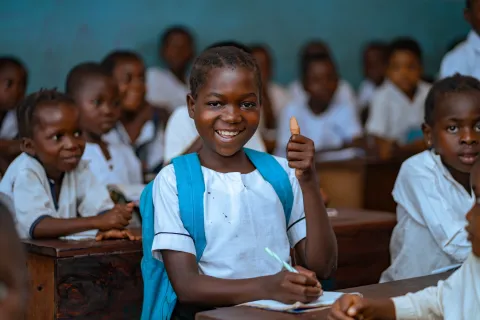
For years, the school has had to manage with just those four rooms. Students of all ages were packed together, learning in tough and cramped conditions.
The education authorities moved the students temporarily and they are sharing a nearby school. Now, they go to class in shifts: pupils from the host school attend in the morning, while the displaced Lake School pupils attend in the afternoon.


“Climate change is real. If you don’t believe it, come and see it here for yourself,” the principal says. “It affects children directly, especially their education.”
He has also asked teachers to include lessons about protecting the environment. The goal is for students to understand the problem; help find mitigation measures and spread the message to their families and neighbours.

Where the playground used to be — now covered by water — two students speak to UNICEF. Alfred, 12 years old, collects plastic bottles floating in the water and pins them on his shirt as a sign of protest.
“I’m worried to see my school disappearing little by little because of the lake. Our education is at risk,” he says. Beside him, Clarisse, 14, shares the same concern.

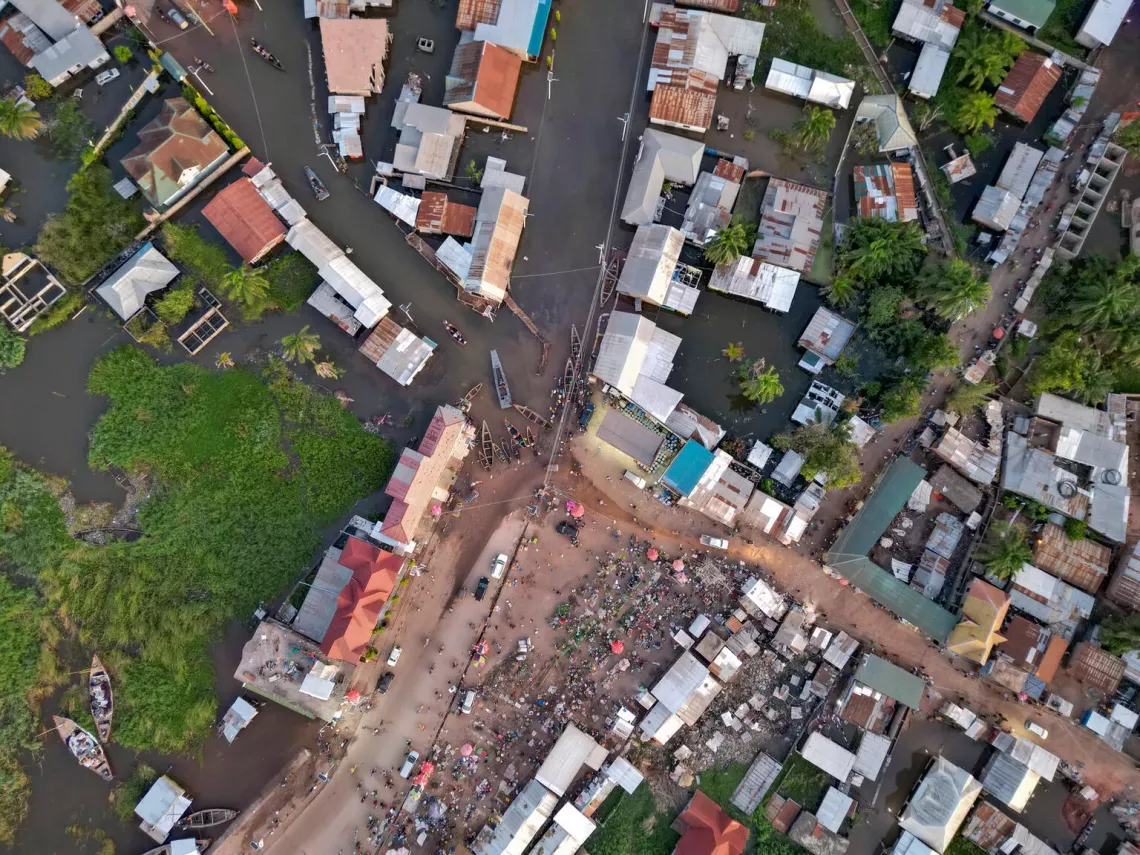
In Kalemie, it’s not just the school affected. Whole neighbourhoods are flooded, and canoes have replaced motorbikes on some streets.
The heavy rains and rising lake aren’t only threatening education — they are also putting families’ health in danger. Since the beginning of 2025, more than 3,000 suspected cases of cholera have been reported across Tanganyika province.

Young people are stepping up to help – notably via UNICEF’s U-Report initiative which allows young people to speak up about and come together around local issues that matter most to them. Imani Shamavu, a leader of a U-Report community in Kalemie, teaches families affected by the floods how to prevent cholera.
“Seeing families hit by floods and getting sick from cholera makes me want to act,” says Imani. “As a U-Reporter, I work to make sure every family gets important information and knows how to use chlorine to stay safe.”
Families, for example, add chlorine tablets to their drinking water to kill germs and make sure it's clean and safe to drink.

On this World Environment Day, Alfred and Clarisse are calling for action.
“Let’s protect our environment,” Clarisse says, holding her pink sign — a simple, important message so every child can learn and grow up healthy.