

All-out war against cholera in Kalemie
Chlorination and sensitization

- Français
- English
In Kalemie, capital of the Tanganyika Province, cholera is endemic. A large number of households take their water from the huge lake and drink it untreated despite the numerous waterborne diseases likely to affect their health. In 2017, 5,496 cases of cholera have been declared, causing 130 deaths.
However, a range of simple solutions exist: chlorine provides an easy way to eliminate the most harmful microbes in order to prevent cholera, typhoid fever and diarrhoea.
In the Kitchanga neighbourhood, on a road leading directly to the lake, Amisi tends a chlorination system. He injects drops of chlorine into the buckets, bowls and containers of the 300 to 500 people who come to see him each day after having collected their water from the lake. These few drops are enough to save the lives of the families who will drink this water and will protect them from waterborne diseases, which are commonplace around the lake.

In Mukuku, on the outskirts of Kalemie, lies one of the region’s 10 rehabilitated wells, which provide nearby communities with an accessible source of treated water. Some people travel up to 1km, equipped with their heavy containers, to access these points, and they may do this up to 3 or 4 times a day in order to obtain enough water to meet the needs of their families.
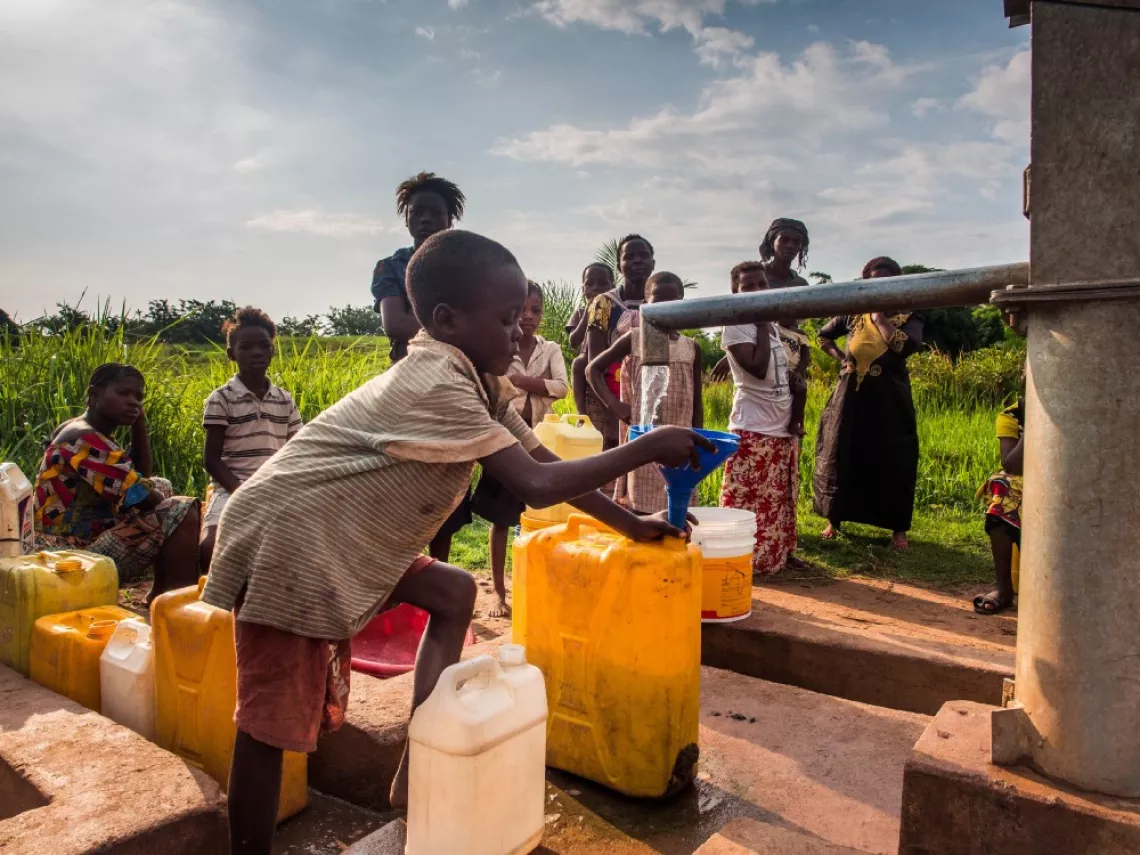
Patience is also required since, depending on the season, the reservoirs may have less water and the output from the wells is considerably reduced. Some people might wait up to 30 minutes on certain days to fill a container with around ten litres of water. With the arrival of internally displaced people following the inter-community violence which has been occurring in the province since November 2016, high demand for water in the areas around water systems has affected host communities. Added to this is the risk of a spread of cholera due to overcrowding and poor living conditions in these communities. This is the case for the community of Mukuku.
However, these wells which are treated directly with chlorine are a basic and vital source for neighbouring households, who are able to obtain clean water that will prevent this disease.

For declared cases of cholera, a rapid disinfection team is dispatched. Equipped with a combination of protection, masks and spray diffusers, this 3-person team is called in to intervene that same day to disinfect the living areas of those identified as having the disease. With the aid of a hand pump, the disinfectors fill a container with chlorine to scatter in the homes which have been affected by the disease, and to prevent any possible residual presence. The product must be sprayed on the walls, floors, ceilings and toilets of the affected home as well as the 5 neighbouring homes. It is vital to treat a larger area in order to prevent any possibility of other people being affected.

In order to prevent the disease, Clémentine, Brigitte, Bernadette, Elodie, Sergine, and Justine, mothers and volunteers, meet as the Lubuye mothers’ club. As a team, the 22 mothers in the club visit around a hundred homes on average twice a week, in order to raise awareness of different issues in the households of their community (sanitation, the prevention of waterborne diseases, correct handwashing techniques, vaccination). As well as the good advice that they share with their fellow citizens, they also take it upon themselves to discuss the problems faced by households in terms of difficulties in accessing drinking water, for example, so that solutions may be found.

UNICEF and its partners, with the support of the CERF funds, intervene in the different aspects of cholera through prevention, sanitation, disinfection, caring for sufferers and adopting good hygiene practices in order to halt the spread of cholera and in the hope of seeing the end of this endemic disease in Tanganyika.


