From hospitals to communities: a united front for health
In Beni, new facilities and community action are transforming care and strengthening resilience against disease

- Français
- English
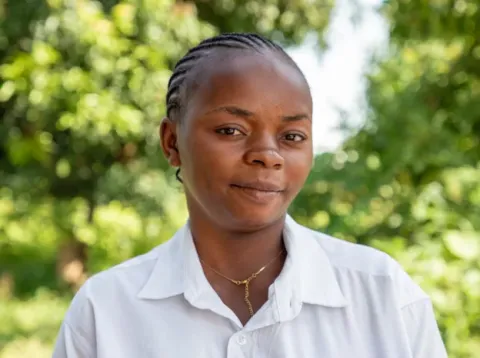
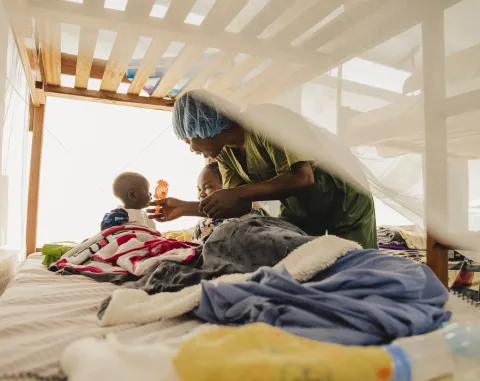
Safi Kahindo beams as she cradles her newborn daughter, delivered just three days ago at the Carl Becker Reference Health Centre in Beni, a city in northeastern Democratic Republic of the Congo (DRC). In this recently renovated maternity ward, she feels reassured: water is available, toilets are clean, and solar lighting keeps the facility running day and night.
“My daughter was born in safe, hygienic conditions, and I hope that as she grows up, she stays healthy and one day becomes a doctor,” she says with a smile.
Safi’s joy reflects more than personal pride. It embodies a collective change underway in Beni, where health workers and entire communities are joining forces to protect families from disease.
Just a few kilometres away, Beni General Hospital has also been rehabilitated in partnership with the World Bank, through the Health System Development Project Management Unit (UG-PDSS).

Toilets and showers have been built, a borehole and water point installed, a laboratory upgraded, and much more.
“The quality of care doesn’t rely on medicine alone,” explains Dr Jules Katembo, the hospital’s director. “It also depends on waste management, clean water, and reliable lighting. Today, we’ve made a huge leap forward.”
In the hallways, visitors and relatives are doing their part. Shikeni who came Walikale, about 200 kilometers southwest of Beni, to care for her brother, volunteers where she can.
“I help clean the toilets,” she says. “Here, I’ve learned that keeping them clean means staying healthy.”


Every day, hygiene workers go beyond cleaning to spread awareness.
“We don’t just scrub floors,” says one. “We talk with patients and their families. Little by little, people are changing their habits.”
But change is not confined to hospital walls. Across North Kivu province, UNICEF has trained 5,000 members of community action cells to raise awareness about epidemic prevention.
Around 600 of these cells received $150 in seed funding to sustain their work and launch small income-generating activities. In the Kapinga neighbourhood, for instance, the group invested in goat farming.


“By selling goats, we cover the costs of our awareness campaigns. We no longer wait for outside help,” says President Kasongo Ilunga. The income allows them to buy batteries for megaphones, update materials, and photocopy the leaflets essential to their work.
This independence enables quick responses – a crucial advantage in a province frequently affected by insecurity and recurrent outbreaks of cholera, measles, mpox, and multiple waves of Ebola.
These successive crises have left deep scars, stretched health systems to their limits, and underscored the need for constant vigilance.

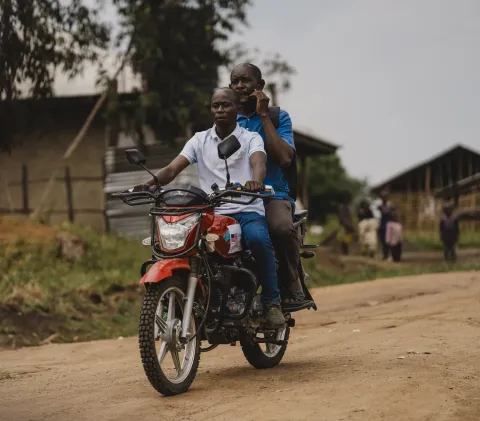
Between April 2024 and February 2025, more than 500,000 people were reached with prevention messages thanks to the work of these groups. Placide Kakule, a community mobilizer since 2019, explains:
“We go door to door, raising awareness and preventing disease. Thanks to our income-generating activities, we can now fund our own materials, make calls, and send SMS alerts.”
With his colleagues, Placide launched a tent-and-chair rental service, a simple but profitable activity.
“Since we started, we’ve doubled the number of home visits. It’s really strengthened our presence in the community,” he says proudly. Beyond changing behaviour, community workers are helping drive demand for essential social services, forging stronger links between families and health facilities.

From the maternity ward where Safi safely delivered her baby to the neighbourhoods where residents finance their own awareness campaigns, Beni shows what collective action can achieve.
New infrastructure and community mobilization go hand in hand, improving prevention and care.
By working hand in hand with health facilities and communities, UNICEF is helping strengthen the health system and improve living conditions for families in North Kivu.