France’s support gives kids a boost on learning in Eastern DRC
WFP – UNICEF Joint press release

- Français
- English
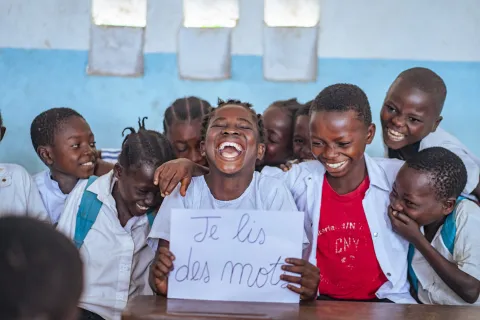
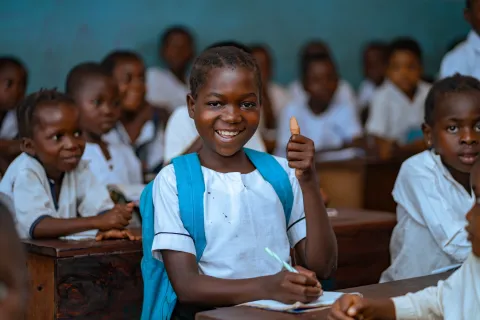
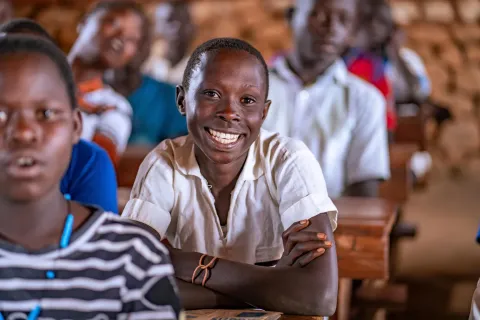
KINSHASA, 6 OCTOBER 2021 – As schools reopen in the Democratic Republic of the Congo’s eastern Nord Kivu province, a 700,000-euro (US$ 817,000; 1.6 billion CDF) contribution from the Government of France allows the United Nations World Food Programme (WFP) and the United Nations Children’s Fund (UNICEF) to provide 5,600 students with hot school meals, nutritional support, and a healthy learning environment amid ongoing regional insecurity and the coronavirus pandemic.
Targeting 15 schools over five months in the Rutshuru and Rwanguba areas of Nord Kivu, the funding aims to improve students’ school attendance, performance and well-being through school feeding and improved water, sanitation, and hygiene (WASH) facilities. The joint project also aims to create school gardens managed by student-parent-teacher committees, thus helping to ensure local ownership and community participation.
The WFP-UNICEF initiative also reflects broader Congolese and French government development objectives, including boosting girls’ education though efforts such as WFP’s take-home food rations. It is being rolled out in a region grappling with years-long food insecurity and armed conflict.
By introducing better hygiene in schools, it will also help to reduce the risk of children and teachers contracting and spreading COVID-19, the disease cause by the coronavirus, after a previous academic year marked by pandemic-triggered shutdowns.
“Hunger and malnutrition have taken a devastating toll on young Congolese,” said Peter Musoko, WFP Country Director and Representative in DRC. “School meals are one way we stand with communities in protecting their children, and in giving girls new opportunities to learn.”
“This joint UNICEF-WFP initiative provides young students in North Kivu with a safe environment where they can learn, play and enjoy a healthy development,” said Jean Metenier, UNICEF Senior Coordinator for Eastern DRC.
Giving young students the healthy, supportive start they need to flourish as adults remains a major challenge in DRC, where an estimated 26 million people are severely food-insecure, and more than half of all girls between five and 17 do not attend school.