Empowering Students and Teachers: Tinkering with Tech in Honduras
Developing 21st-Century Skills Through Innovation and Design Thinking
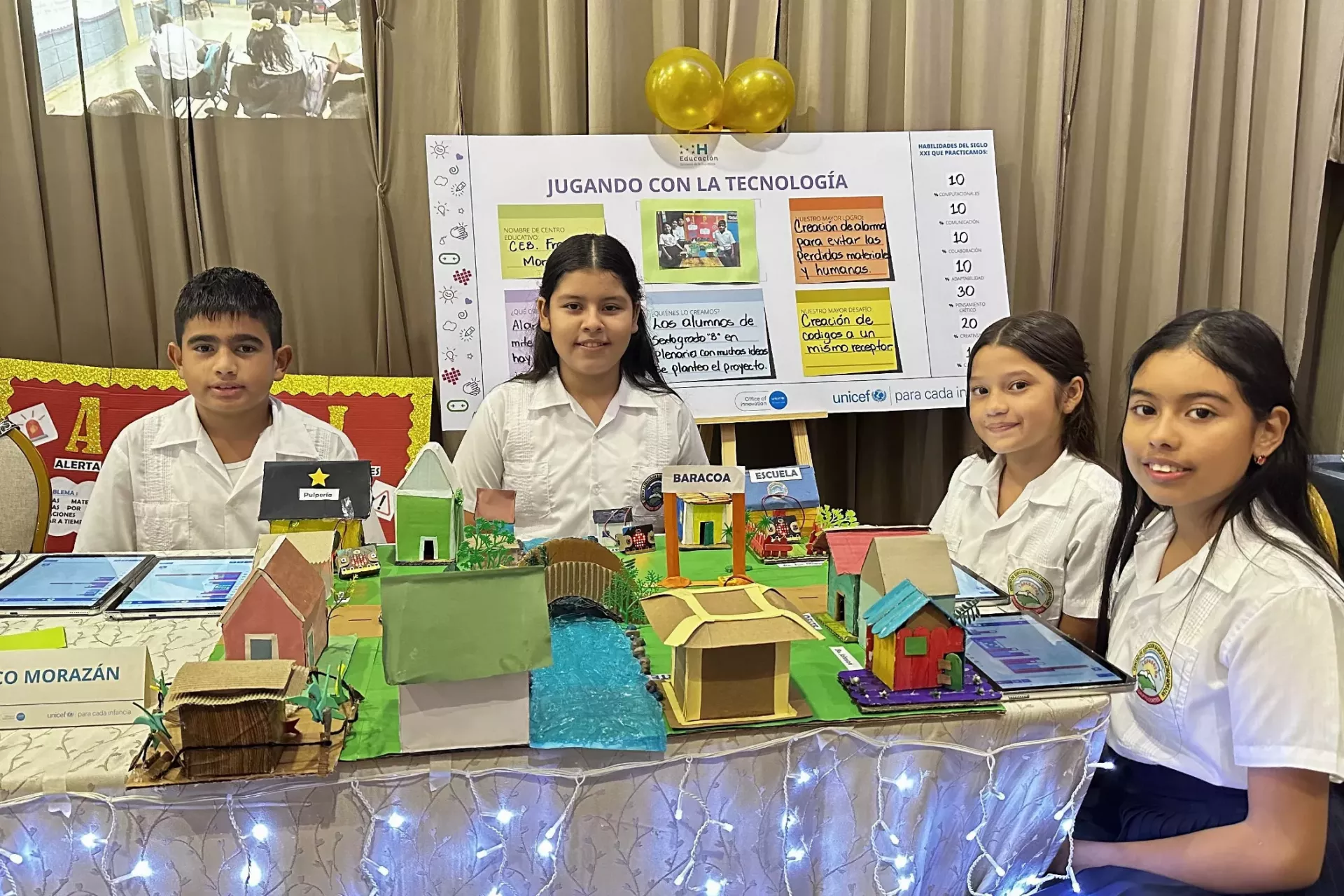
In a small, flood-prone school on the outskirts of San Pedro Sula, a group of students huddles around a prototype they’ve built—a micro:bit-powered alarm designed to warn their community when heavy rains threaten to inundate their classrooms. This project is more than just a science class experiment; it’s a tangible solution to a real-world problem these children face. It’s also a powerful testament to the impact of UNICEF’s Tinkering with Tech program, which has brought hands-on innovation and design thinking to schools in some of Honduras' most marginalized areas. These schools are located in vulnerable communities in northern Honduras, including San Pedro Sula, Villanueva, and Puerto Cortés—areas deeply affected by poverty and violence. These challenges contribute to high migration rates and school dropout, significantly limiting opportunities for children and adolescents.
A Transformative Opportunity
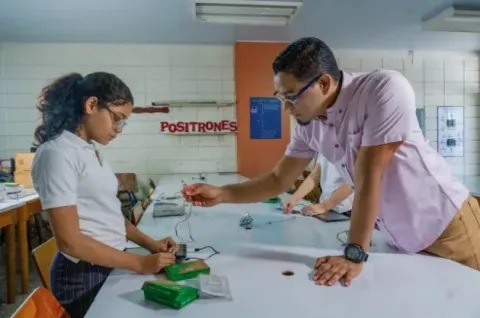
For many of these students, technology was something distant and unfamiliar. Children in these communities face significant challenges, including a lack of pedagogical and curricular tools in their schools, inadequate infrastructure with limited access to basic services like water and sanitation, and traditional teaching methods that are disconnected from modern technological and pedagogical advancements. Schools in these neighborhoods often lack resources, and opportunities to experiment with technology were rare—until now. Through Tinkering with Tech, students embarked on a journey of creativity and critical thinking, learning to apply the design thinking process:
- Empathize with their communities, understanding challenges like flooding and hurricanes.
- Define the problems they wanted to solve.
- Ideate solutions, brainstorming ways to make a difference.
- Prototype using micro:bit devices to test their ideas.
- Test and refine their projects.
- Finally, celebrate their achievements and reflect on their learning.
This journey culminated in a Grand Challenge event in San Pedro Sula, where students showcased incredible projects addressing local and climate-related challenges, including anti-flooding alarms, systems to protect against landslides, devices to ensure plants thrive in harsh conditions, and hurricane alert systems.
To achieve this, Tinkering with Tech works closely with the Ministry of Education to strengthen the National Digital Education Strategy. The program is helping shape this strategy, particularly in demonstrating how digital tools can enhance student learning and engagement in public schools.
A Collaborative Effort
The success of Tinkering with Tech in Honduras was built on a foundation of teacher empowerment. Over the summer, teachers participated in hands-on training workshops, where they not only learned about the technology but also embraced design thinking and experiential learning. A Community of Practice (CoP) was established on WhatsApp, allowing teachers to share ideas, troubleshoot challenges, and celebrate successes. Bi-weekly calls provided additional opportunities for collaboration and support.
One teacher shared her initial fears: “At the beginning, I was worried I didn’t have the right skills for this. But as we went through the process, I learned so much—from my students and alongside them.” Another teacher noted how students began seeking out additional resources online to improve their projects, even looking for ways to access more micro:bit devices to continue learning at home.
Students Taking the Lead
At the Grand Challenge event, the enthusiasm and creativity of the students were on full display. Hernán Torres, Education Officer at UNICEF Honduras, shared his excitement: “It was incredible to see these students explain their projects. They were so creative, implementing solutions that were directly relevant to their surroundings.”
During two panel discussions, teachers reflected on the program’s impact, unanimously agreeing that they would participate again without hesitation. Local partners, including the Ministry of Education, private sector representatives, and UNICEF Honduras, emphasized the importance of initiatives like Tinkering with Tech to equip students with future-proof skills.
Challenges and Lessons
The program wasn’t without its hurdles. Teachers in some schools had limited access to technology—sharing one tablet between two or three students—and many reported feeling intimidated at first by the idea of using micro:bits in their classrooms. Yet, the teachers’ perseverance and the students’ engagement proved transformative. "Teachers noticed that student participation increased significantly, and they were eager to tackle challenges creatively," said Hernán.
A Celebration of Innovation
The Grand Challenge event was more than just a showcase; it was a celebration of innovation, resilience, and the power of education to change lives. Some of the students' prototypes will be featured in the Micro:bit Foundation’s global Do Your Bit challenge, demonstrating that Honduran students can innovate on the world stage.
As Daniel Contreras, Chief of Education at UNICEF Honduras noted during the closing ceremony, "Tinkering with Tech has shown that we can innovate in Honduras’ schools. This program has empowered our students and teachers, and it’s just the beginning of what we can achieve together."
Building on the success of the pilot phase, efforts are now underway to scale up the initiative, bringing this transformative learning experience to even more schools in these challenging contexts across Honduras. By expanding Tinkering with Tech, we aim to ensure that more children can benefit from this innovative approach—using technology not just as a tool, but as a gateway to creativity, problem-solving, and brighter futures.
This initiative aligns with Honduras’ broader efforts to integrate technology into education. UNICEF Honduras is working closely with the Ministry of Education to develop a National Digital Education Strategy, and the experiences and lessons from Tinkering with Tech are providing valuable insights into how digital tools can be leveraged to enhance student learning and engagement in public schools. Through Tinkering with Tech, Honduras has proven that even in challenging contexts, children and their communities can create solutions that matter—while learning skills that will prepare them to thrive in an ever-changing world.