From the first workshop to a life choice
More than learning about technology
- Bosanski/Hrvatski/Srpski
- English
Sajra’s story, and what can happen when a girl gets an opportunity at the right time
For many girls in Bosnia and Herzegovina, a first encounter with technology still comes through school theory and content that rarely sparks curiosity or a sense that they truly belong in that space. Through UNICEF’s support to the digital transformation of education, IT Girls has been working for years to change that, creating space for girls to explore technology through hands-on learning, creativity and topics that feel close to their everyday lives.
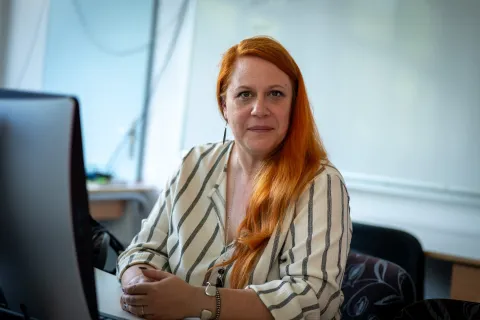
For Sajra, now a software engineering student, PR and Marketing Manager at Nix.ba, and a long-time UNICEF collaborator, that first encounter was much more than a workshop. It was the beginning of a path that would shape her choice of school, field of study, profession, and the way she now gives her energy and knowledge back to her community.
How it all began
Sajra first came across the IT Girls programme in the seventh grade of primary school, when her mother saw an open call for applications on Facebook.
“Honestly, at that time I had no real interest in computer science, nor did I know what the IT field really included. I came to that free workshop, we did some basic things using Arduino software, but for me it was the start of a whole new story.”
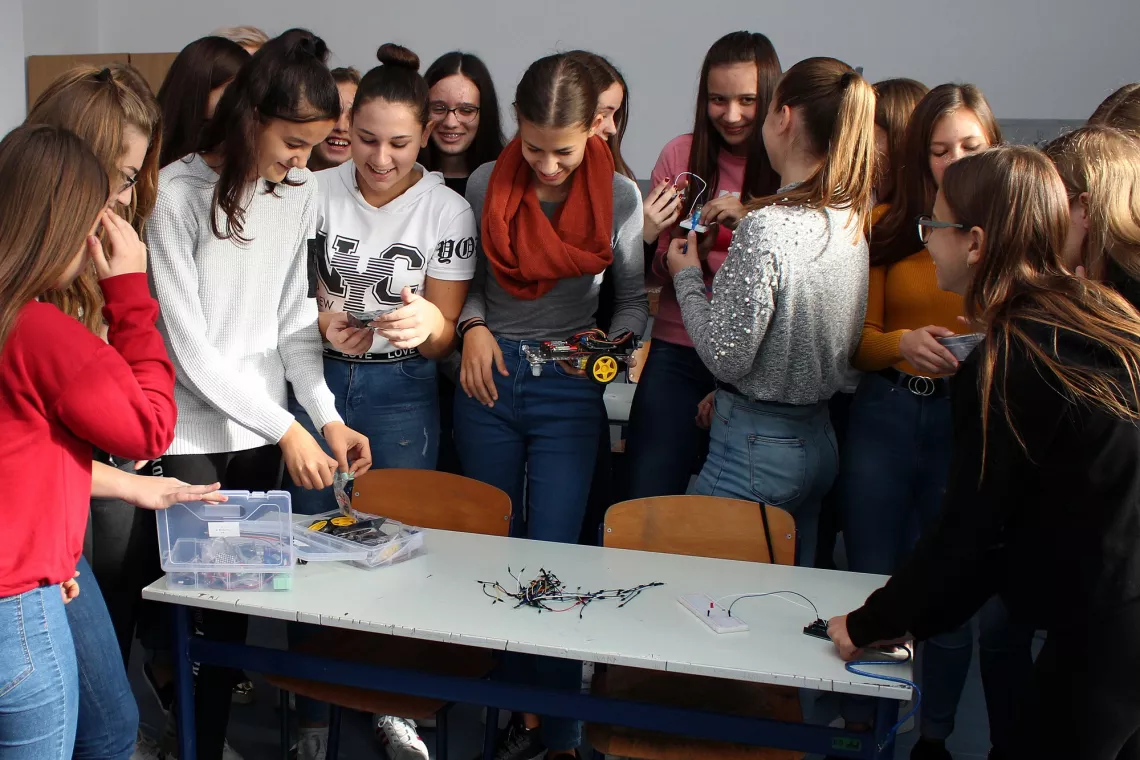
What drew her in most was the way the workshops connected technology with subjects she already cared about, environmental protection, recycling and sustainability. That connection made technology feel less abstract and more understandable, useful and real.
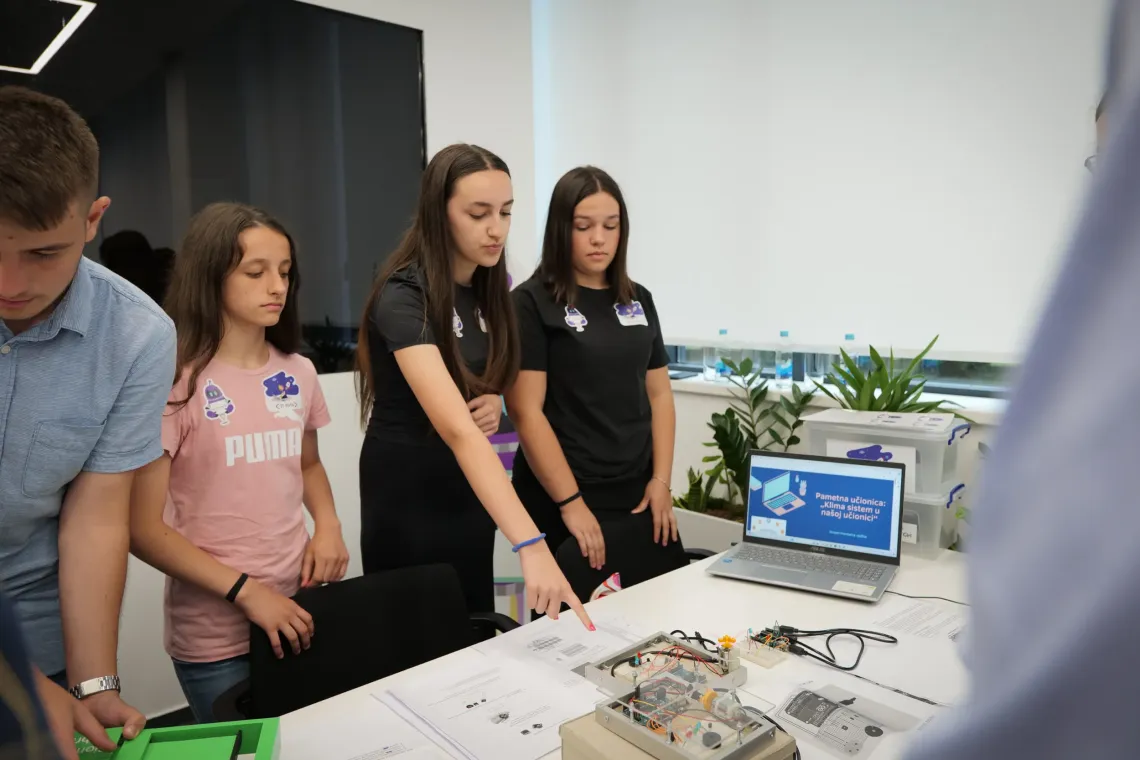
After those first workshops, an opportunity came up to apply for a summer school focused on smart cities. Even though she did not yet fully understand what that meant, she knew that IT Girls made her feel motivated, encouraged and curious.
“It makes no sense at all to compare IT Girls activities with the computer classes I had in primary school. There, I was learning theory I did not understand and making PowerPoint presentations. Neither I nor my friends were interested. For me, IT Girls workshops were a completely new world where technology was interesting, and where the trainers were so enthusiastic and gave us so much support that we could truly understand and learn.”
Why early experiences matter
Sajra’s story also raises a broader question: how early girls and boys, based on their experiences at school, begin to believe that something “is not for them”. That is why opportunities that come at the right time matter so much, because they can change not only what a child learns, but also how they see themselves, their interests and what they may one day become.
“If you have a bad experience with a subject in primary school, it is natural to distance yourself from it and think it is not for you. For me, that meant an outdated curriculum and teachers who were sometimes disengaged. My friends and I thought computer science was simply boring; beyond definitions, we had no real idea what it actually was.”
Through IT Girls, Sajra realised that technology could be creative, useful and connected to real life. That experience came early enough to influence her decision to choose an IT track in secondary school.
More than learning about technology
For Sajra, IT Girls was never just a place to learn about technology. It was also a space where confidence, voice, friendships and a sense of belonging were built.
“That is where I made friends I later worked with. In my life, IT Girls is not only connected to technology; in many ways it is even more connected to my personal development and the soft skills I built there. That is where I had my first public speaking moments, my first stumbles on television, my first moments of confusion on stage, my first improvisations while presenting projects and all of that happened quite early, when I was around 14.”
As she says, those early experiences became an important foundation for what she does today, from leading a team at Nix.ba to advocating publicly for digital education and for the greater inclusion of girls in STEM.
Girls who speak up, shape change and inspire
Among the experiences she speaks about most warmly is the year she spent as the representative of Bosnia and Herzegovina in UNICEF’s Global Girl Leaders Advisory Group, a space where girls from different parts of the world share experiences, learn from one another and reflect together on how to change the communities in which they are growing up.
“I met girls from all over the world who shared the same or a similar purpose. We all come from different parts of the world, we have different challenges and different methods, but we all came there with one goal: to help. I learned so much from those incredible girls.”
Today, although her professional path is strongly linked to technology and entrepreneurship, Sajra still looks for ways to stay connected to initiatives that open new possibilities for girls.
“My interests fall into two categories. One is technology and innovation, and the other is something I discovered along the way, giving back to my community. Working with UNICEF represents something very close to my heart. I always say that if I can help even one girl or boy, then all of this has been worth it.”
“To any girl who is hesitating, I would say: try. Not all of us have to be interested in the same things, but you do not know until you try. Be brave, not only when it comes to this programme, but with anything that interests you.”
One opportunity can change the course
“Without the IT Girls programme, I would never have discovered how exciting STEM can be, and I would certainly not be studying what I study today. If the young women who led IT Girls at the time had not brought such energy, commitment and a genuine desire for every girl to feel that she belonged, none of this would have been possible. I am deeply grateful to them.”
Support from partners such as NELT has enabled UNICEF to sustain IT Girls activities precisely in the years when girls are making their first important decisions about what interests them, where they belong and which path they want to follow.
Sajra’s story is one of many that shows what can happen when girls are given the opportunity to approach technology without fear or prejudice. In the past year alone, UNICEF Bosnia and Herzegovina, through activities such as “Tinkering with e-waste”, engaged 35 teachers from 24 schools, while related social media content reached nearly 10,000 users. Yet the most important result cannot be measured in numbers alone. It can be seen in growing confidence, in choices that begin to feel possible, and in the paths that girls like Sajra continue to forge, both for themselves and for those who come after them.