From Curiosity to Confidence: How the IT Girls Club Is Expanding Horizons for Students and Teachers
Space for exploration and confidence
- Bosanski/Hrvatski/Srpski
- English
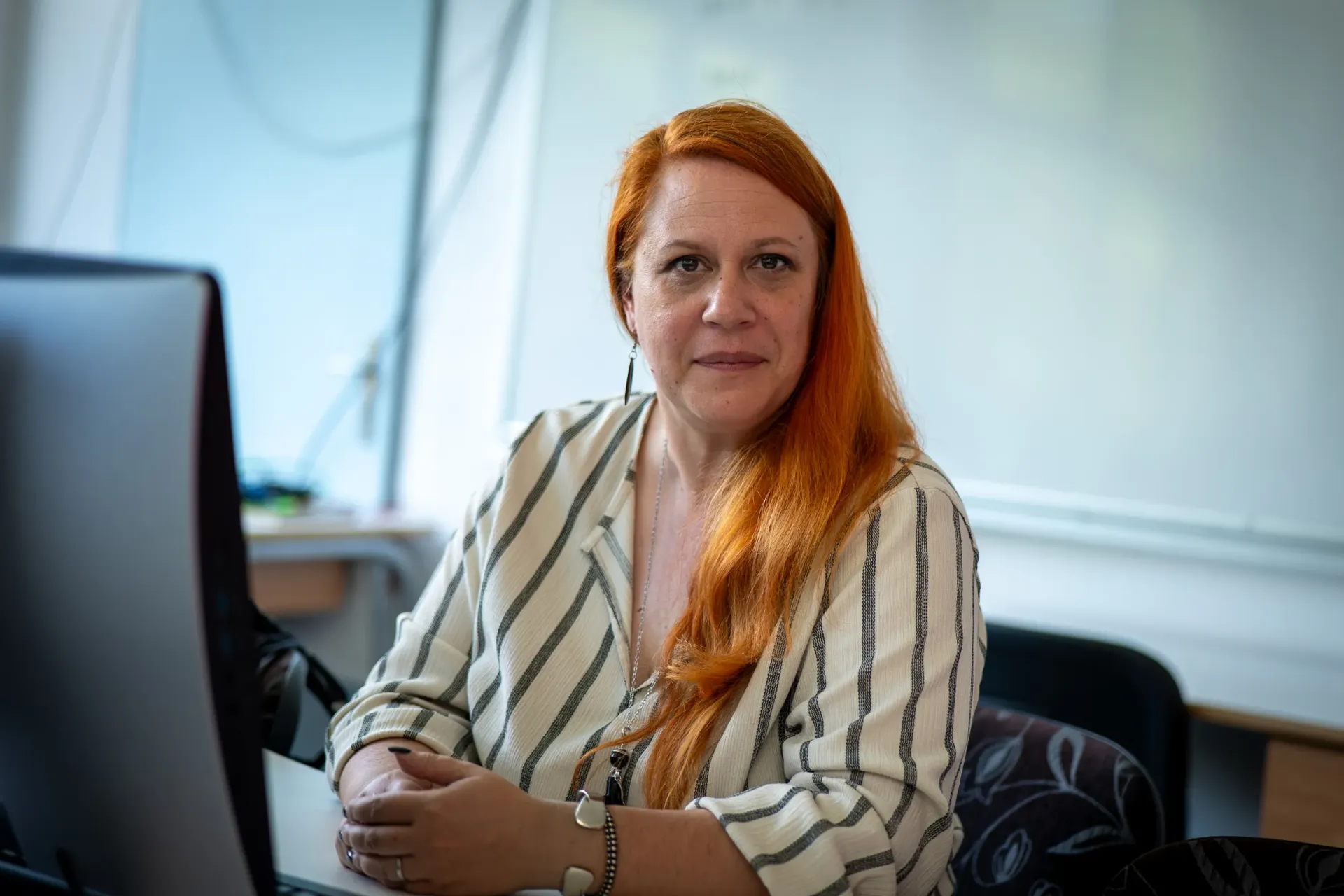
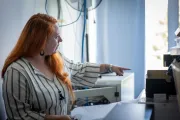
When she responded to the call for IT Girls training four years ago, Professor Nina Šmecelj did not expect that this step would take her far beyond the classroom and beyond what she then considered her comfort zone. Today, as the leader of the IT Girls Club at the Second Gymnasium in Sarajevo, she speaks about learning, courage and discoveries that are transforming both teachers and students.
She joined the training together with two colleagues, drawn by an approach that combined technology, creativity and practical work. Although she came from a software background, encountering something new gave her even greater motivation to take part.
By the following school year, the IT Girls Club had already started its work at the school. Support from the school management was there from the beginning, and the school also invested additional resources in equipment, recognising the programme as an opportunity for students to learn in new and different ways.
Space for exploration and confidence
In a school that already offers a mathematics and information technology track, the IT Girls Club brought something more: a space for exploration, experimentation and public presentation of what students can create.
The greatest value of these activities lies in the fact that children step outside the boundaries of standard classroom learning, present their projects, discover the work of others and learn through those experiences.
Through innovation fairs, competitions and presentations, students do not only develop technical skills. They also learn how to present an idea, stand behind their work and find new inspiration in the achievements of others.
Among the girls who discovered a new direction for themselves through the club, some later continued into robotics, electrical engineering and information technologies. One of them became a member of the Bosnia and Herzegovina Olympic robotics team and went on to compete in Singapore.
When e-waste becomes a learning tool
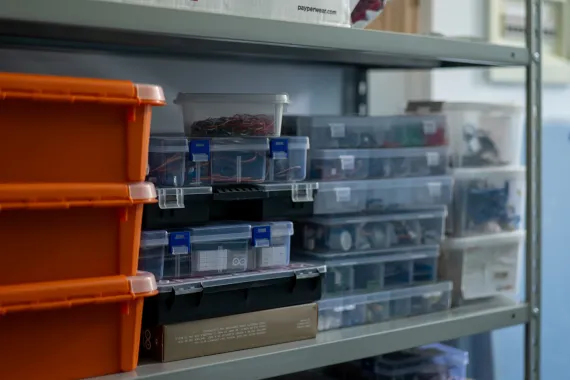
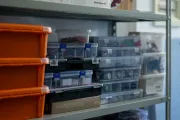
One particularly interesting area of work was e-waste. Through the “Tinkering with e-waste” initiative, launched by UNICEF with the support of Nelt, discarded electronics were given new value as material for learning, exploration and creation.
In this work, the school also used old remote controls as a practical solution for activities based on infrared technology, showing how discarded devices can become valuable tools for learning.
This approach quickly sparked students’ interest. What once might have ended up as waste became part of school projects, and old electronics became a new way to learn.
The biggest challenge: time for extracurricular activities
The biggest challenge remains time, as all activities take place outside the regular timetable.
Larger projects are most often developed during the winter break, when students are free from regular classes and other obligations. During this time, they work in a more relaxed atmosphere of collaboration and shared discovery, while she is there primarily to provide support whenever it is needed.
From software to practical skills
Perhaps the most important transformation was the one that happened to the teacher herself.
Before joining IT Girls, she had almost no practical experience with hardware. Through her work in the club, however, she gradually deepened her understanding of electronics, physics and the practical application of technology.
"I also learned how to solder, something I had never known how to do before."
For her, this reflects one of the programme’s most important values: learning does not move in only one direction. While students build skills and confidence, teachers also expand their own horizons.
She is especially proud that she was learning alongside her students, while also opening a space for girls to engage in practical work and discover new interests.

A message for other schools
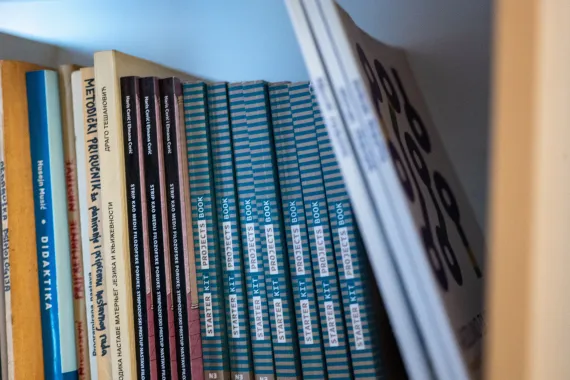
"It is important that we, too, keep learning alongside children. As long as we keep learning, we can offer them something new. When we stop learning, we stop developing. That is why initiatives like this should outlive individual projects."
For her, it is essential that initiatives like this do not remain isolated projects, but become part of the system and of the school’s regular work. For long-term sustainability, she says, it is important that such programmes are recognised as part of teachers’ regular responsibilities and of the wider school system.
Throughout this journey, she says, the support of the school and its openness to new ideas have been decisive.
"The support of the school management was especially important at the beginning. The school’s openness to new projects and ideas was essential for the club’s development. For me, it is invaluable to learn something new and then pass it on, because knowledge gains its fullest value when it is shared."
Looking ahead
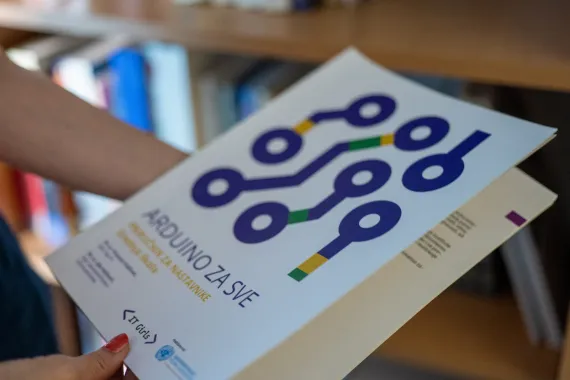
Four years after first picking up an Arduino, Professor Nina now leads a club that brings together students ready to explore, programme and create. For some, it is the first step towards future studies and careers. For all of them, it is a space where they learn to believe in themselves and discover how much they are capable of.
This is the broader value of the story: not only in the knowledge that is shared, but in the opportunities that are created. When children are supported to explore, ask questions and learn through experience, their confidence, curiosity and sense of possibility grow. These are the environments that help children and young people develop the skills, trust and aspirations they need to fulfil their full potential.