UNESCO, UNICEF and ITU launch landmark Charter for Public Digital Learning Platforms
On the International Day for Digital Learning, the Charter offers a clarion call to extend public education to digital and online environments

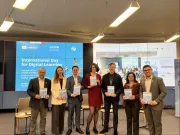
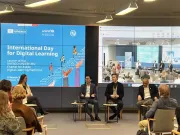
Today in Helsinki, Finland, UNESCO, UNICEF and the International Telecommunication Union (ITU) launched the Charter for Public Digital Learning Platforms – a roadmap to help uphold and expand the right to education, position digital learning platforms as a public good, and strengthen inclusion, equity and resilience in education systems.
Issued on the International Day for Digital Learning, the landmark Charter provides a framework to help governments design, build and govern public digital learning platforms that put teachers’ and learners’ needs first.
The Charter arrives at a decisive moment for digital learning. Around the world, hundreds of millions of children and young people are still not achieving minimum learning levels. Without coordinated and sustained support, they risk exclusion from the digital systems – and the lifelong learning opportunities they enable – that increasingly underpin modern education.
Despite this growing digital divide and global learning crisis, education funding is declining. According to UNICEF, Education funding faces a US$3.2 billion decline by 2026, placing millions of children’s futures at risk.
At the same time, the rapid expansion of artificial intelligence (AI), generative chatbots – alongside a proliferation of EdTech tools, many of which sit behind paywalls – is profoundly reshaping how teachers teach, how children learn, and how today’s children are prepared for the future. Without urgent, principled action, the digital transformation of education risks fragmenting public systems and deepening inequality rather than strengthening resilience and inclusion.
A new vision for digital education
Helsinki has emerged as an important hub in digital education worldwide. The Government of Finland is a key supporter of UNICEF’s Global Learning Innovation Hub, anchored in the organization’s Centre of Excellence for Education. UNICEF is working with strategic partners to tap the power of AI and other digital education innovations to transform how education is delivered in the 21st century.
“This Charter is our collective commitment to ensure that the digital world becomes an extension of the education system, not a replacement for it,” said UNICEF’s Global Director of Education Pia Rebello Britto. “Delivered responsibly as a public good, AI and other EdTech solutions offer a unique opportunity to connect private-sector innovation with public sector policies, safeguards and systems to provide teachers with the training, tools and resources they need to deliver on our promise quality education for all.”
“In today’s screen-based age, education needs to meet students where they are – and, increasingly, that’s online. The Charter clarifies that digital learning platforms are core education infrastructure. UNESCO is pleased to provide a positive vision for digital learning platforms in partnership with our sister UN agencies,” said Stefania Giannini, UNESCO’s Assistant Director-General for Education.
Building on its work through Giga to connect every school to the internet, ITU recognizes that digital education requires more than connectivity - it requires strong and secure digital foundations. As the UN specialized agency for digital technologies, ITU supports countries in strengthening capacity and advancing interoperable and secure building blocks for the digital transformation of education, ensuring their integration into national systems.
"Learning is increasingly happening online, and our public education systems need to keep pace," said ITU Secretary-General Doreen Bogdan-Martin. "That means building digital foundations that are safe, interoperable, and designed to protect learners. ITU is ready to support countries in transforming the principles of this Charter into inclusive, secure and trusted digital education platforms that leave no learner behind."
Beyond digital as usual
The Charter opens with a striking diagnosis: in far too many countries, public education effectively stops where digital platforms begin. While some countries build and sustain polished, well-resourced educational platforms – and teachers often receive the training, support and resources they need to adapt these platforms into the classroom – hundreds of millions of learners live in communities that are not served by any public digital learning platforms or are confronted with platforms that are poorly maintained, unreliable, unsafe, and difficult to navigate and use.
Fortunately, a growing number of governments are recognizing that in today’s digital and AI age, the public purposes of education should be supported in digital environments in ways that empower teachers and improve learning for all children. The private sector also plays a critical role in providing technology that can improve the quality, reach and impact of education. While at the same time, countries need strong safeguards to protect children and ensure that digital learning tools are safe, reliable and work effectively within public education systems that reach all learners.
Seven principles for the digital schools of the future
The Charter – refined with inputs from member countries of the UNESCO-UNICEF Gateways to Public Digital Learning Initiative and international experts – sets out seven broad principles that all public digital learning platforms should strive to reflect:
- Public – Platforms should be governed, financed and controlled by public authorities, with data sovereignty firmly in national hands.
- Inclusive – Platforms must widen opportunities for all, with multilingual support, accessibility for learners with disabilities and designs that work on low-cost devices with limited connectivity.
- Pedagogical – Platforms should be teacher-led, pedagogically diverse and balance guided learning with independent exploration.
- Complementary – Platforms should reinforce, not replace, in-person schools and teachers, and be embedded within national education policy frameworks and digital infrastructure.
- Open – Platforms should be built on open standards, licensed for reuse and designed for interoperability across education systems and with wider digital public infrastructure.
- Focused – Development should start small, be guided by educational needs rather than technological novelty, and build iteratively based on evidence.
- Trustworthy – Platforms must be accurate, reliable, age-appropriate and responsible stewards of sensitive learner data – with AI tools governed transparently and kept tightly focused on educational purposes.