Prevention of gender-based violence
What is the relationship between gender-based violence and violence affecting children and adolescents? The Mídete campaign seeks to understand the cultural roots of these problems, their impacts and consequences

- Español
- English
An analysis that brings us closer to the intersections between gender-based violence and violence against children and adolescents implies understanding the fundamental causes and manifestations of each of these intimately related social problems, whose implications are expressed in both directions.
There is no doubt, and it has been internationally recognized, that both forms of violence not only intersect with each other, but also with other forms of discrimination such as based on ethnicity, class, geographic area of residence, among others.
Both gender-based violence and child abuse share essential common elements among their causes, manifestations, consequences, risk and protective factors, and also show that their victims are exposed to multiple forms of abuse that cannot be addressed in isolation if we aspire to address these problems comprehensively.
Unfortunately, the care, research and prevention of both are often carried out along parallel paths, without points of convergence that would facilitate intervention that is more effective. This is why the available data and results generate a partial approximation to reality.

Analyses on the subject identify six areas of intersection:
1) Violence against women and violence against children and adolescents share risk factors.
In Cuba, as at the international level, risk factors for the exercise and reproduction of violence against women and violence against children and adolescents are shared in almost all aspects that make them possible. Violence against women increases the possibilities of violence against children, and experiences of violence against children and adolescents can increase the acceptance, perpetration or experimentation of violent relationships.
2) Social norms often support these forms of violence and discourage help-seeking.
When analyzing the Cuban case in relation to the social norms that intercept both types of violence, it is possible to affirm the congruence between reality and the numerous results of international studies. In general, studies in the country show that violent cultural patterns are tools given to boys and girls from birth, sometimes unconsciously.
3) Child maltreatment and intimate partner violence often coexist in the same household.
There are many and diverse scientific studies on the consequences of gender-based violence and, in general, on the repercussions of violence against women in the domestic environment, but there are still few that address the effects of this violence on the children of female victims, despite the specialized recognition that children are also victims of the abuse of their mothers.
4) Both violence against women and violence against children and adolescents can have intergenerational effects.
Both violence against women and violence against children have intergenerational effects, and violence against women often has negative consequences for children. In this sense, the intergenerational effects of violence against women and violence against children and adolescents have been widely documented and are quite similar in Cuba.
5) Many forms of violence against women and violence against children and adolescents have common and mutually exacerbating consequences across the course of life.
Children who live with gender-based violence in their homes frequently receive different forms of direct mistreatment, but it cannot be ignored that exposure to gender-based violence as witnesses has negative effects on children, regardless of their age.
These consequences range from the physical level (with alterations in sleep or nutrition, for example) to the emotional level (anxiety, anger, depression or low self-esteem), the cognitive level (effects on school performance, for example) or in behavior (with aggressiveness, criminal episodes or consumption of toxic substances). They should therefore be considered victims.
6) Violence against women and violence against children and adolescents often intersect with adolescence, a period of greater vulnerability to certain types of violence.
The Cuban studies confirm the international trend related to adolescence as the period of greatest vulnerability to certain types of violence, especially sexual violence. A specific connection found in adolescence is the link between gender-based violence and sexual abuse. However, this is an area little explored by research in all related sciences.

The analysis of these interconnections can be much more complex if we consider other variables and disaggregate the data by skin color, age, and geographic area, among other factors, typical of the logic of the intersectional gender perspective.
In this sense, the situation of rural and peripheral areas that have less visibility shows the existence of pacts of silence and deep-rooted cultural mandates that reinforce the existence of links between the two above-mentioned forms of violence.
Significant steps are being taken in Cuba that can contribute to closing the gaps that interrelate violence against women and violence against children and adolescents, as well as to improving the protection of children in the country:
- The adoption in 2019 of a new Constitution endorsing the protection of children in the country.
- The approval of the National Program for the Advancement of Women (PAM) in October 2020.
- The approval by the Council of Ministers of the “Comprehensive strategy for the prevention of and attention to gender-based violence and violence in the family setting”.
- The approval of the new Family Code, which recognizes and endorses the postulates of the Convention on the Rights of the Child, redefining the role of children as active subjects in the sphere of parental relations and in the autonomous exercise of their rights.
Publications about Prevention of gender-based violence
Multimedia


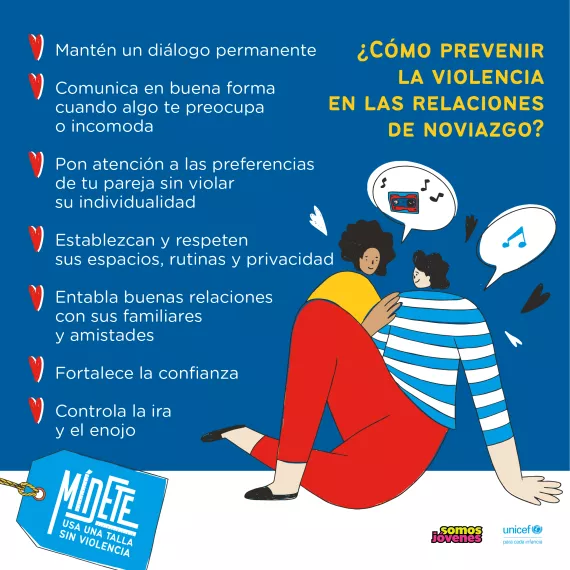


Prevention of gender-based violence on Social Media