World Obesity Day: "Let's Change the Story of Obesity"
CIPH and UNICEF presented guidelines for reporting and public communication with the aim of destigmatizing and preventing obesity in children

- Hrvatski
- English
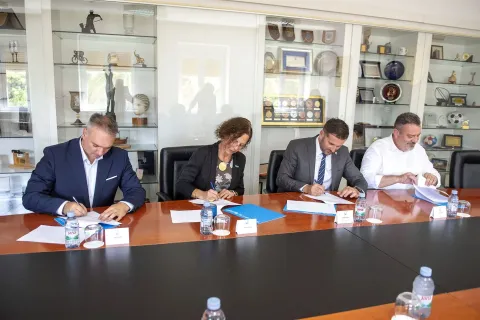
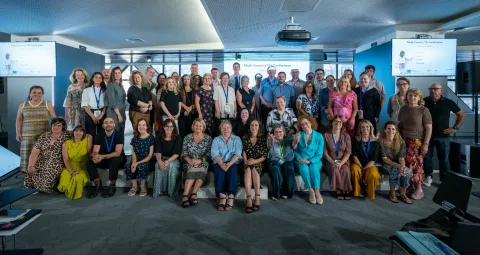
Zagreb, March 4, 2026 – On the occasion of World Obesity Day, which is marked with the message "Together we can change the story of obesity", the Croatian Institute of Public Health and UNICEF presented the Guidelines for Media Reporting and Public Communication on Children's Health and Obesity in Children – "Child First".
Every third child of primary school age in Croatia lives with overweight or obesity, which puts Croatia in fourth place in Europe. Obesity in children is a complex public health problem, and it threatens the physical health and psychosocial development of children, with possible long-term consequences in adulthood. The trend of increasing the incidence of obesity in children is present on a global level, and research shows that obesity in children is contributed by numerous factors, such as genetics, social and economic conditions, lifestyle, changes in the environment in which children grow up, and exposure to the marketing of nutritionally poor and calorie-rich foods.
However, in public space, obesity is still often talked about in a simplified way - the causes of obesity, as well as solutions for obesity, are mostly attributed to the responsibility of parents and children. Such communication contributes to the stigmatization of children with obesity and can lead to serious consequences for the mental and physical health of children - impair self-esteem, increase the risk of depression, anxiety and the development of eating disorders, and lead to withdrawal from physical and social activities.
Children's health must always be a social priority and that is why it is an important part of public communication. Through responsible public communication and reporting, the media, experts and other stakeholders can significantly contribute to the prevention of obesity in children, which includes communication about obesity as a disease influenced by numerous factors.
The purpose of the "Child First" Guidelines is to promote public communication that contributes to the understanding of the causes of obesity and the search for solutions, and above all takes care of the health, well-being and protection of children. The guidelines offer concrete approaches and examples of terminology, audiovisual content, sources of information and questions for the preparation of media content and other forms of public communication on the topic of obesity in children and children's health in a broader sense.


The guidelines were developed as part of a wider cooperation between CIPH and UNICEF with the aim of preventing obesity in children, and prof. Barbara Kalebić Maglica from the Faculty of Humanities and Social Sciences of the University of Rijeka and Ph.D. Nensi Blažević from the Faculty of Political Science in Zagreb. With the aim of maximizing the reach of the messages of these guidelines among different audiences and age groups, the team of the FPZG Media Center will also develop a video package for social networks and use it in lectures, professional conferences and workshops.

"We continuously warn of the growing trend in the incidence of children with obesity in Croatia. Although this fact is, I believe, now widely known, it is important that, in addition to highlighting the problem, we also pay attention to the way we talk about this topic in public. Obesity is a complex disease with many causes, and its growth trend in modern society can largely be attributed to what we call an obesogenic environment, i.e. an environment that encourages obesity. By simplifying this problem or blaming individuals, we will not achieve what I believe is in everyone's interest, which is to preserve the health of our children. All of us who publicly speak out on the topic of obesity, either as experts or as media workers, have a responsibility to change the narrative about obesity and advocate for multisectoral cooperation that will improve the health of all our children", said Prof. Sanja Musić Milanović, Head of the Health Promotion Service at the Croatian Institute of Public Health and the Ministry of Health's Reference Center for Health Promotion.
"In order to make a change and reverse the negative trend, we also need to change the way we speak about obesity in children. Media and public communication can significantly help tackle this problem, but it can also deepen the problem if it is not appropriate, evidence-based and constructive. In every form of communication, the dignity, health and well-being of children must come first. We should all talk more about the complex causes of obesity and how to work together on solutions to one of the most urgent and complex public health challenges of our time," said Luisa Brumana, Head of UNICEF Office for Croatia.
---
Media contacts
ABOUT UNICEF
UNICEF promotes the rights and well-being of children in everything we do. In partnership with others, we work in some of the most challenging parts of the world to help the most vulnerable children. In more than 190 countries and territories, we work for every child, with a special focus on the most vulnerable.
Follow what we do for children and youth in Croatia and beyond on our Facebook, Instagram, X and YouTube.