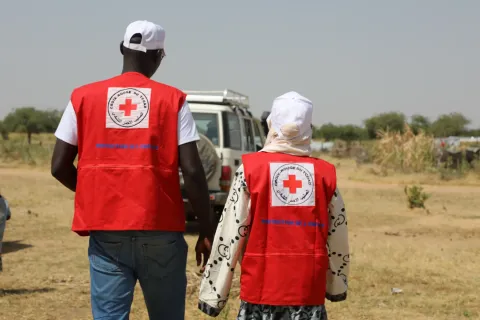
Where invisible pain finds healing
"It was an incredibly powerful moment to witness a family reunited, thanks to our efforts," says Adoum.
- English
- Français
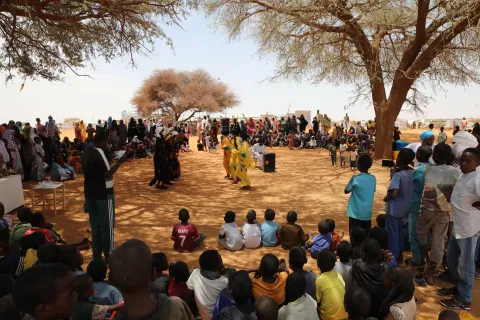
Seating on a mat among a group of children, Adoum leans forward to explain the rules of a game. The children smile, their eyes filled with trust. At the Child-Friendly Space in Farchana refugee camp, in eastern Chad, this is usually how he begins his workday, before heading into the surrounding communities where his support is equally needed.
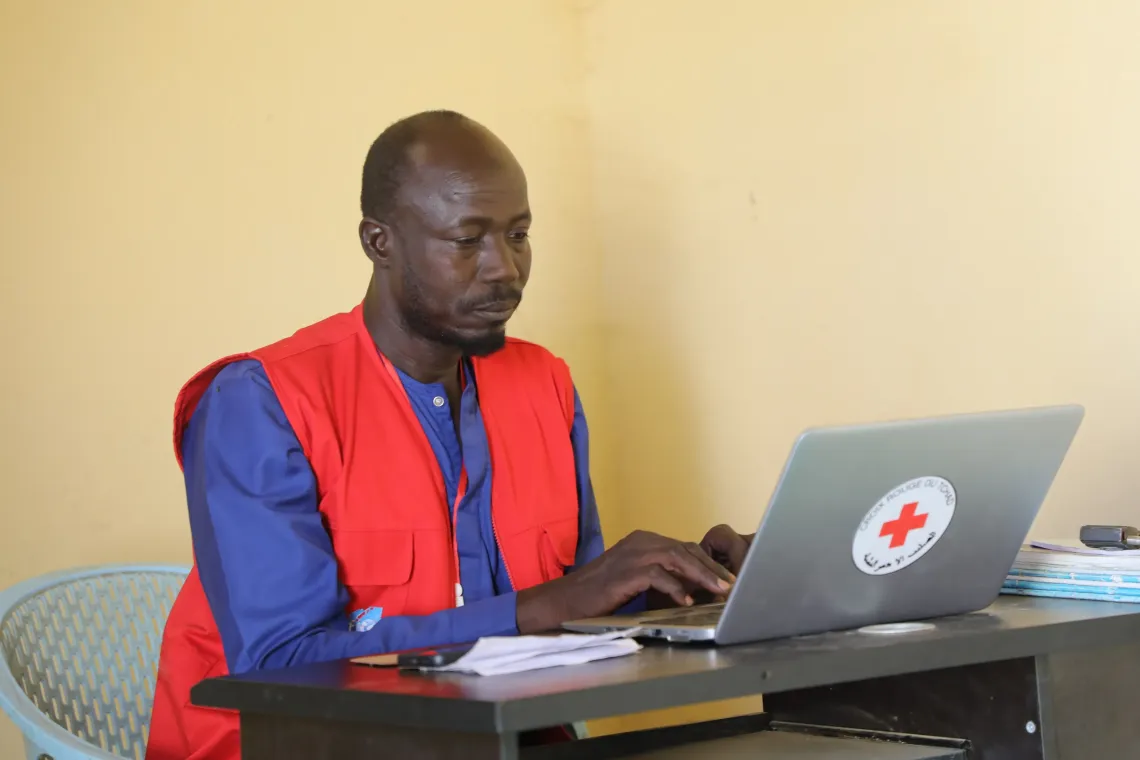
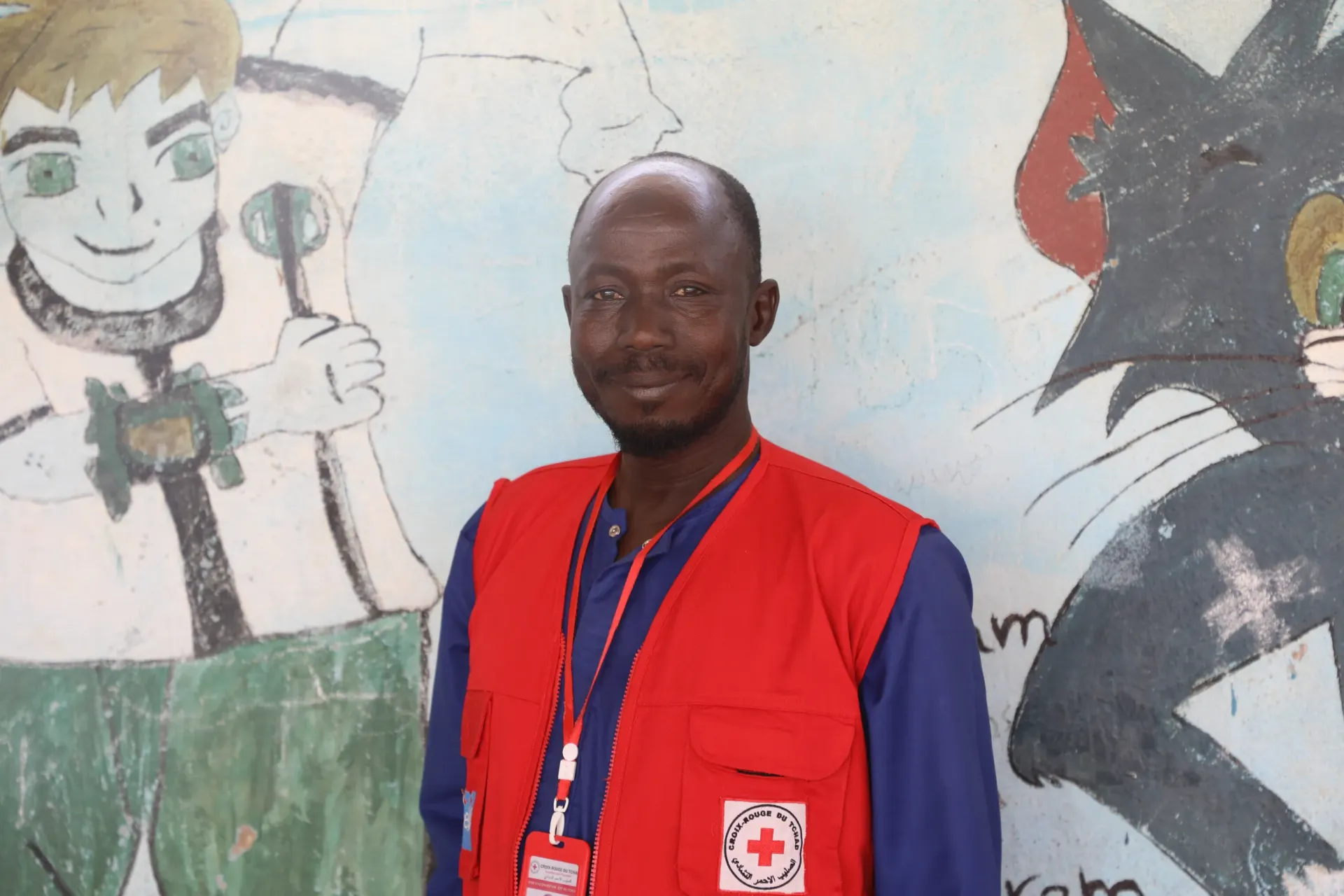
A social worker, Child Protection and Gender-Based Violence (GBV) supervisor, and Prevention of Sexual Exploitation and Abuse (PSEA) focal point at Farchana camp, Adoum is a trusted confidant and a steady source of support for many children and their families.
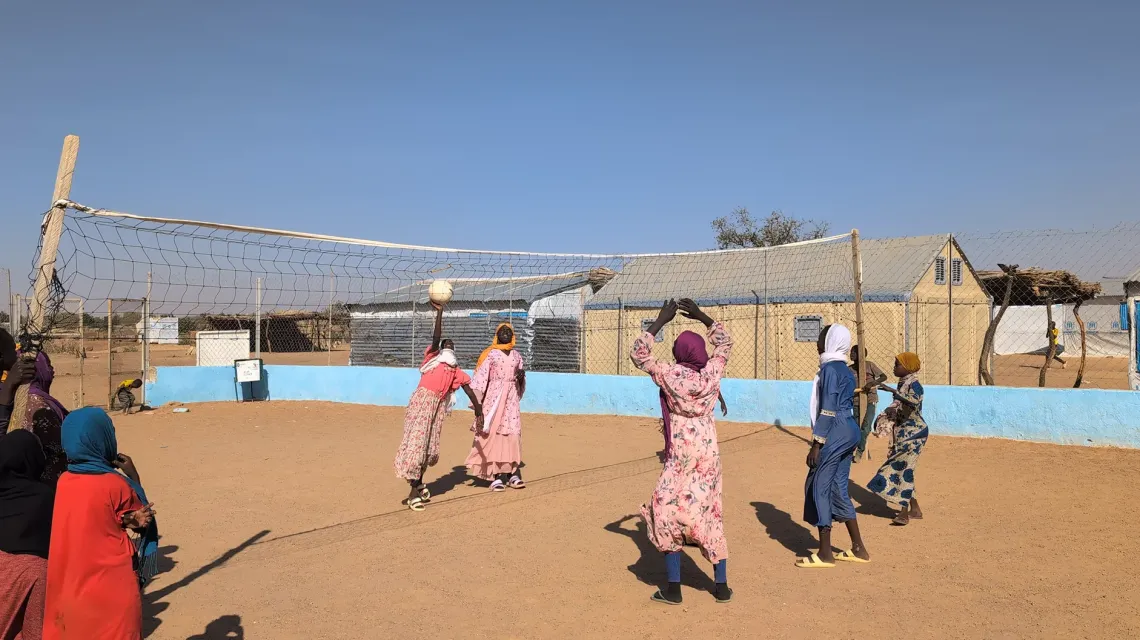
Here, everything starts with simple moments with children, drawing, impromptu volleyball matches, board games. We observe behaviors, listen carefully, and gradually identify those who may need specialized support.
Leading a team of three community volunteers, two case workers, and two facilitators, Adoum coordinates daily activities and oversees the protection and support provided to the most vulnerable children and families.
On the ground, the challenges are rarely straightforward. Cases of violence, family conflict, discrimination, and profound emotional distress are part of the realities he faces every day. Each situation requires careful assessment, empathy, swift action, and sustained commitment to ensure that those most at risk receive the protection and care they need.
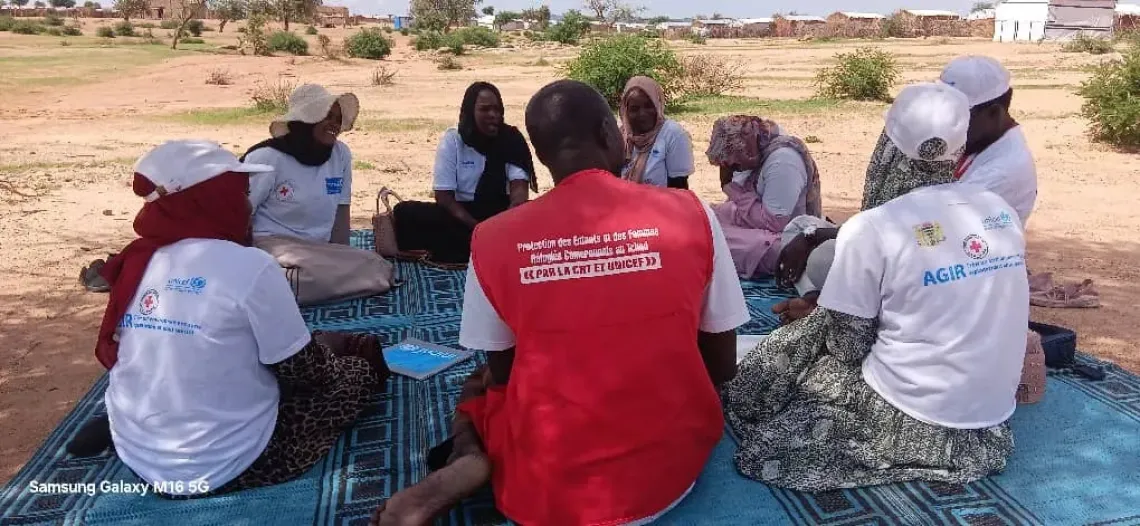
Child protection case management is guided by a structured and rigorous six-step process: identification and registration, obtaining informed consent from parents or guardians, conducting both initial and comprehensive assessments, developing and implementing an individualized care plan, ensuring regular follow-up, and, when appropriate, safely closing the case.
Yet beyond procedures and frameworks, every child’s story is different. Some are unaccompanied. Others have lost one or both parents.
Adoum recalls the case of a teenage girl who had been separated from her family due to the conflict in Sudan. For several months, he and his team provided continuous psychosocial support, careful follow-up, and coordination with partners. Their efforts eventually led to her reunification with her mother, a moment he describes deeply moving.
It was an incredibly powerful moment to witness a family reunited, thanks to our efforts.
He also remembers two children living with albinism, a case that still brings him joy today.
"They were excluded and rejected by the other children. Through sustained support, awareness-raising, and mediation within the community, everything changed. Today, they are respected, included, and fully accepted by their peers. Their mother is relieved and proud to see her children reclaim their place," he adds.
Believing that protection also means empowerment, Adoum and his team supported the establishment of girls’ clubs. These spaces allow adolescent girls to develop small income-generating activities while strengthening their confidence and reducing their exposure to violence and abuse.
In December 2025, in Farchana refugee camp and its surrounding extensions, 973 children including 457 boys and 516 girls received psychosocial support. 17 children also benefited from individual case management and specialized assistance.
Behind these figures are transformed lives, children and families regaining hope, safety, and dignity.
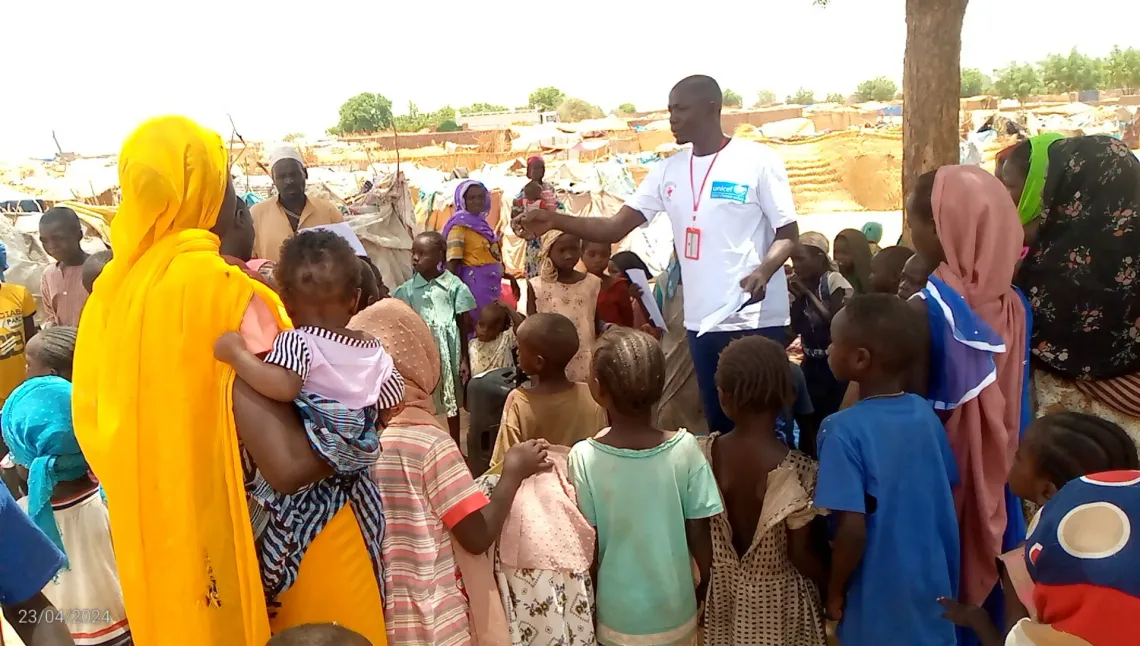
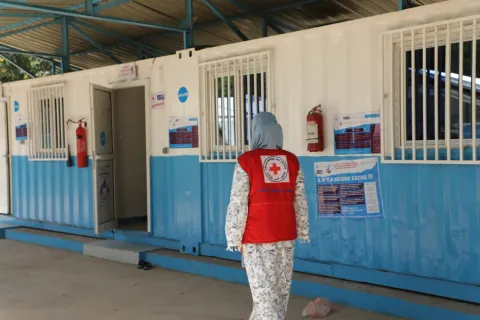
The community-based initiatives implemented in Farchana, as well as in several other refugee camps across eastern Chad, are part of a broader and sustained partnership aimed at strengthening child protection systems. The initiative is implemented by UNICEF and its partners, including the Chadian Red Cross, in support of the Provincial Delegation for Women and Early Childhood, and with financial support from the European Union’s Humanitarian Aid, the German Cooperation, and the Swedish International Development Cooperation Agency.
Through the dedication of Adoum and his team, one message stands out clearly: in a context marked by the continued arrival of refugee populations, protecting children is not a short-term response but a long-term commitment. It requires sustained investment to restore dignity, rebuild trust, strengthen resilience, and help lay the foundations for a safer and more hopeful future for every child.