In the Dougui refugee camp, listening heals hearts
Psychosocial support — a vital pillar for refugee families affected by cholera in eastern Chad

- English
- Français
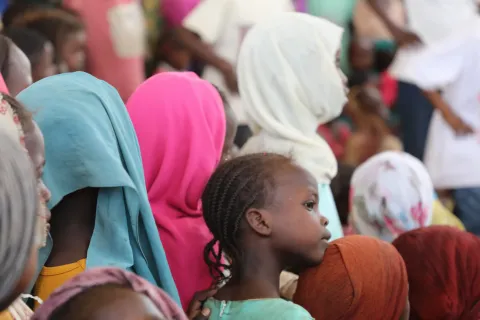
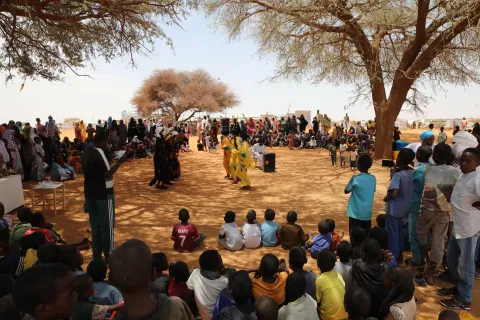
The sun nears its zenith, and the heat blankets the Dougui refugee camp in Ouaddaï province, eastern Chad. Located a few hundred kilometers from the Sudanese border, the camp is home to nearly 20,000 Sudanese refugees who fled the armed conflict in Sudan. Since July 2025, a cholera outbreak has struck eastern Chad, severely affecting communities already weakened by displacement and hardship.
As part of the cholera response efforts, UNICEF, in partnership with the Chadian Red Cross, is strengthening psychosocial support in the Dougui camp — because it is essential to try to heal the invisible wounds left by illness and loss.
As the heat slowly rises over the Dougui camp, Chadian Red Cross volunteers are already at work. It’s visiting day. By mid-morning, teams make their way through the sandy alleys of the camp to meet the families they regularly support.
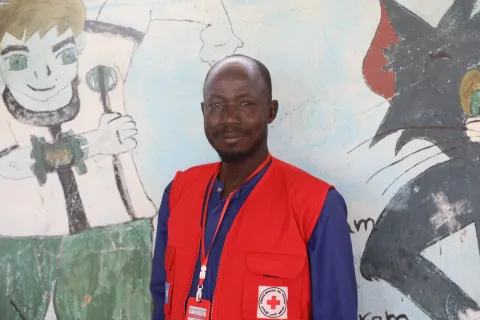
Issa Mahamat Issa, a child protection caseworker, and Zara Yasmine Adoum Ali, a caseworker specializing in gender-based violence, walk slowly under the sun. Notebook in hand, they go from home to home, checking in on families, talking with adults, and listening to children. For the past three months, Issa has been working in the camp to support children and families affected by the disease. He and his team provide psychosocial support to children in distress or suffering from trauma related to the epidemic.

“We help children manage their emotions, maintain their motivation and resilience in the face of daily challenges. A healthy emotional balance also helps families to better listen to, understand, and support vulnerable children,”
he explains. These sessions, sometimes held twice a week in family homes, help rebuild trust and reduce stigma. Issa recalls the case of a widowed mother who lost her husband to cholera.
“She now lives with her five children under her father-in-law’s roof. We initiated the process for their school enrollment and provided them with kits containing mats, bedding, and toys. This helps the children feel calmer and more comfortable.”
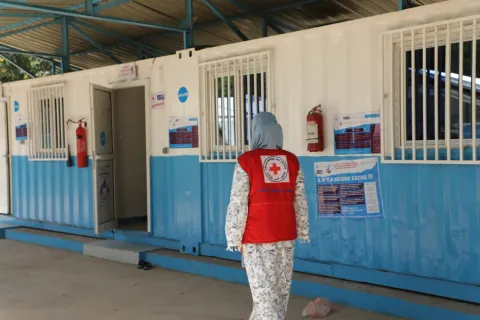
Beside him, Zara Yasmine Adoum Ali has been working in the Dougui camp for a month. Her commitment runs just as deep. For Zara, psychosocial support is first and foremost about “healing children’s hearts and minds.” She explains:

We help children overcome the emotional, social, and psychological challenges they experience because of cholera. This includes both children who were sick and those separated from their families. Sometimes, we also work with parents to help them better support their children.
Her work regularly takes her into family homes.
“We visit twice a week. Families welcome us warmly because we’ve built a relationship of trust.”
Zara recalls a mother of three who recovered from cholera.
“During her hospitalization, her children were alone at home, helped only by a few neighbors. After her recovery, some people still refused to speak to her out of fear of the disease. We supported her to help her reintegrate and restore her dignity.”


In the Dougui camp, these interventions bring hope back to families who have lost everything. Beyond physical care, they aim to heal the invisible wounds left by illness, loss, and fear.
In response to the cholera outbreak in Chad, UNICEF — with financial support from its flexible humanitarian fund, the Central Emergency Response Fund (CERF), the Government of Sweden, and the European Union’s Humanitarian Aid — is supporting the Chadian government and its partners in preventing and responding effectively to the crisis.
This support includes the distribution of treatment kits, the provision of disinfection equipment, and the rehabilitation of water, hygiene, and sanitation facilities. In parallel, UNICEF is working with the Chad Red Cross to strengthen psychosocial support, child protection, and community awareness efforts, particularly in refugee camps like Dougui.
Beyond the health response, this commitment aims to safeguard the mental health and well-being of affected populations — especially children. Because saving lives also means restoring hope — the courage to dream, to smile, and to rebuild.