Social workers, driving hope and protection at the heart of the humanitarian response.
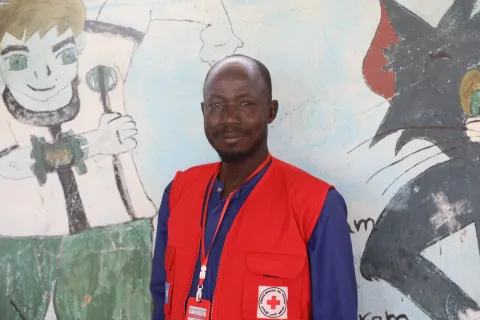
“Each survivor carries a unique and painful story” shares Zeynab, a social worker at the Integrated Multisectoral Services Centre (CISM) in Adre

- English
- Français
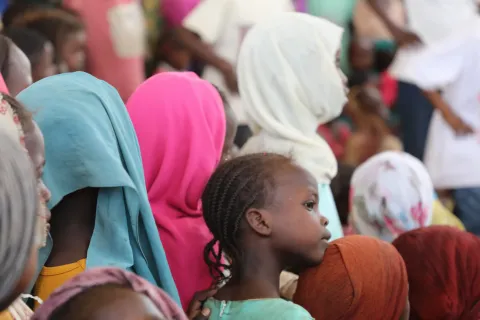
The stories change, and so do the faces, but violence remains the common thread running through them all. Mostly distressed women, children and adolescents with eyes far too heavy for their age, all of them seek a safe space to speak, be heard, and receive support that will help them regain a sense of safety and protection.
Every morning, Zeynab (a pseudonym) arrives at the Integrated Multisectoral Services Centre (CISM), ready to guide, listen to, and support those who cross this doorway of hope.
Since September 2024, this social worker has become a reassuring presence for many refugee women and girls, often the first person to truly listen to them since they fled from Sudan. “Here, every day is different. Each survivor carries a unique and deeply painful story” Zeynab shares.
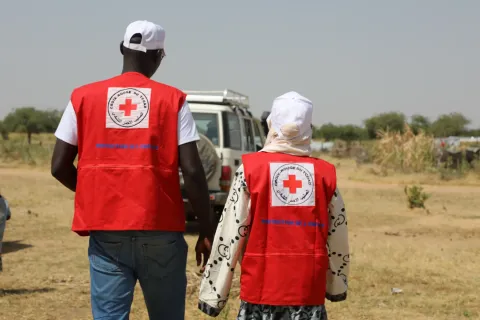
Located within Adré Hospital, in the border town near Sudan, the CISM has become a vital lifeline for the people in Adré , especially for those exposed to or recovering from gender-based violence and other forms of trauma. It was established by the Chadian government with support from UNICEF, the Chadian Red Cross, and several other United Nations agencies, thanks to funding from the Swedish Cooperation and UNICEF.


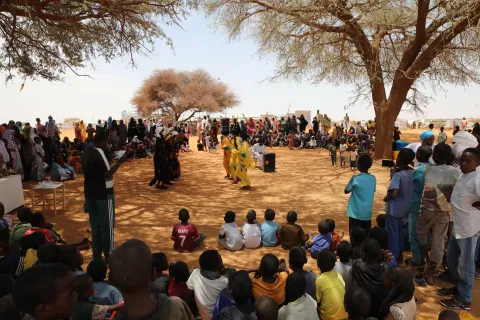
Zeynab’s mission does not end at the doors of the CISM. She frequently travels across the town of Adre, the refugee site, and surrounding areas. Everywhere she goes, she raises awareness among communities about the prevention and management of gender-based violence, menstrual hygiene, the existence of the CISM and the services it provides, as well as the risks linked to the cholera outbreak affecting Chad since August 2025. Her work also relies on local community leaders, who help relay prevention messages, guide survivors to the Centre, and contribute to breaking the silence around gender-based violence.
In the same way, 12 youth clubs composed of both girls and boys have been trained to engage in awareness-raising activities within their communities, becoming key players in preventing violence and encouraging mutual support among peers.
However, above all, Zeynab embodies active listening and dialogue. Behind every testimony she gathers lies a wound to soothe and a hope to rekindle. When people are referred to the CISM, she welcomes them with compassion, takes the time to listen, and engages in an empathetic dialogue to better understand their needs. Is it a need for dialogue, psychological support, medical care, or the initiation of legal proceedings? It is her role to determine the appropriate course of action. Severe trauma cases are referred to the WHO team onsite for specialized mental-health care and clinical follow-up.
Many women arrive at the CISM deeply scarred, having experienced violence during their flight from Sudan. Since the Centre opened, 180 cases have been recorded, including 81 cases of rape, 15 of which involved minors, as well as numerous physical assaults, sexual violence, female genital mutilation, and psychological abuse. Adolescent girls and young women are particularly vulnerable when collecting firewood or working in the fields. “They often report harassment, threats, and sometimes rape,” Zeynab explains.
The stories that affected me the most were those of a four-year-old orphan who survived rape, and a young woman held captive and raped for 25 days by armed men. She became pregnant, and we supported her throughout the delivery. It was extremely difficult to handle. Can you imagine?
The strength and success of the CISM lie in its very structure. It brings together multiple organizations with complementary expertise, enabling a truly comprehensive response for beneficiaries. Medical services, psychosocial support, legal assistance, socio-economic and educational reintegration, and safe spaces for women and adolescents all work together to provide coordinated, holistic support accompanying survivors at every step of their recovery.
Because economic vulnerability amplifies exposure to violence, the Centre also supports women through a cash-assistance mechanism. Nearly 100 beneficiaries have already received between 50,000 and 60,000 CFA francs (USD 88 to 107) each to start income-generating activities, a first step toward autonomy and restored dignity. Today, some run small businesses selling basic goods, while others have begun working in sewing and textiles.

Working as a social worker in such a fragile context is not without risks.
“Sometimes, relatives of perpetrators come to threaten me or accuse me of taking sides with survivors. It is intimidating, but I always take the time to explain my role. Through dialogue, the tension eventually eases,” Zeynab says.
Zeynab knows she cannot change everything. But every time a survivor regains confidence and finds the strength to rebuild their life, it is a victory for her, and it is exactly where her mission finds its deepest meaning.