In Koukou Angarana, Aicha registers her newborn through the Tasdjil system
In Koukou Angarana, Aicha registers her baby during her first outing after birth through the Tasdjil system

- English
- Français
On a sunny morning at the Koukou Angarana District Hospital, in the Sila province of eastern Chad near the Sudanese border, 29-year-old Aicha Haroun Issakh came to register the birth of her second child, Mihrab, who is 42 days old.
Aicha, who holds both Chadian and Sudanese nationalities. She has a degree in accounting from the University of Khartoum. She lives with her husband in Koukou Angarana. Two months ago, during one of her prenatal visits, she learned about the one-stop birth registration office at the hospital and She decided to register her child immediately after birth.
However, due to medical complications requiring a cesarean section Aicha was transferred a few weeks before giving birth to the provincial hospital in Goz Beida , about thirty kilometers away. The surgery was successful well, followed by a 40-day recovery period.
Seven days after returning to Koukou, Aicha made her first outing since giving birth to register her daughter.
"This is my first time leaving the house after my recovery. I decided to come directly to register my child because it’s important to do it early and avoid forgetting."

"The birth certificate is important for him. With it, he can go to school and have a better future."
Aicha is also very careful about her child's health. She practices exclusive breastfeeding and ensures that he receives all his vaccines.


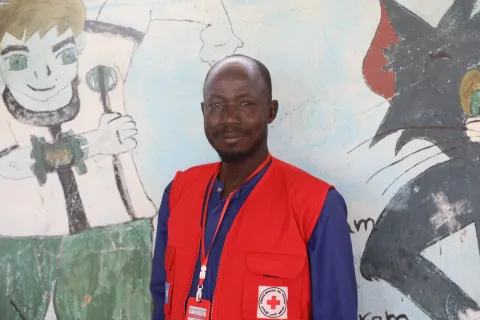
For Ahmat Nil, head of the one-stop birth registration office at Koukou Angarana Hospital, seeing women like Aicha come to register their children is a clear sign of progress.
"It's always a pleasure to see families come and ask me about birth registration and register their children."

For Ahmat Nil, also a native of Koukou Angarana, each new registration of a child brings him joy.
"It shows that the message is getting through."
With financial support from the European Union, the United Nations Central Emergency Response Fund (CERF), Gavi, the Vaccine Alliance, and the Norwegian Agency for Development Cooperation (Norad), UNICEF has supported the Government of Chad in establishing one-stop birth registration offices in several health centers. These offices, using the Tasdjil system—a digital application for birth registration—enable the quick and secure birth certificates to mothers who give birth in hospitals or come for vaccinations or other services.
This service is available to all children, including refugees living in Chad due the conflict in Sudan.