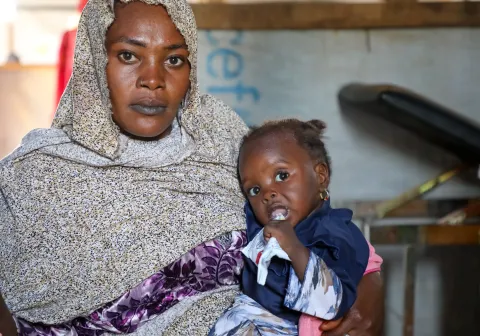
What Noura and many other mothers wish they had known sooner
Good infant and young child feeding practices and early screening are at the heart of the fight against child malnutrition

- English
- Français
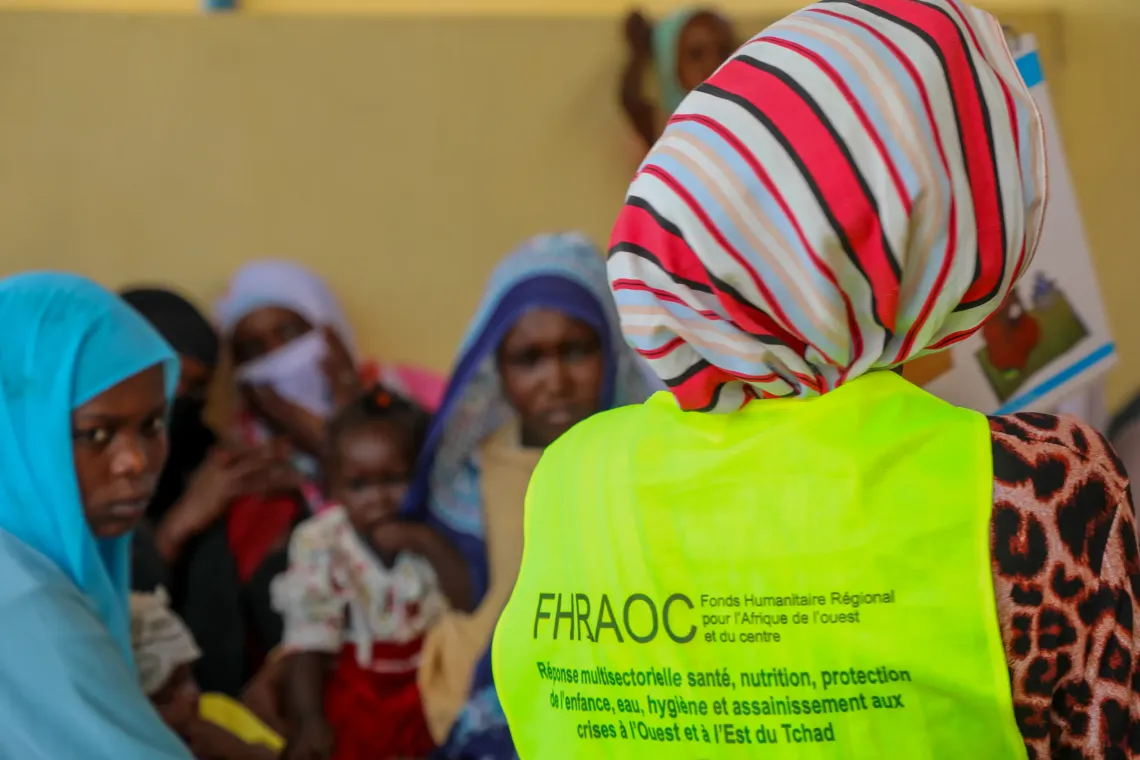
That morning, Noura Timan timidly walked through the gates of the Ourba health centre, in Wadi Fira Province in eastern Chad. In the courtyard, dozens of women, both Chadian and Sudanese refugees, had already gathered. Some were catching up with one another, while others gently rocked their children as they listened to the health workers welcoming them.
They had all responded to an announcement made a few days earlier by the village crier, inviting mothers to attend an awareness session on infant and young child feeding practices. While most of the women appeared to be familiar with the health centre, it was Noura's first visit.
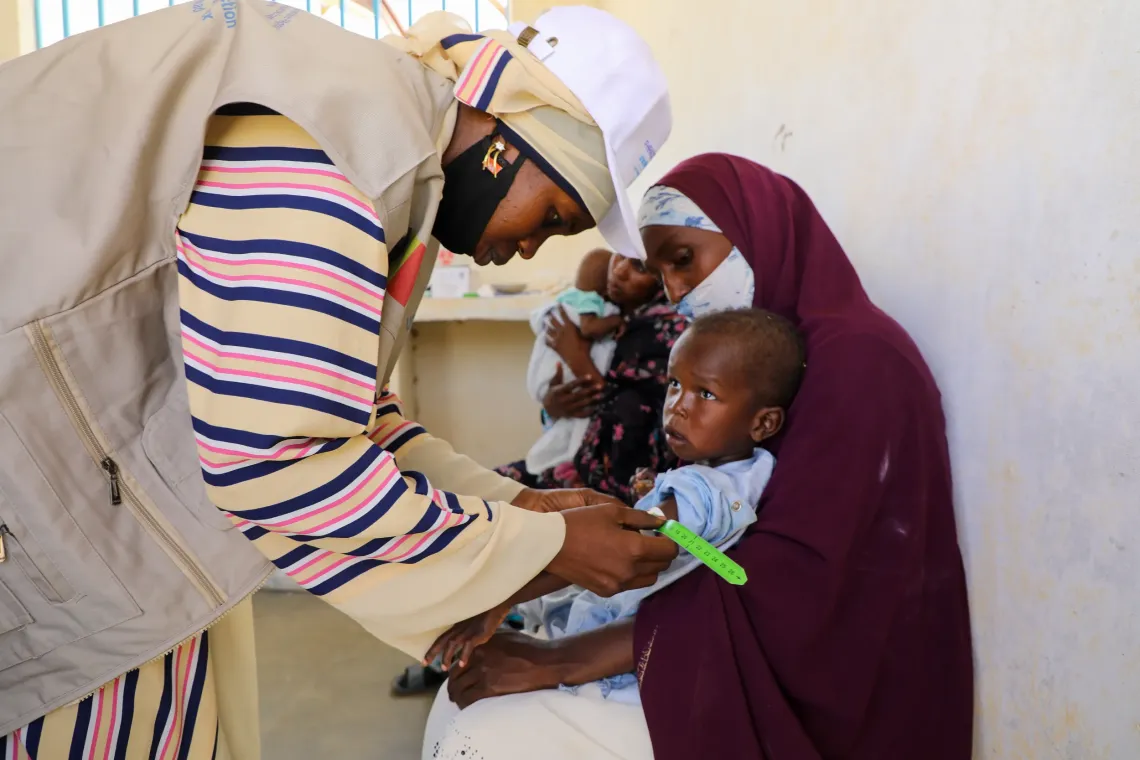
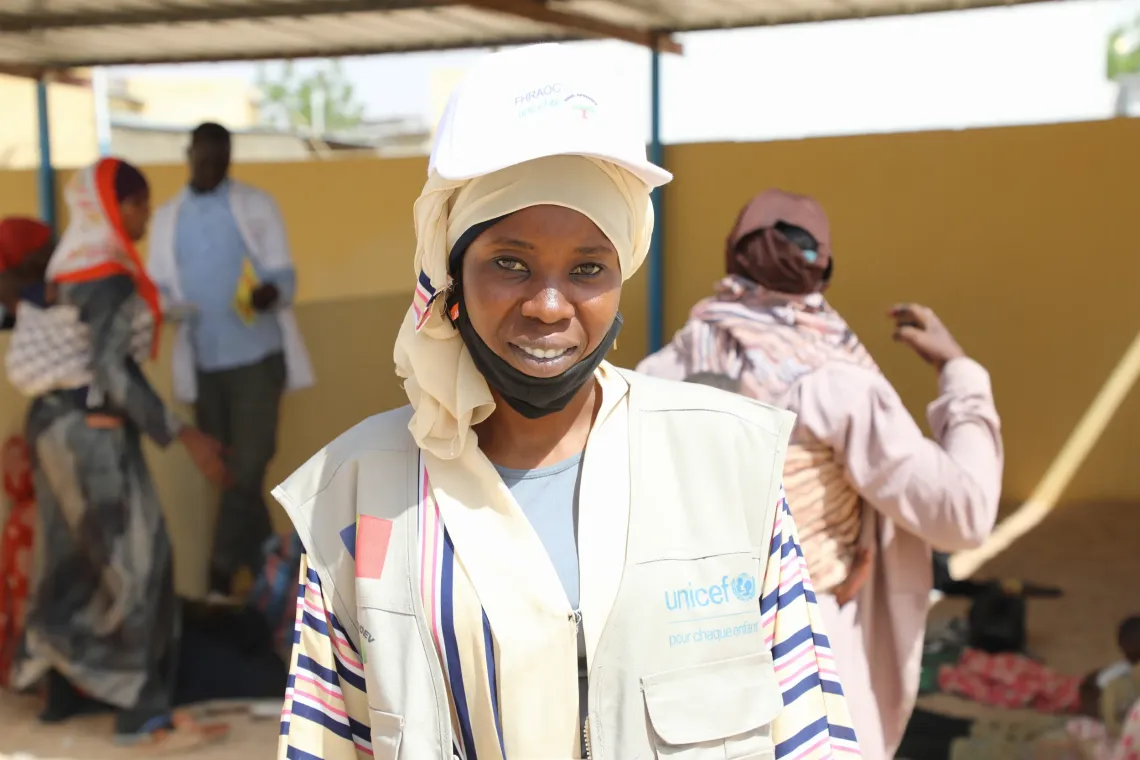
As she walks toward the awareness session with her son, Mahamat, staff members from APRODEV, a UNICEF-supported partner organization, immediately notice the little boy's worrying condition. Zara, a supervisor, gently approaches Noura and starts a conversation.
At just two and a half years old, Mahamat is unusually quiet. His body is thin and frail, and his hair is sparse and discolored.
"He has had a fever, diarrhea and a cough. Every day, he seems to be getting weaker. I don't know what to do, and I don't have the resources to pay for his treatment," says the 26-year-old mother.
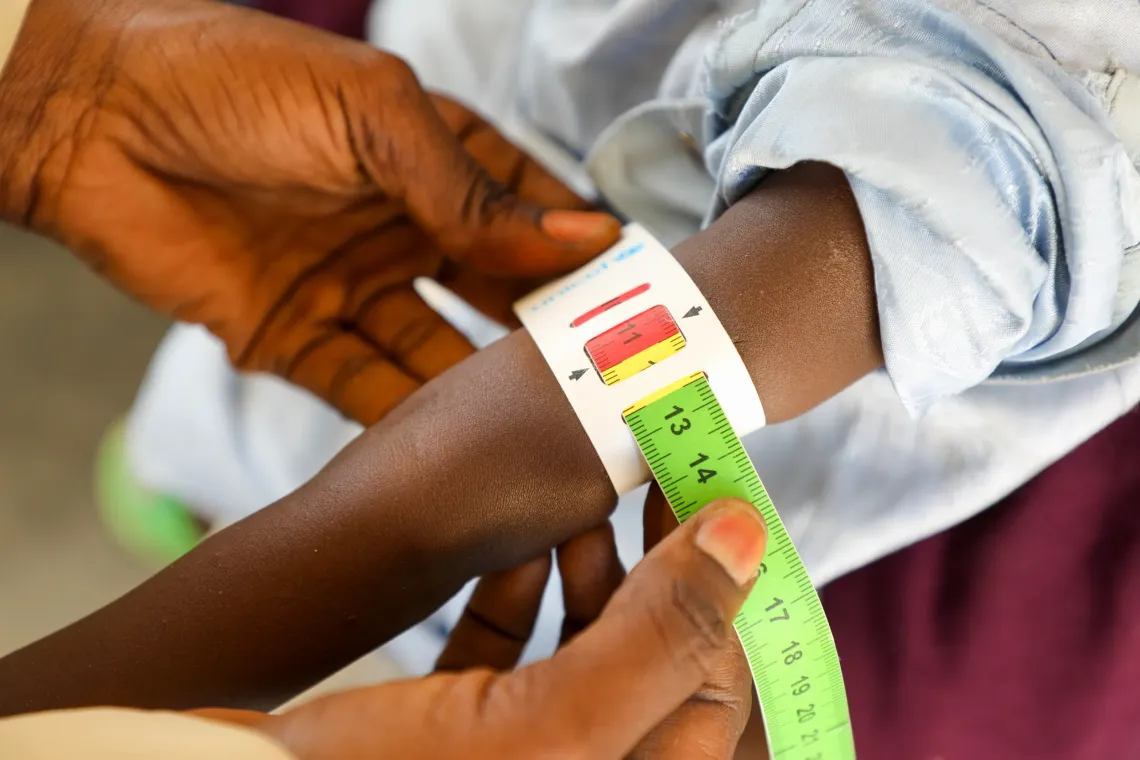
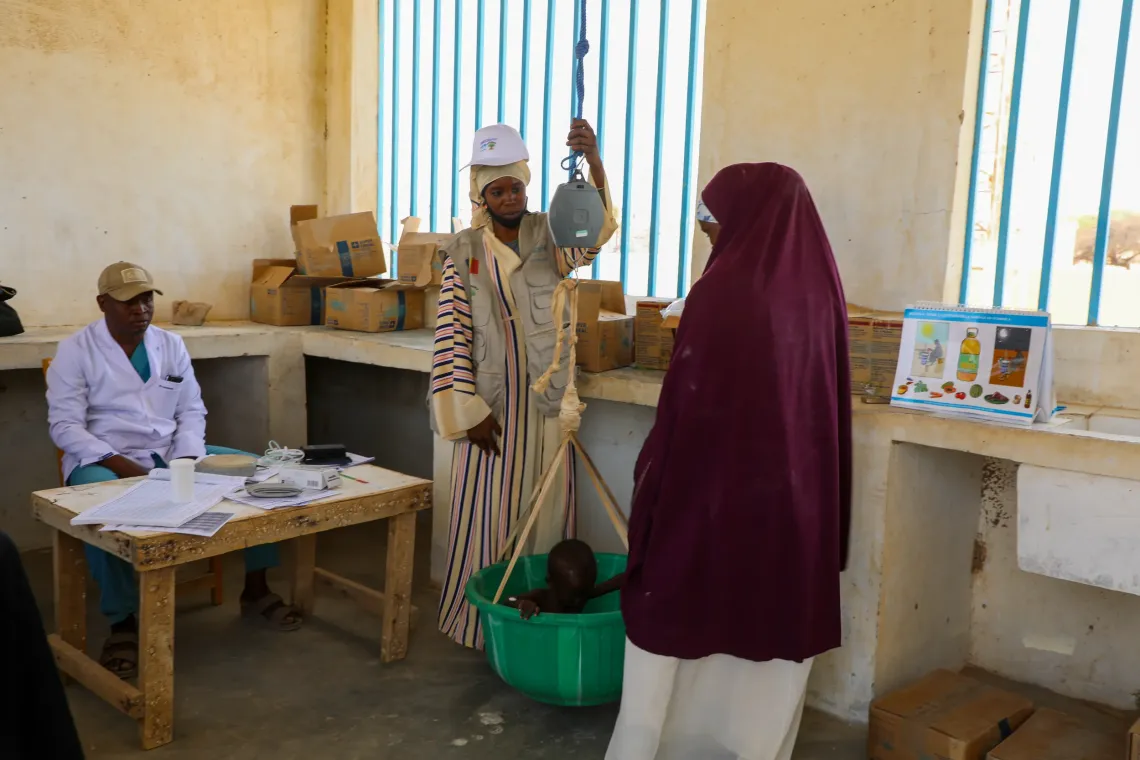
Even before the awareness session begins, Zara advises Noura to have Mahamat screened for malnutrition. Health workers measure his mid-upper arm circumference (MUAC), weight and height. The results confirm that he is suffering from severe acute malnutrition. The little boy is immediately enrolled in the health centre's outpatient nutrition treatment and follow-up programme. Mahamat is then given an appetite test using ready-to-use therapeutic food (RUTF) to determine whether he can be treated at home or requires referral for inpatient care.
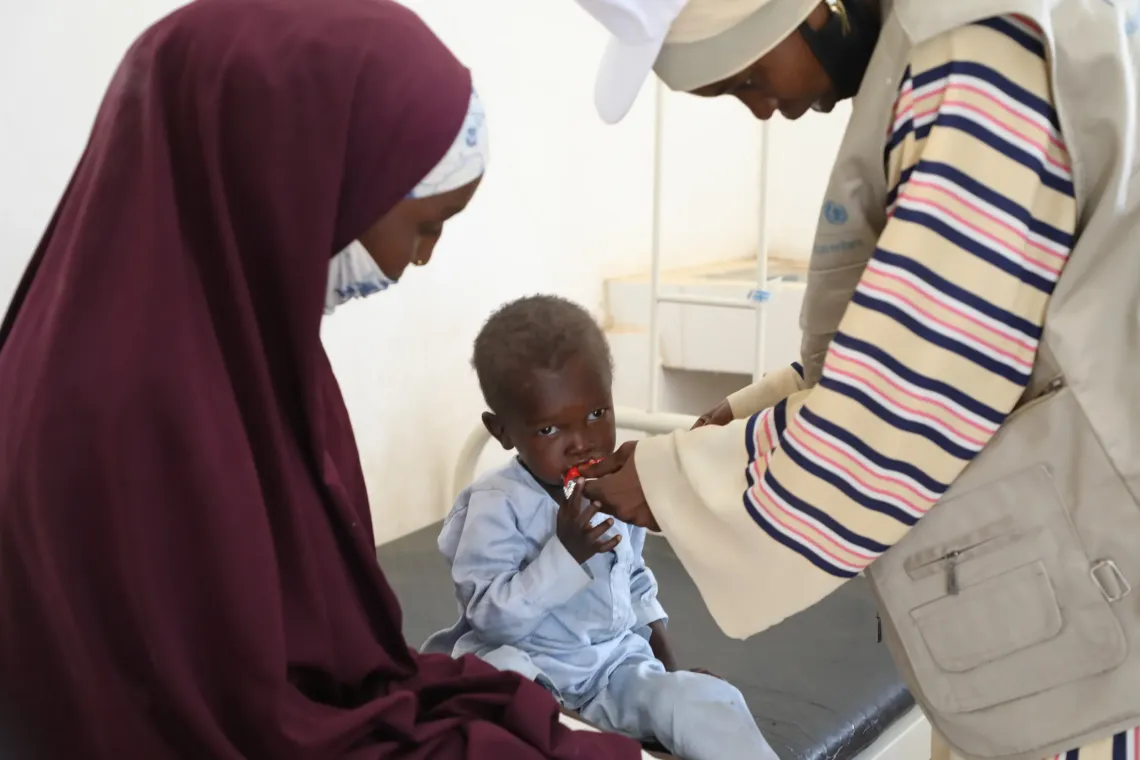
To his mother's great surprise, Mahamat eagerly takes the sachet and begins eating. Noura watches in silence for a moment.
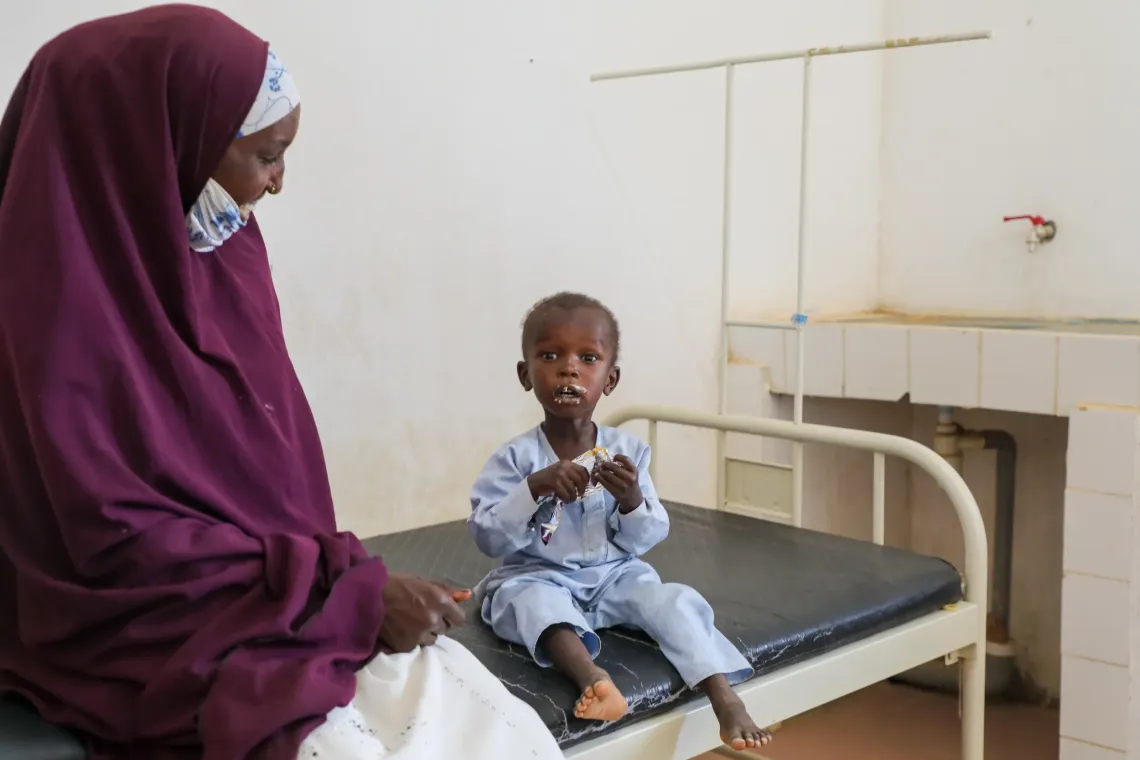
For the past few days, he would only eat powdered milk that I buy at the market. I can't remember the last time I saw him eat with such an appetite.
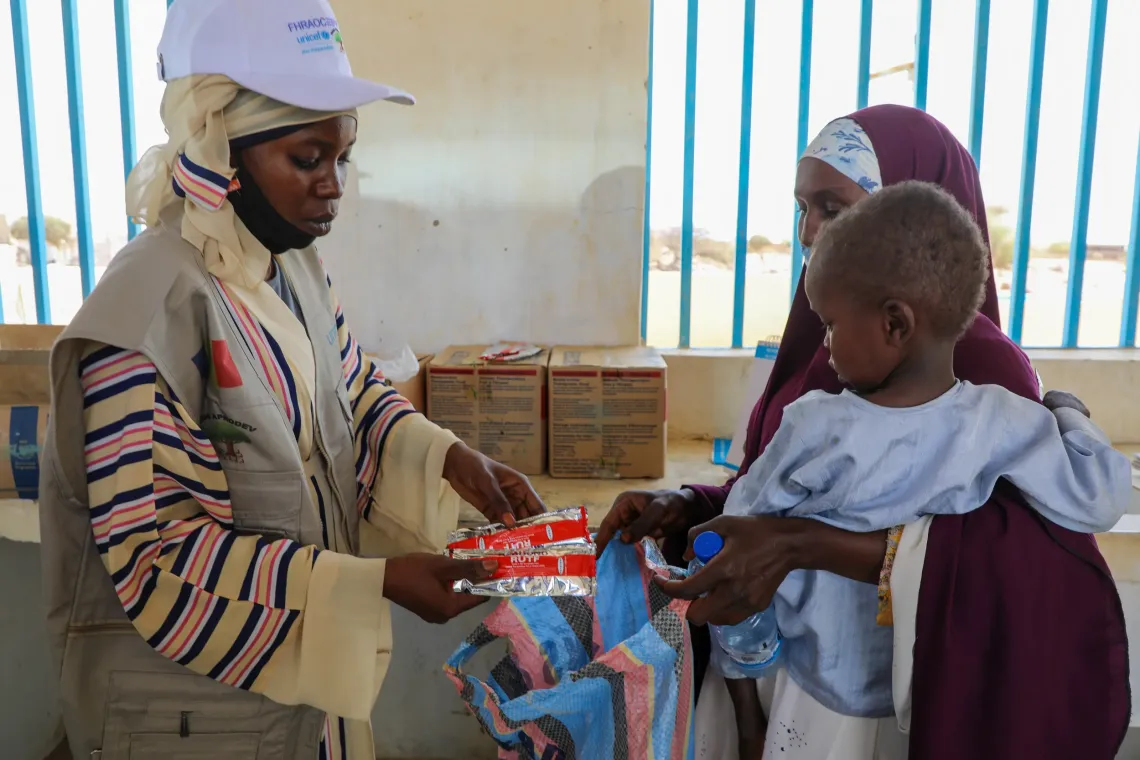
Before joining the other women for the awareness session, Noura receives a supply of ready-to-use therapeutic food (RUTF) sachets to continue her son's treatment at home.
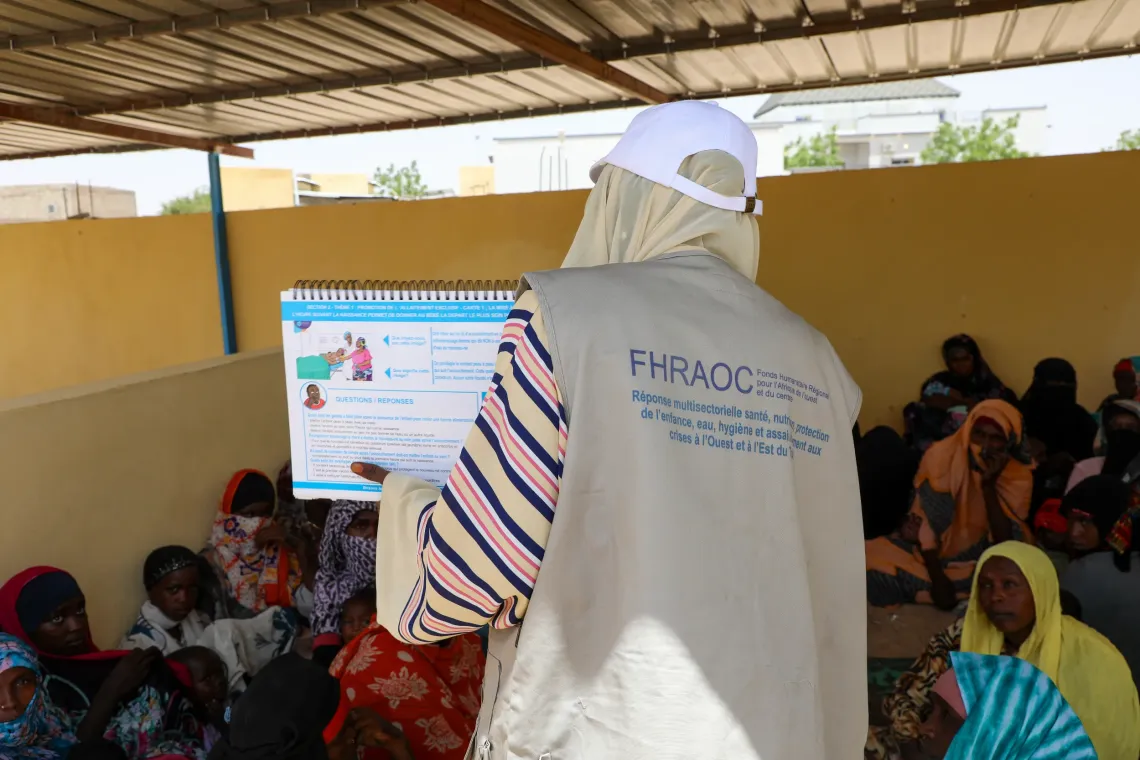
Noura then joins the other women, and the session begins. Sitting together on woven mats, they listen attentively as Zara and her team explain the recommended infant and young child feeding practices. Using a flipchart with illustrations showing common daily practices, they discuss exclusive breastfeeding during the first six months of life, the gradual introduction of complementary foods, hygiene, regular growth monitoring and vaccination.
Before long, hands begin to rise and questions pour in. The discussion becomes lively. For many mothers, some of the recommendations are a real eye-opener. Others are surprised to learn that certain feeding practices passed down from generation to generation can, in fact, put young children's health at risk.
Seated among the group, Noura listens intently. She realizes that the knowledge she is gaining today will help her better care for her son and give him a healthier start in life.
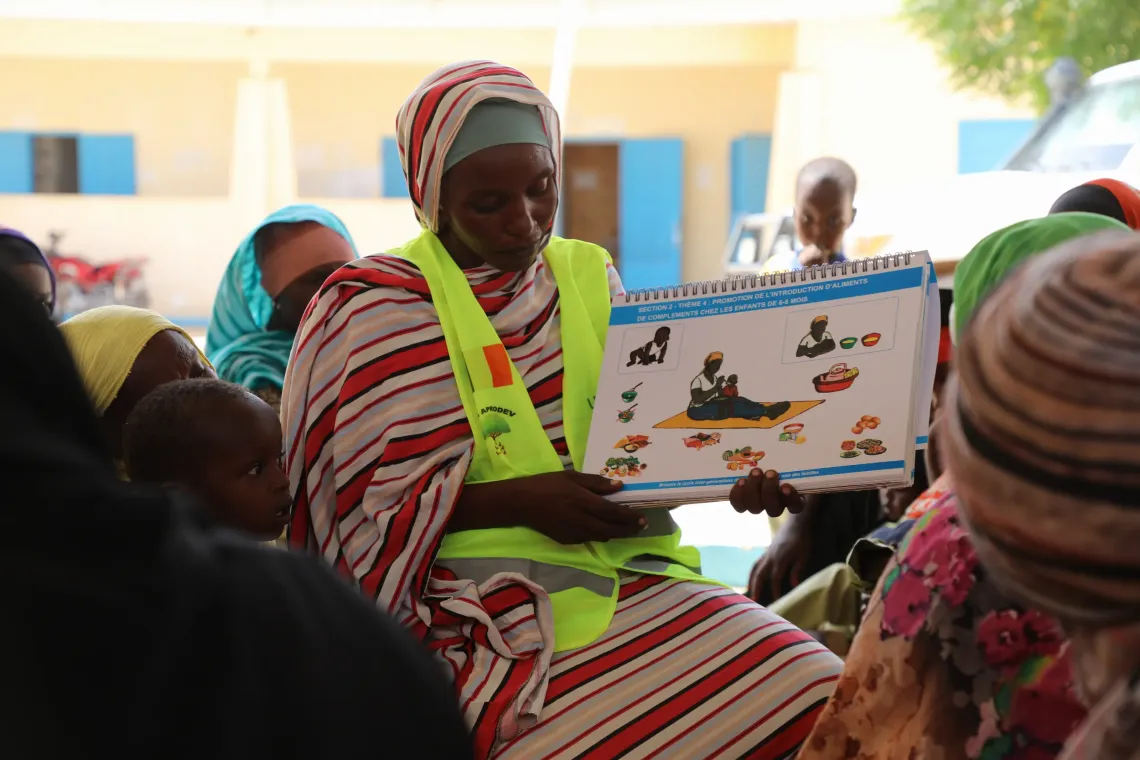
For Zara, Mahamat's case is a powerful reminder of the importance of community-based awareness activities. "Our role is to ensure that mothers have the information they need, identify children at risk as early as possible, and refer them promptly for appropriate care," she explains.
Together with her team, Zara regularly conducts community dialogue sessions in neighborhoods and awareness sessions at the health centre, where mothers receive practical advice on how to better feed and care for their children.
Family poverty is not the only cause of child malnutrition. Some long-standing feeding practices also contribute significantly to it.
Djimro Zakaria, the head of the health centre, echoes this view.
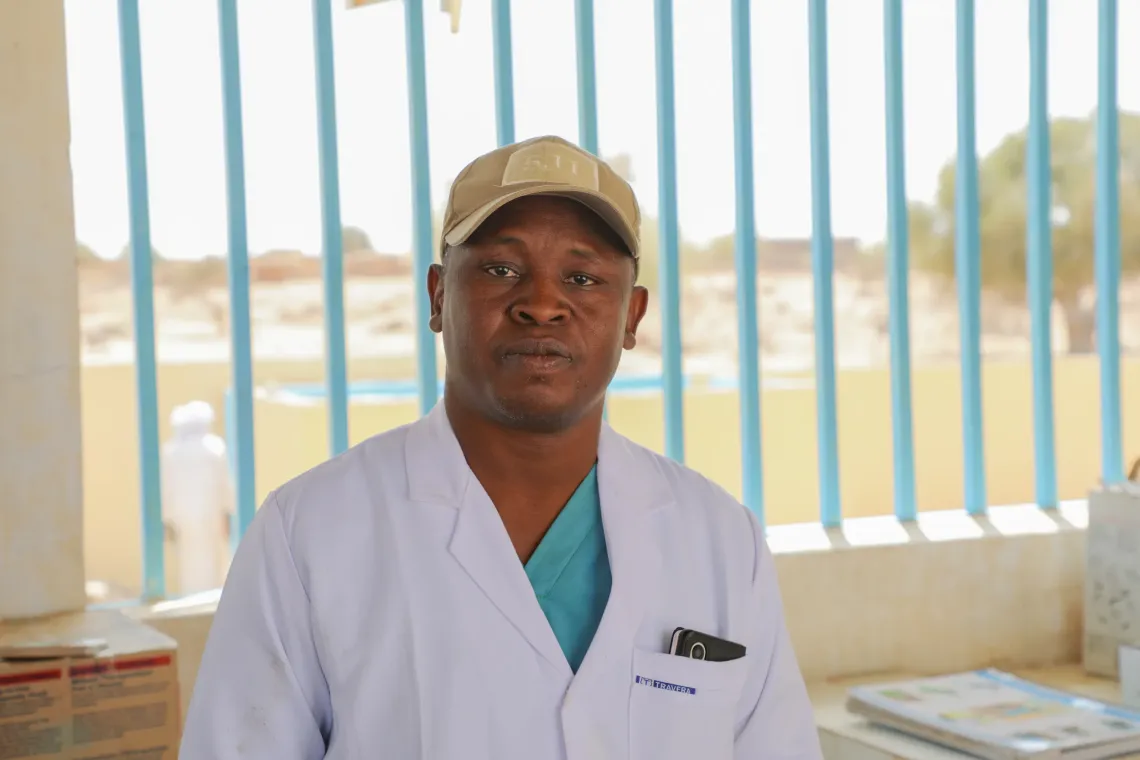
Many cases of child malnutrition can be prevented if mothers are better informed. When a mother adopts recommended feeding practices, recognizes the warning signs and seeks care early, she can protect her child from malnutrition. That is exactly what we are committed to.
Despite the challenges posed by insecurity and the constant movement of populations, health workers remain committed to supporting families, convinced that promoting good infant and young child feeding practices can help save children's lives.
Thanks to funding from the Regional Humanitarian Fund for West and Central Africa, UNICEF and its partners are strengthening the prevention and treatment of child malnutrition while, above all, equipping mothers with the knowledge they need to adopt recommended infant and young child feeding practices.
Today, Mahamat begins his treatment.
Tomorrow, thanks to the knowledge his mother has gained, he will have a better chance of growing up healthy.
Because beyond treatment, it is also knowledge, simple everyday practices and timely advice that can make all the difference to a child's survival and development.