Safe drinking water now reaches nearly 4,000 people in Maiba
"We suffered greatly from unsafe drinking water, especially the children," says Haché, a Sudanese refugee and mother of seven children
- English
- Français
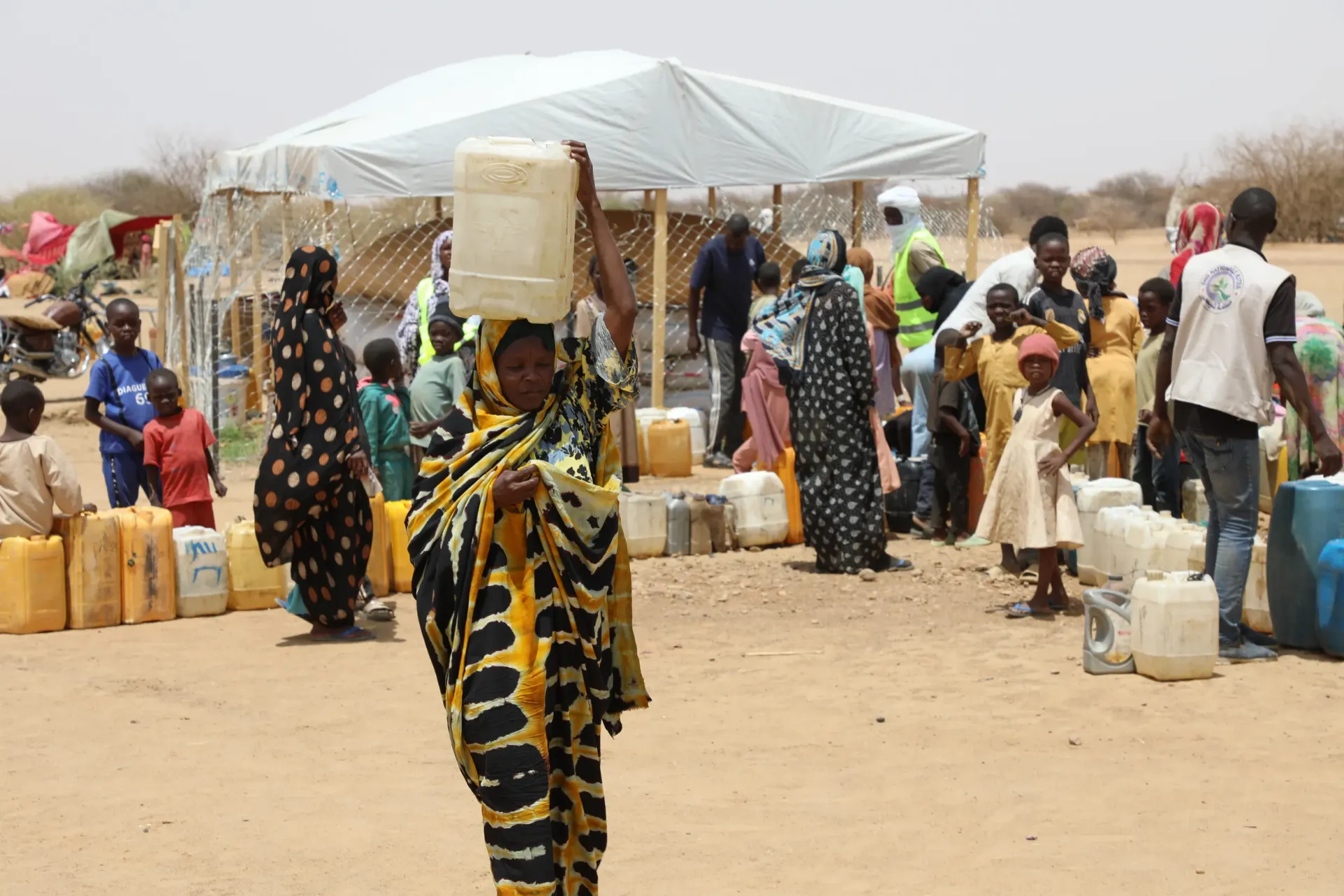
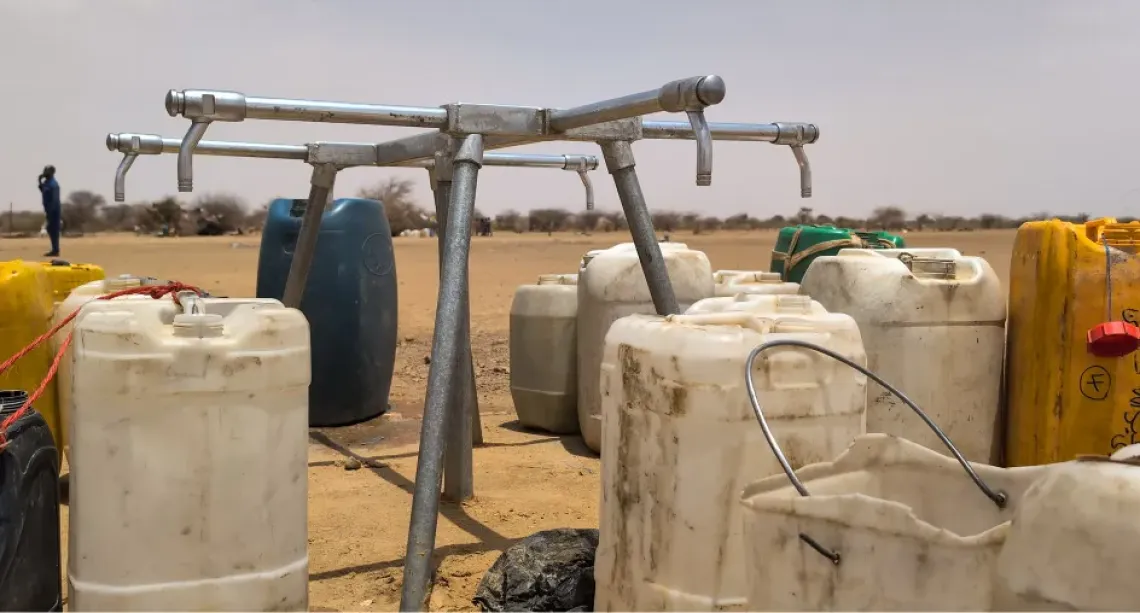
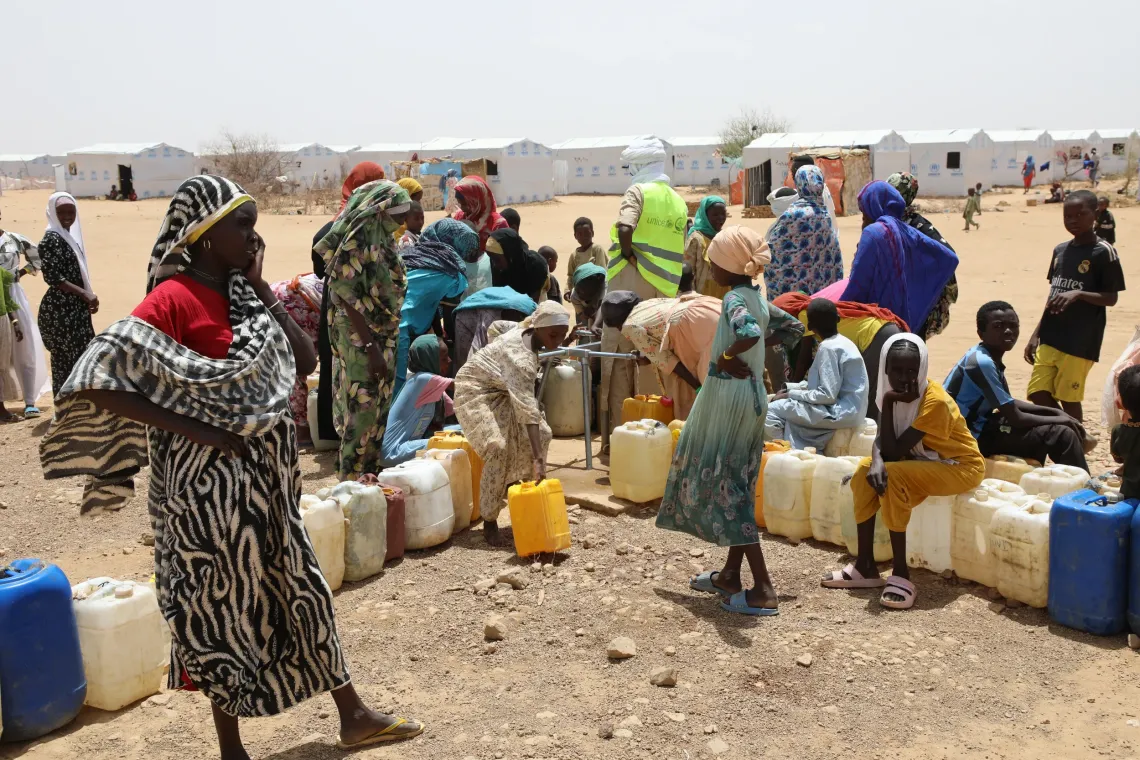
Under the scorching sun, dozens of jerrycans line up in front of the emergency water distribution taps. Like many others, they are waiting for the return of the water trucks that supply safe drinking water to the newly established Maïba refugee camp in eastern Chad.
Among the first to arrive that morning is 45-year-old Hache, keeping a close watch over her jerrycan. Most people have returned to their shelters to escape the intense heat. Haché, however, chooses to stay. Being among the first to collect water is, for her, the best way to return home quickly with this precious resource.
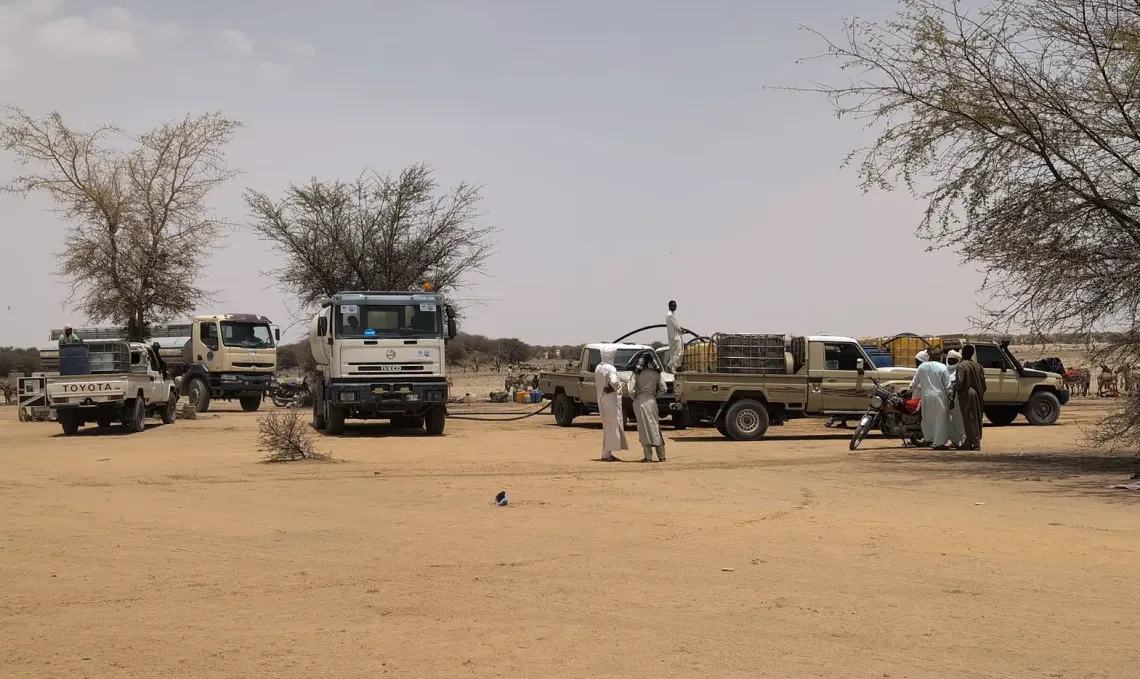
A few kilometers from the camp, Djibril, a water truck driver, is also waiting for his turn. At the government-developed borehole that supplies the area with safe drinking water, water trucks, vehicles and donkey carts move in a steady, well-coordinated flow. Under the watchful eye of a supervisor, everyone waits patiently for the opportunity to fill their tanks.
Djibril cannot hide his impatience. His eyes remain fixed in the queue, knowing that thousands of people in the camp are counting on him.
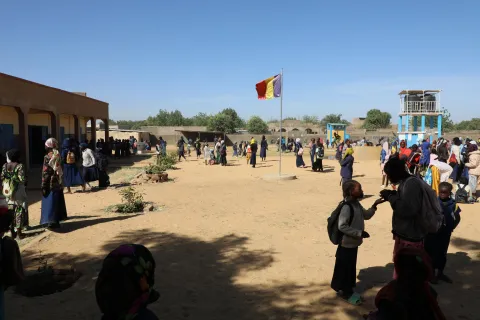
Since the conflict erupted in neighboring Sudan in April 2023, hundreds of thousands of people sought refuge in Chad. By May 2026, the country was hosting more than 928,818 new Sudanese refugees. Maïba camp, one of the newest sites established to respond to the growing influx, is already home to nearly 4,000 people, the majority of whom are women and children.
After several hours of waiting, Djibril finally filled his water truck. Without delay, he sets off towards the camp. Even before he arrives, a crowd has already gathered around the water distribution points. As soon as the water truck is connected to the 10-cubic-meter storage bladder installed in the camp, the first liters of water begin to flow. Relief is visible on everyone's faces.
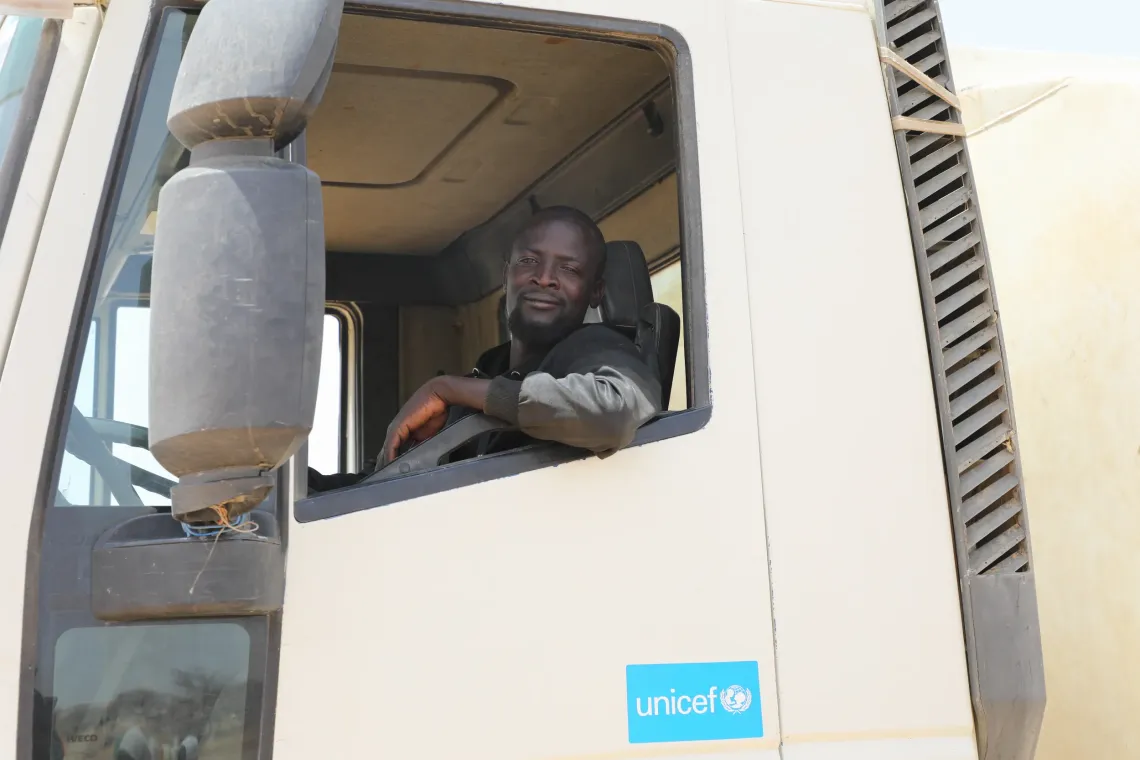
For the past two months, two water trucks have been delivering safe drinking water to Maïba camp, supplying an average of 80 to 100 cubic meters daily. Their mission begins at dawn at the borehole, where the water is carefully chlorinated before being distributed.
Each day, three trips are needed to provide an emergency supply of safe drinking water to refugees and host communities.
“I’m proud to see how happy people are when we arrive with our trucks full of water. It reminds us that we are helping improve the lives of all these people,” says Djibril.
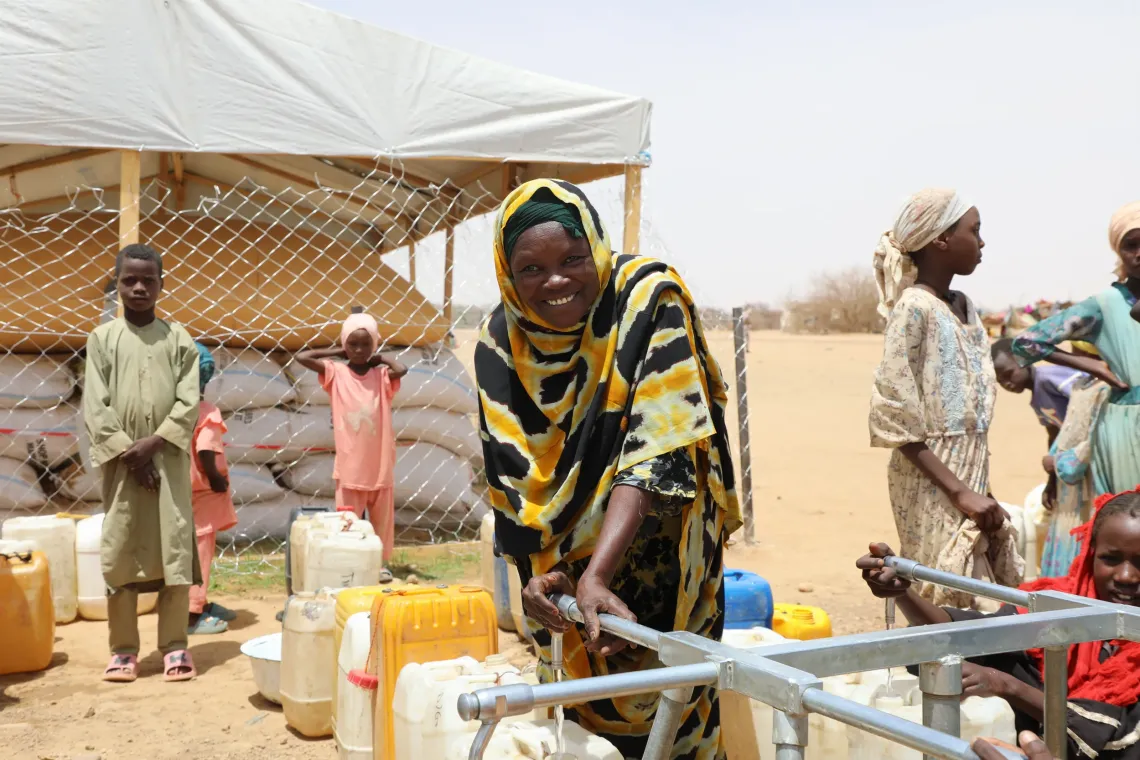
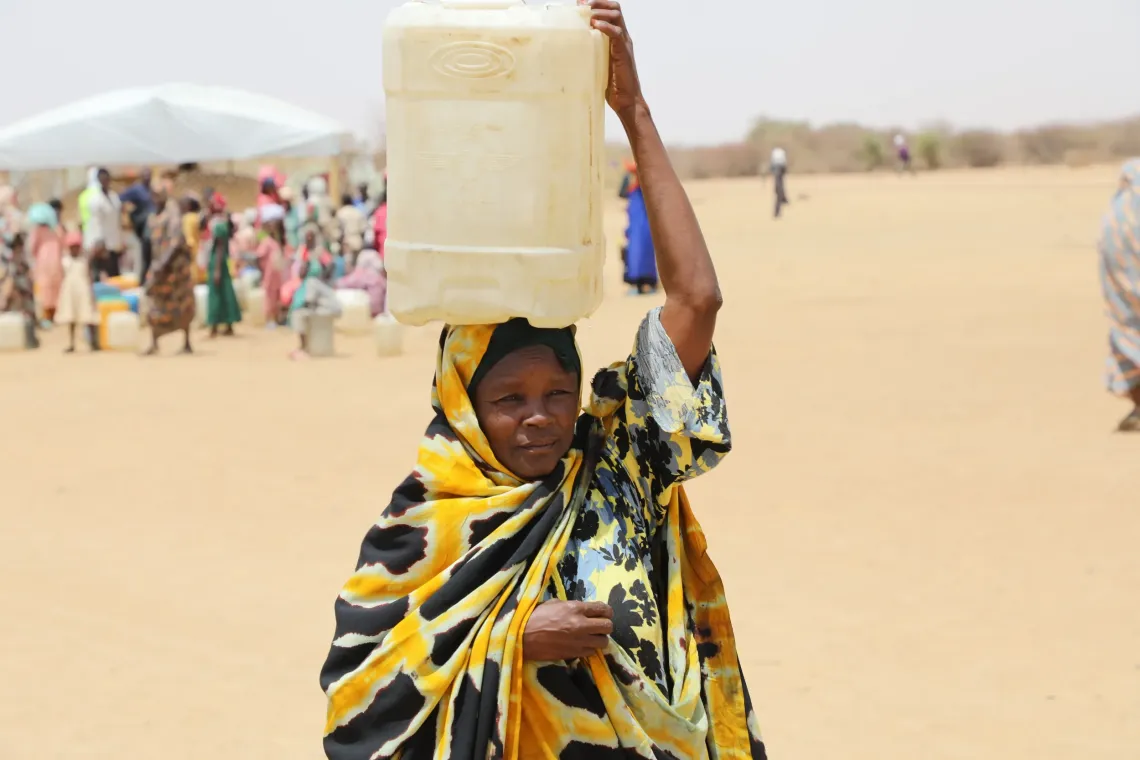
At last, Haché has filled her 20-liter jerrycan with water. Smiling, she makes her way back to the makeshift shelter where she lives with her seven children. Today, she plans to keep part of the water for drinking and preparing porridge. For washing clothes and meeting the family's other household needs, she will have to return later and wait in line once again.
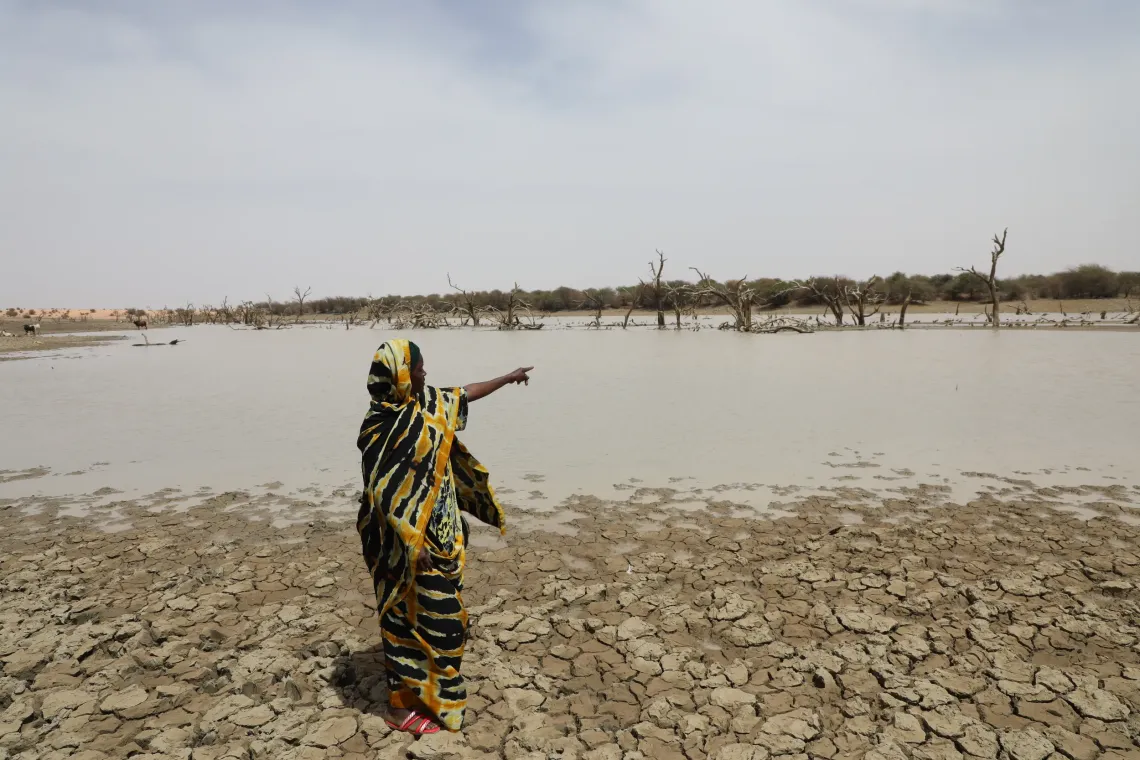
Just a few months ago, before the emergency water supply system using water trucks was put in place, the people of Maïba, both refugees and host communities, had no choice but to walk nearly five kilometers to collect water from a wadi, a seasonal riverbed. Although it was unsafe, it was their only source of water. It was a matter of survival.
“Look for yourselves. This is where we used to collect water. We washed our clothes over there, fetched drinking water a little further away, and the animals came to drink on the other side. That was our daily reality. We suffered greatly, especially the children,” Haché recalls with emotion.
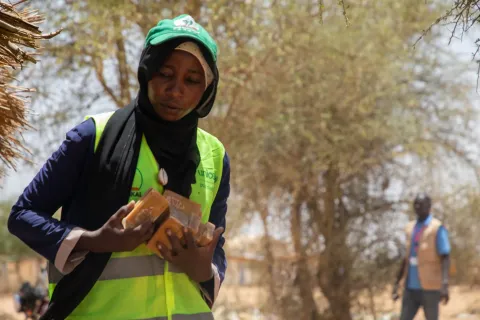
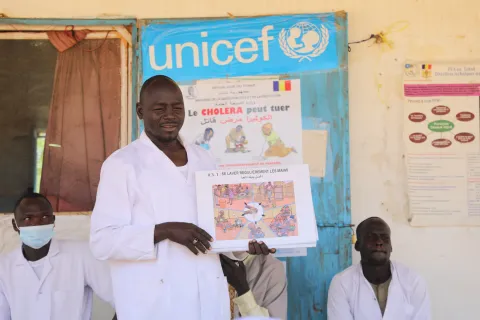
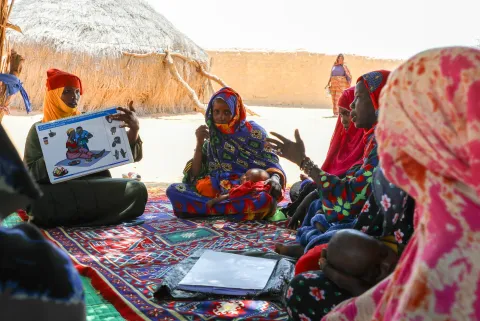
Every water distribution is carefully coordinated. At the heart of the operation is Parfait, a staff member of the national NGO Kites, one of UNICEF’s partners. Together with his team, including one supervisor and six community volunteers, he oversees every step of the process, from chlorinating the water at the source to distributing it in the camp and raising awareness among families about good hygiene practices.
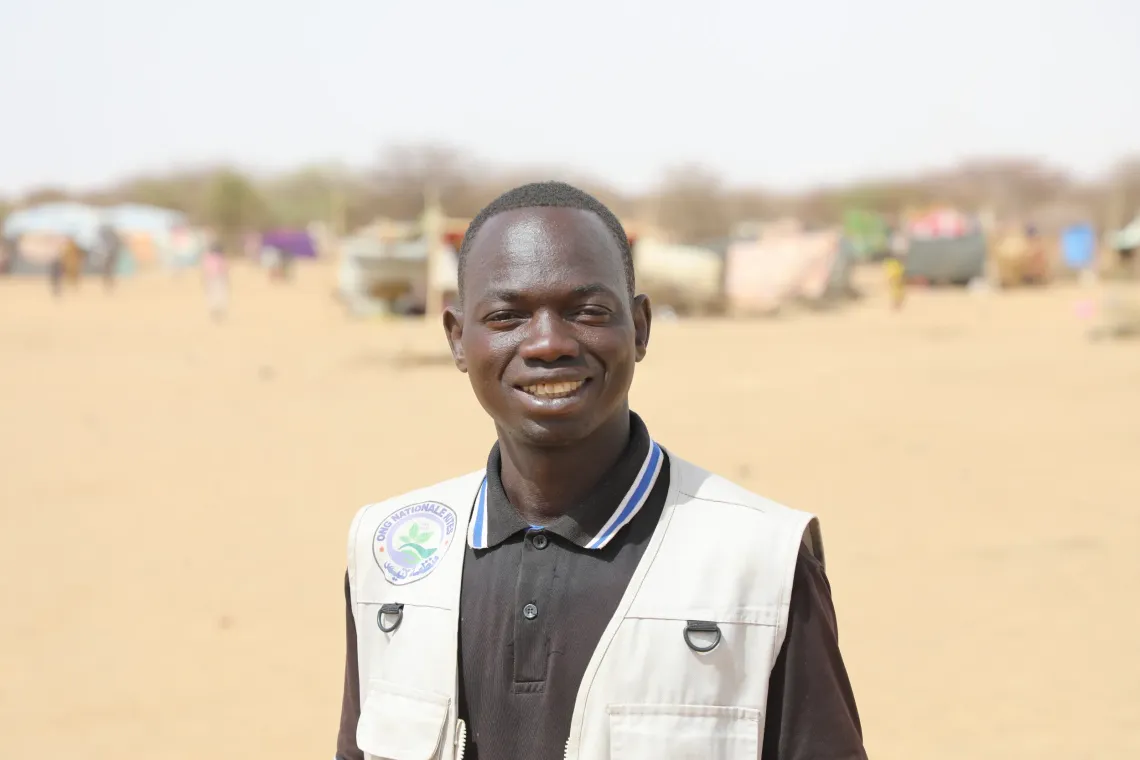
We must stand in solidarity with refugees and do everything we can to help improve their well-being. That is why my team and I are here.
In Maïba, access to safe drinking water is transforming daily life for both refugees and host communities. With financial support from the United Nations Central Emergency Response Fund (CERF), UNICEF and its partners, alongside the Ministry of Water and Energy, are providing safe drinking water to refugee and Chadian communities.
As the crisis in Sudan continues and humanitarian needs keep growing, sustaining and expanding essential services, including access to safe drinking water, hygiene and sanitation, remains critical to protecting children's health, reducing the risk of disease outbreaks and preserving the dignity of families.
Safe drinking water should never be a privilege.