Renovated facilities to boost inclusive education and allow better hygiene in school.
School facilities adapted to the needs of girls and boys, for an inclusive education.

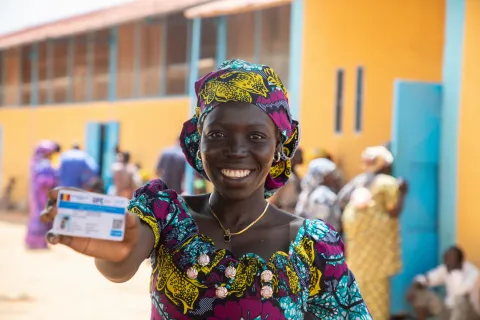
In Chad, access to quality education is a major challenge. This is even more visible at the national level and particularly in the provinces of Hadjer Lamis and Ouaddai, where the access rate to secondary school is below 30%. In order to reverse this trend, the Ministry of National Education and Civic Promotion, with the support of UNICEF and funding from the Korea International Cooperation Agency (KOICA), has set up an inclusive quality education programme for boys and girls aged 10 to 24, in an environment that promotes best practices in health, WASH (water, hygiene and sanitation) and girls' empowerment.
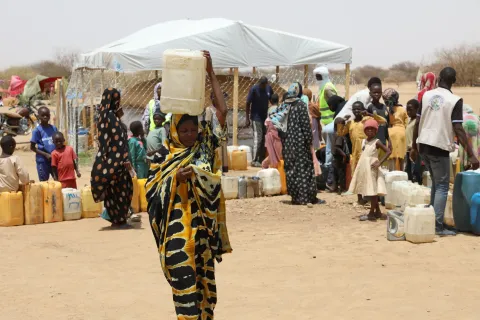
In schools lacking toilets and water points, basic hygiene practices are not possible. Pupils are forced to defecate in the open air and often in the vicinity of the school, with the risk of getting their hands dirty. The KOICA Programme provides a complete package of sanitation facilities including toilets, hand-washing kits and water points. For the students, this initiative is changing their daily lives.
Rehabilitating school facilities, promoting good hygiene and sanitation practices.
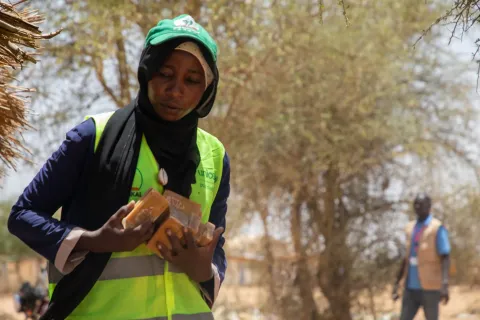
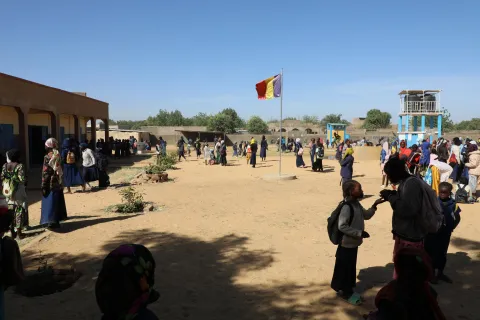
It is through this programme that the Lycée and Collège de Douguia were selected among 30 other beneficiary schools for : the rehabilitation of 4 classrooms and 2 sheds, the construction of 3 latrine blocks, the rehabilitation of a water point, the training of 07 teachers on WASH tools and menstrual hygiene management. In the same vein, 347 students, 226 boys and 121 girls, have also benefited from school supplies.
In the past, our classrooms were damaged, and we had no toilets. We used to relieve ourselves behind the school. Now that the school has been renovated, it is nice, and we are happy to come to school. We have water and clean toilets.

Preparing adolescents to manage menstrual hygiene
According to a report by the United Nations Educational, Scientific and Cultural Organization (UNESCO), one in ten girls in sub-Saharan Africa does not attend school during her menstrual cycle, which is estimated to be 20 per cent of the school time lost in a year. Establishing programmes that integrate menstrual hygiene management is first and foremost a question of rights, the right of young girls and adolescents to access information on the subject.
At home, my parents never gave me information about menstruation. It is thanks to the sensitization done at school that I know how to manage my period and how my menstrual cycle works.

It is therefore necessary to prepare the girls and adolescents, but above all to provide them with appropriate support to manage their menstruation hygienically, with dignity and in safety.
We have been trained on hygiene, school sanitation and menstrual hygiene management. We help girls to know their bodies and encourage them to continue their studies during their periods. I also reflect this action at home because now I can help my daughter better.

Better days for students in Douguia
With funding from the Korean International Cooperation Agency (KOICA), 794 teachers, including 31 women, have been trained in life skills (Menstrual Hygiene Management - Gender) and education for a culture of peace in the provinces of Hadjer Lamis and Ouaddai. A total of 147 classrooms were also rehabilitated, including two in Douguia.
In these two provinces, these funds made it possible to build 21 new drinking water points, rehabilitate 5 and build 60 separate latrine blocks for girls and boys, allowing 13,640 pupils, including 5,389 girls, to have access to drinking water and sanitation services. In addition, 326 teachers were trained on hygiene, menstrual hygiene management and good hygiene practices in schools.
Through this programme, 19,223 children, including at least 6,428 girls, from 36 communities have seen improvements in their living environment. They now have better access to inclusive, equitable and quality education, health, water, sanitation, and hygiene services.