Mayaz, a dream beyond borders
“I will do whatever it takes to continue my education” Mayaz, 19, a Sudanese refugee
- English
- Français
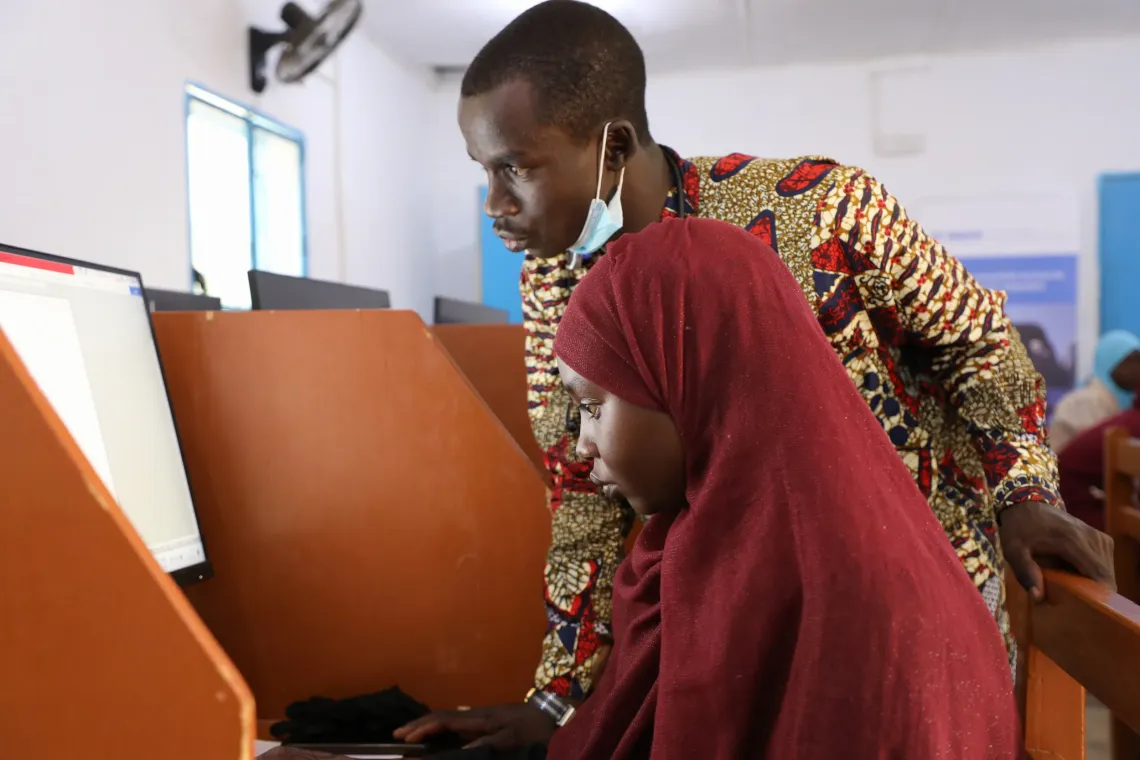
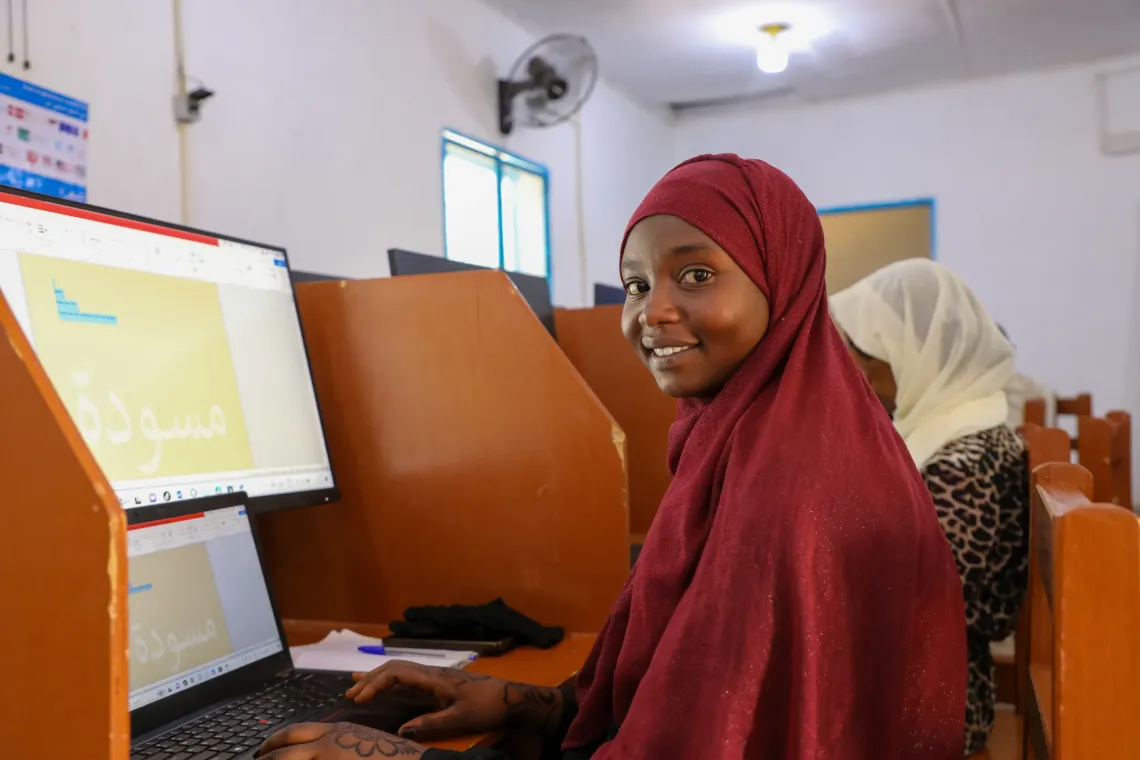
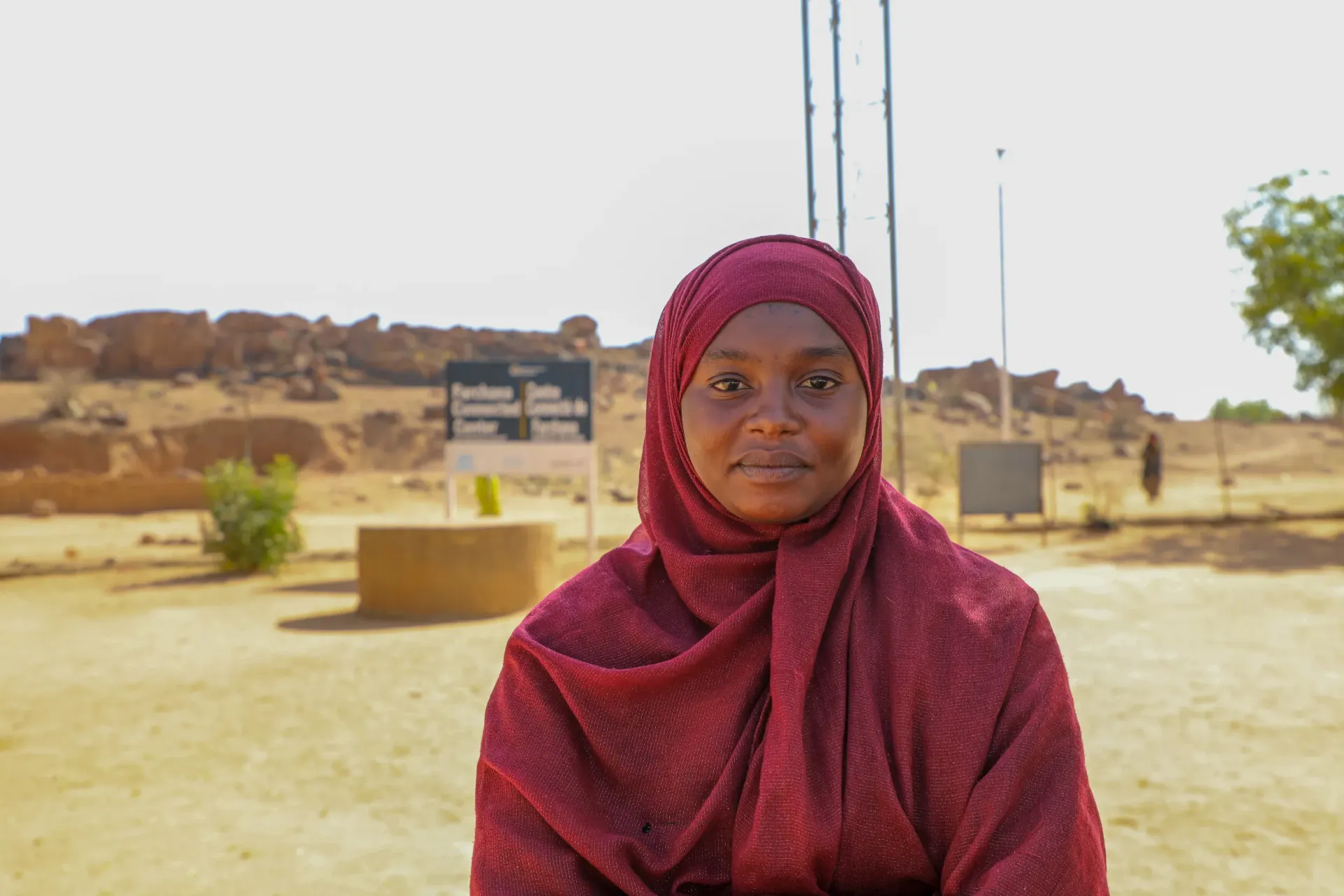
Staying at home and doing nothing is not an option for her. Despite the scorching heat, 19-year-old Mayaz walks regularly to a training centre in Farchana refugee camp. There, she conducts online research, explores new pathways, and works tirelessly, day after day, to find ways to pursue her dreams.
When war erupted in her hometown of El Geneina, in West Darfur, Sudan, she fled with her family, carrying almost nothing but her strength, determination, and courage. Today, Mayaz lives in Farchana in eastern Chad with her parents and five siblings. Their arrival in Chad was not a matter of choice, but of survival.
“We fled the war, first to a village about a two-hour walk away. But attacks continued there, and one of my brothers was shot in the leg,” she recalls.
Amid the chaos, the family became separated. Four of her brothers and her father fled in one direction, while Mayaz, her mother, and her injured brother escaped in another.
“We hid my brother under woven mats. If the armed men had found him, they would have killed him”, she says.
Against all odds, the family reunited a few days later in an abandoned village. Together, they made a momentous decision to leave Sudan. Chad, in their view, was the closest and most accessible refuge.
Upon arrival in Farchana, the harsh realities of displacement quickly became apparent; food shortages, lack of shelter, uncertainty about the future, and Mayaz, the profound fear that her education had come to an end.
Over time, conditions gradually improved thanks to the solidarity of host communities and the support of the Government of Chad, with the assistance of several humanitarian organizations, including UNICEF.
“Everything was difficult. But people encouraged me not to give up. They reminded me that I am young and that the best is still ahead,” Mayaz adds.
Then, one day, the young girl was informed that the Sudanese secondary school final examination, equivalent to the national baccalaureate, might be administered in Chad for refugee students. It was an unexpected glimmer of hope.
I was overjoyed. But I did not even have textbooks or notebooks to prepare. Fortunately, I still had my phone. I regularly searched online and studied on my own, as much as I could.
An initial announcement raised the possibility that the examination would take place. Then, silence followed. Months passed, and disappointment deepened, until the news was resurfaced. This time, it was confirmed.
Across Farchana camp and in refugee-hosting communities, information spread rapidly. Revision sessions were organized in multiple locations to support candidates in their preparation.
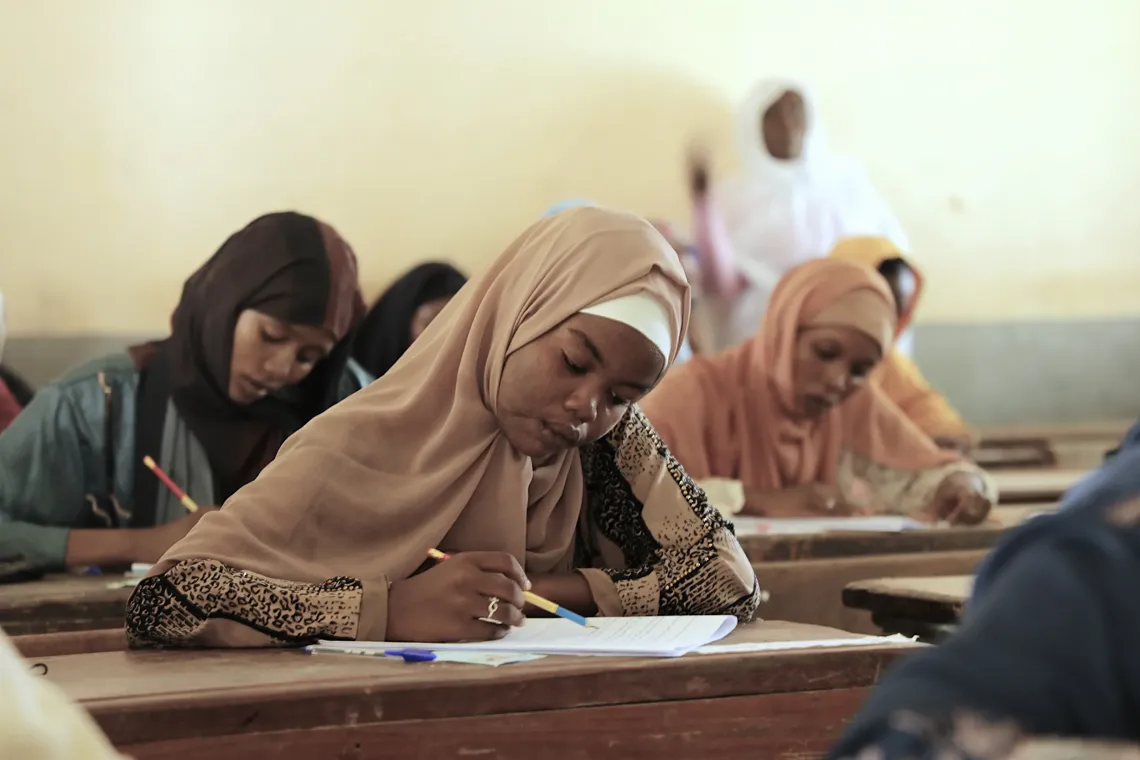
Thanks to the joint efforts of the Chadian and Sudanese authorities, with the support from UNICEF and several partner organizations, the Sudanese baccalaureate was administered in September 2025, providing close to 5,000 refugee students with the opportunity to complete their secondary education.
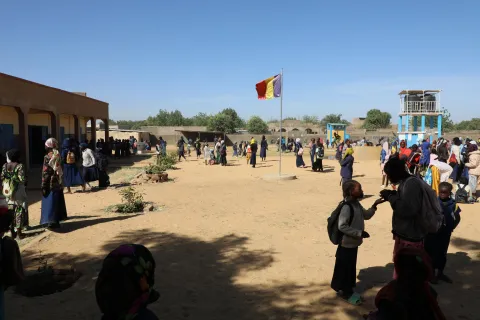
As the examination approached, Mayaz traveled to Hadjer Hadid, approximately 20 kilometres from Farchana, to sit for the exams. Days of intense effort, anxiety, and anticipation followed, until the long-awaited results were finally released.
Mayaz not only passed her exam, but also ranked first in her examination centre, achieving a good average score of 74.7%.
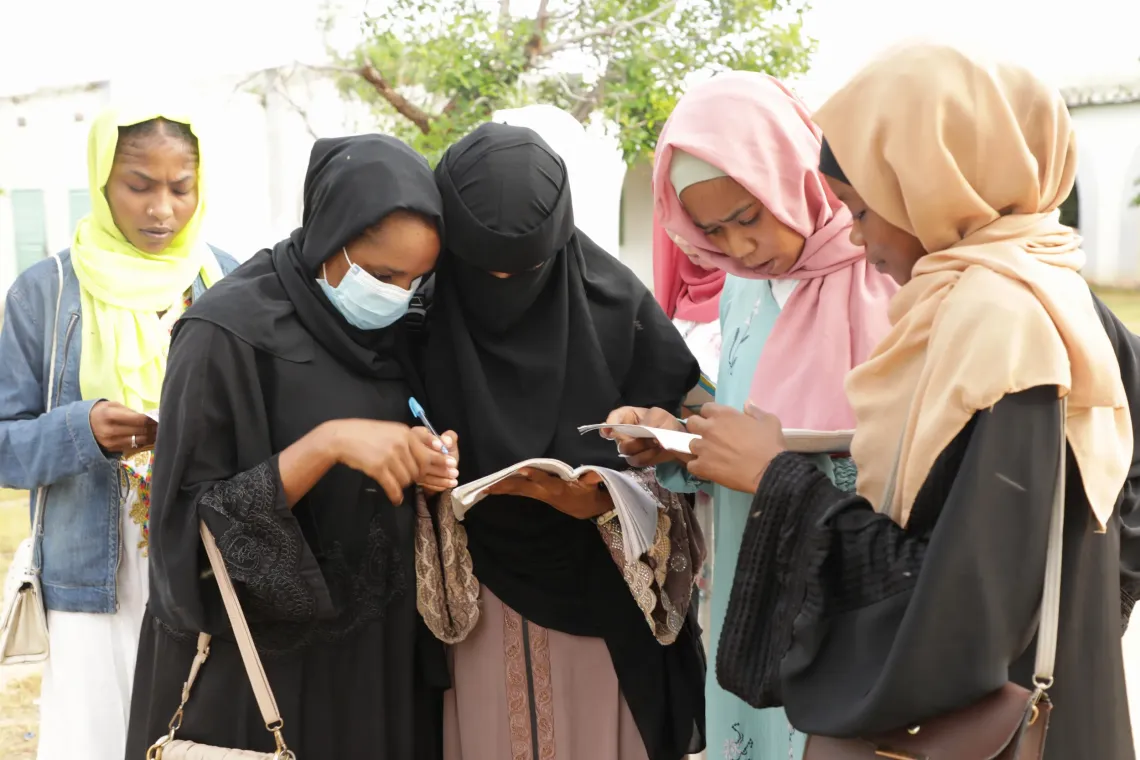
When I was informed that I had passed the baccalaureate, I cried. It was overwhelming. After everything I have endured, obtaining my diploma proves that anything is truly possible in life.
In organizing this exceptional initiative, UNICEF in collaboration with national authorities and other partners provided critical support, including learning materials and examination preparation sessions; safe transportation from refugee camps to examination and accommodation centres ; psychosocial support and child protection services; as well as coordination with education authorities to ensure official recognition of the results.
Today, Mayaz holds a clear ambition: to become a doctor. Driven by unwavering determination, she is taking every possible step to pursue her studies and has even secured provisional admission to the Faculty of Medicine at the University of Khartoum. Yet her future remains uncertain. Tuition fees, security concerns, travel arrangements; these are just some of the questions weighing heavily on her mind.
I know it is risky to return to Sudan. But I will do whatever it takes to continue my education, wherever that may be.
Passing the baccalaureate marked a major milestone. However, the journey ahead remains long.
While her own future is still unfolding, Mayaz has chosen to help shape the future of others. At Green Island, a language centre near her home, she teaches English to younger students. Sometimes she is paid, sometimes she volunteers, but she remains consistently committed, determined to stay active and to continue forging her path by every possible means.