Life-changing latrines
In Southern Chad, semi nomads say no to open defecation

Fanè Zakaria is married and has four children. She lives with her family in Ferrick Djimet, a locality located 7km from Goré in the Logone Oriental Province in southern Chad.
Thanks to the Community Led Total Sanitation programme supported by UNICEF with funding from WASH Thematic Funds, the population of Ferrick Djimet, like all the other villages in Goré Canton, has been able to benefit from latrines.
In this nomadic camp of twelve families, life is peaceful, but for these semi-nomadic populations, the construction of toilets is not a habit. "When we didn't have toilets, we had to hide in the grass around the houses and continually check that no one was approaching," says Fanè. “And at night we were afraid to go out to relieve ourselves.”

In addition to being a sanitation and hygiene problem, access to sanitation facilities such as latrines is a matter of protecting people's privacy. Mahamat Ahmat is Fanè's husband and is part of the team of natural leaders identified in the framework of the CLTS programme. He believes that the construction of toilets in the village has had a major role in keeping women and girls safe.

"Several women and girls were sexually assaulted in the village. We have arrested some men. Since we have the toilets, women are less exposed and there are fewer incidents.”
Community Led Total Sanitation allows for the implementation of a set of coordinated actions which, when the different implementation steps are respected, allow the village to be declared as having reached the "ODF status. Ferrick Djimet was certified ODF in July 2021. And since then, monitoring mechanisms are respected by natural leaders like Mahamat: "We check the maintenance of the toilets, making sure they are always clean and that the children's faeces are removed."
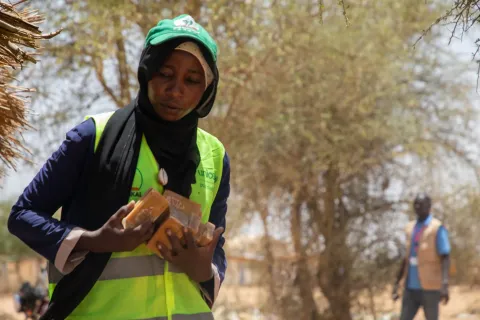
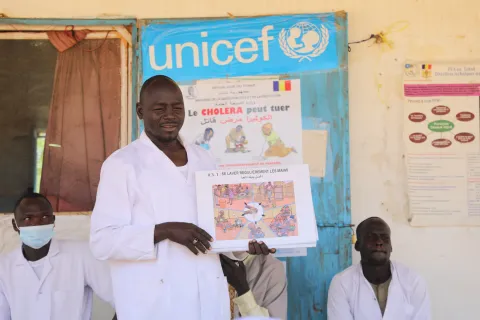
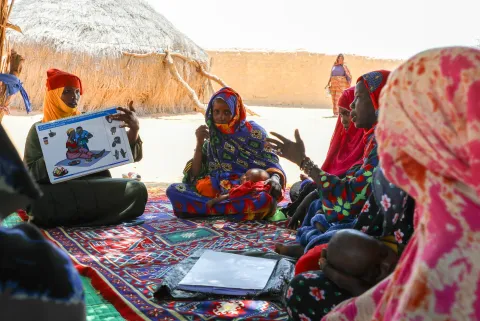
In addition to encouraging and promoting the construction of latrines, the approach stimulates behavioral change in communities on water, sanitation and hygiene issues, and motivates inhabitants to fully invest in improving their living environment. Through small daily gestures, Fanè ensures that the rules of hygiene that she learned in the framework of this programme are respected: "The facilitators explained to us the consequences of open defecation and poor food preservation. Now I clean the family toilet and cover the food well.”