Chadian and Sudanese refugee girls committed to menstrual hygiene in eastern Chad
Ibtihal and her friends' commitment to menstrual hygiene in Eastern Chad
- English
- Français
"My mother used to make a living from cross-border trade. Since the border with Sudan closed, she has lost her income. She can no longer buy me sanitary towels. Now that I've learned how to make them, I'll be able to have some for myself and give others to other girls in my situation."
Ibtihal Oumar, 16, lives in Adré, in eastern Chad. Her town has been swamped in recent months by the influx of refugees fleeing the conflict in neighbouring Sudan - more than half a million people sought refuge in Chad in 2023.
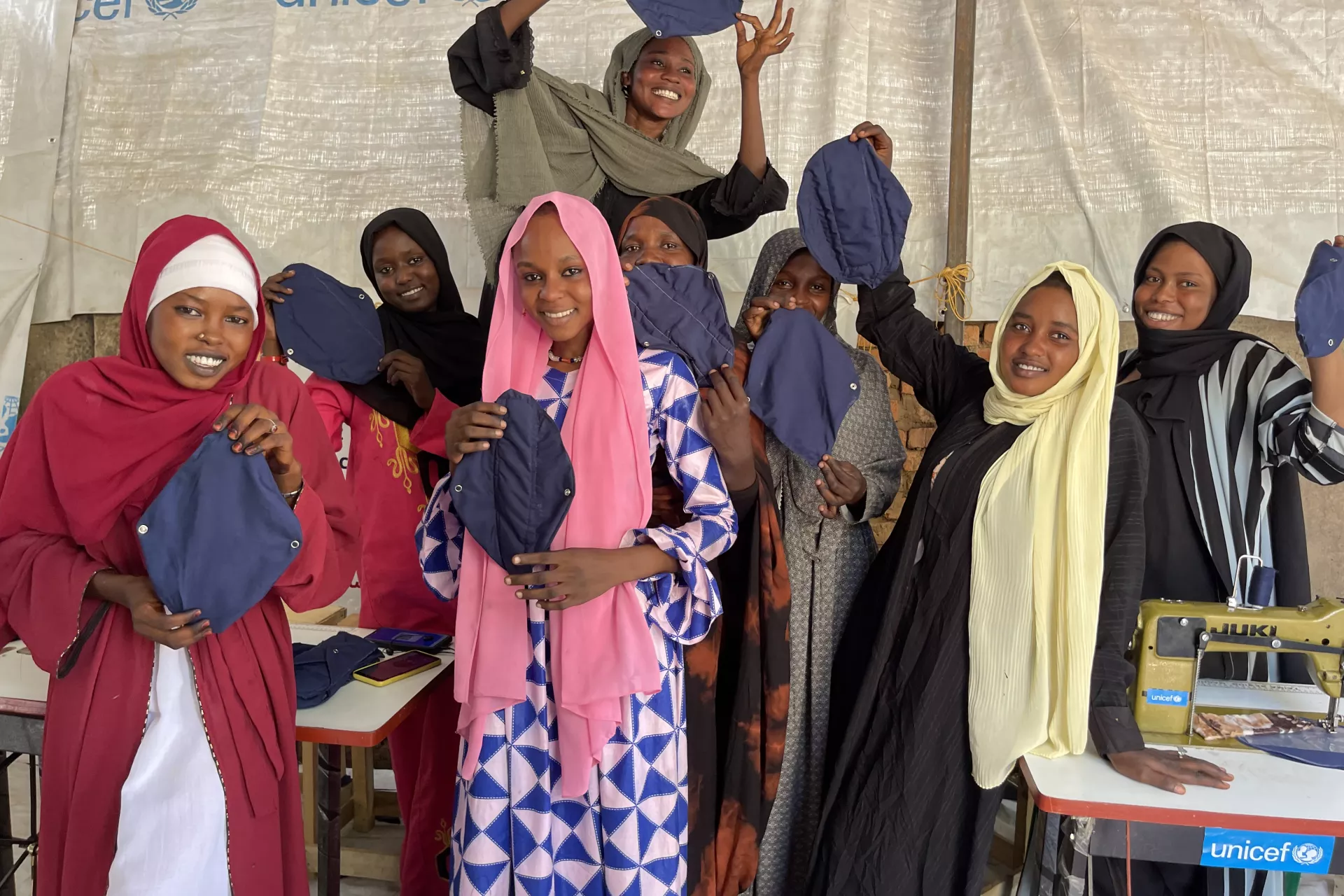
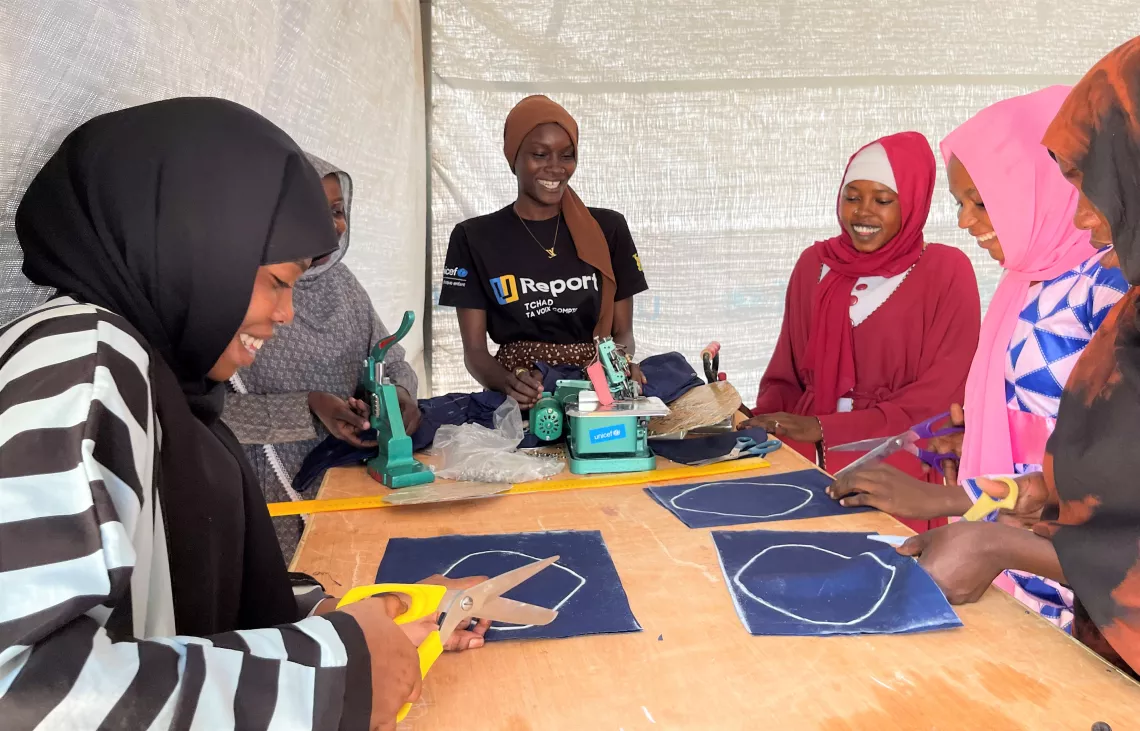
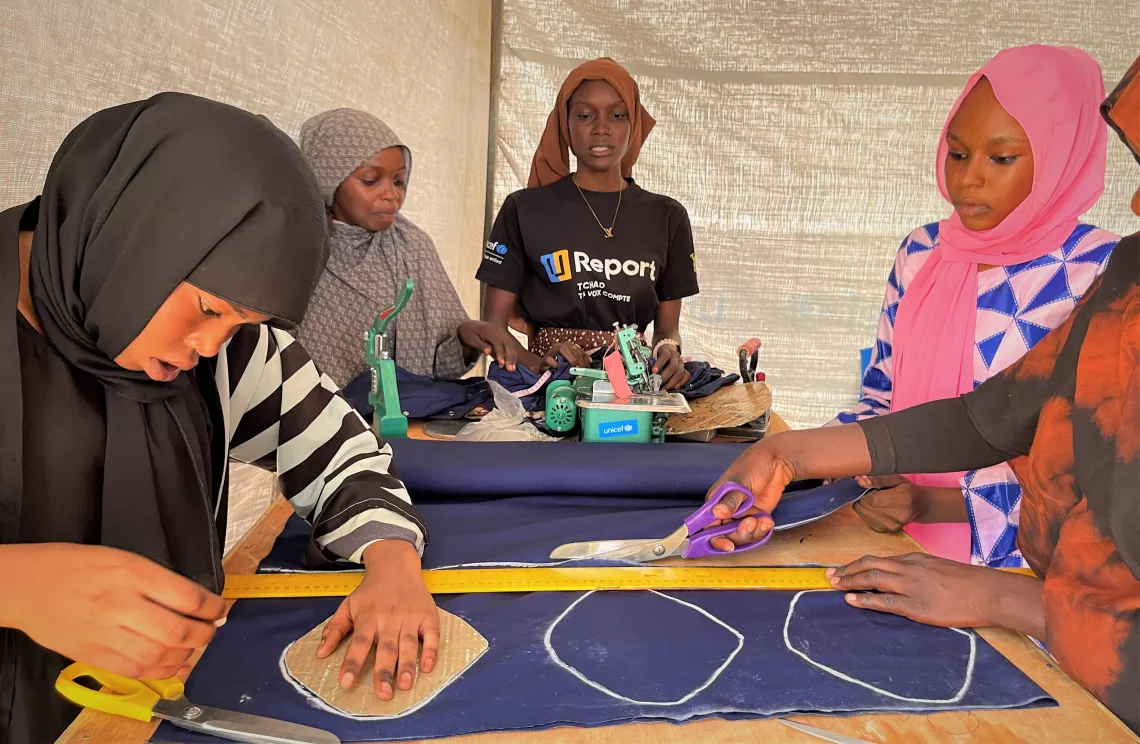
Under the shed built in the courtyard of Adré’s cultural centre, a dozen young girls, Sudanese and Chadian refugees from Adré, are busy working around the sewing machines. Some are cutting the fabric into small pieces, others are sewing them, while a third group is ironing the finished product: washable, reusable sanitary pads.
"Since the refugees arrived and first settled inside Adré high school, we've had no classes. For weeks, I was idle and very bored",
Ibtihal says. Her mother, who used to trade between Chad and Sudan, also found herself suddenly destitute when the border was closed to trade.
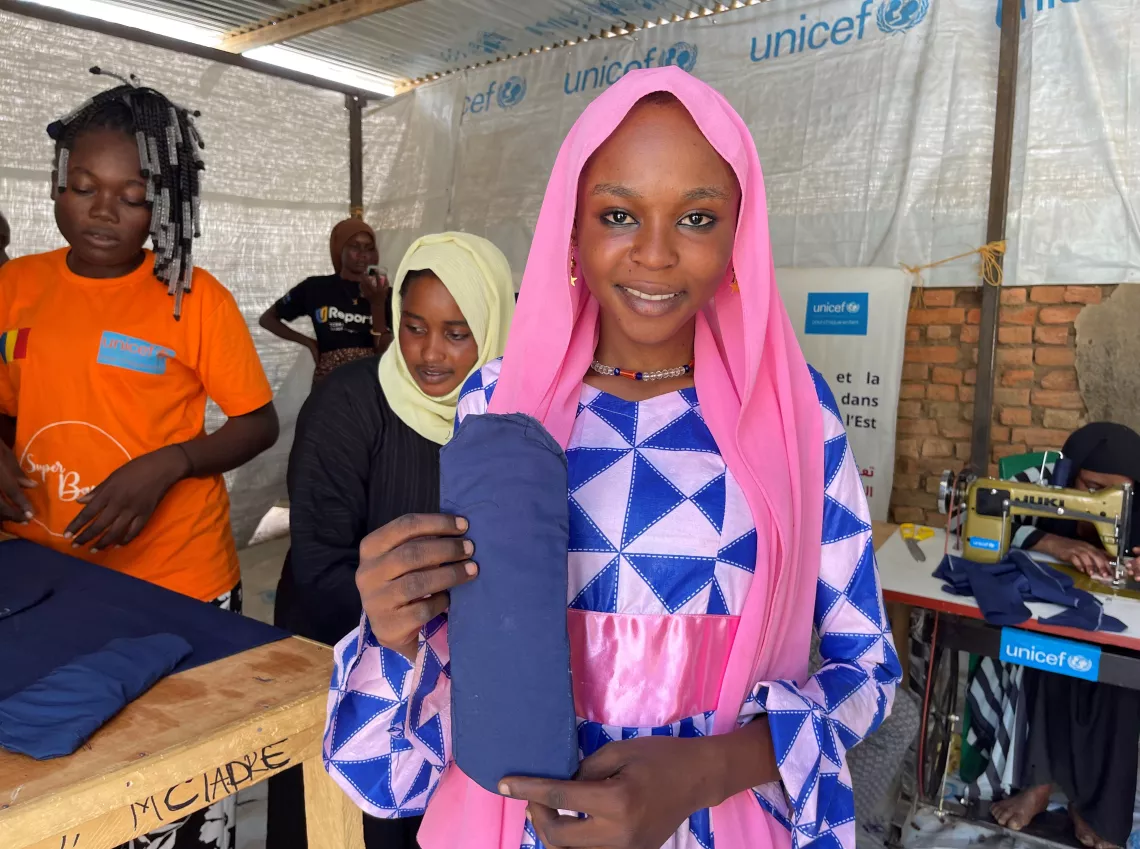
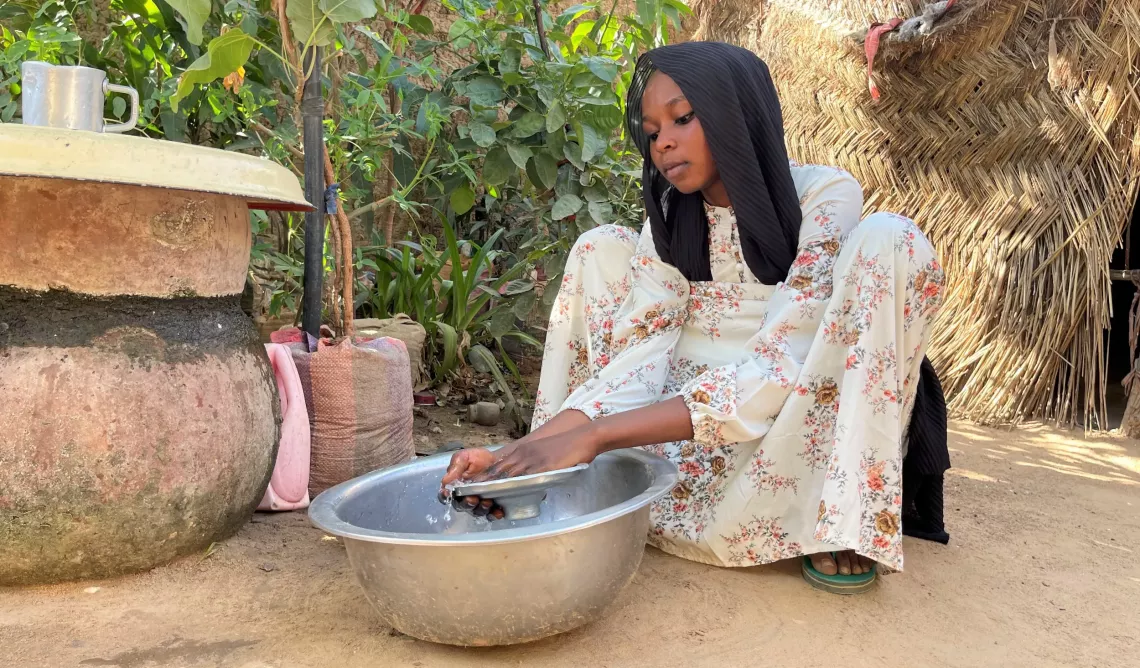
"In the past, girls used disposable sanitary towels imported from Sudan," says Ibtihal. “Now, the few sanitary pads you can find in the shops are so expensive that we can't afford to buy any more. In the past few months, I have been using pieces of cloth that I found at home to protect myself, which made me itch and risk infection. I was very worried since access to health services is difficult because they are overwhelmed."
Ibtihal explains.
The idea of setting up these small units to manufacture reusable sanitary pads came from the girls themselves. During a consultation organised by UNICEF, as part of its collaboration with the Chadian authorities to encourage the involvement of young people and adolescents in community activities, both young girls from Adré and refugee girls expressed a crucial need for menstrual hygiene kits.
Ibtihal and her team-mates underwent practical training in sewing and benefited from the experience of the Super Banat, Chadian girls living in the capital who have in-depth knowledge of how to make sanitary pads (read more about the Super Banat). It takes them less than a quarter of an hour to make a complete kit of five sanitary pads.
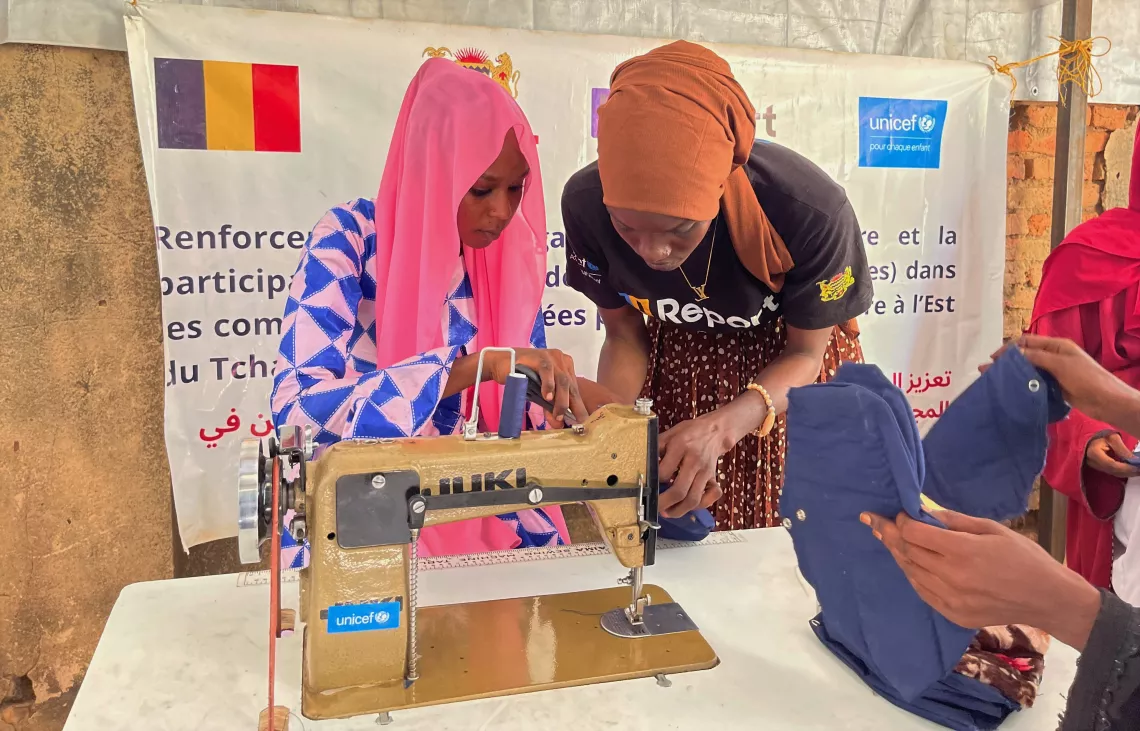
Ibtihal lives with her parents and two brothers, and sometimes helps her mother with domestic chores. While classes resume at her secondary school, Ibtihal leads the sub-group of six girls, aged 14 to 24, who come three times a week after school to make the sanitary pads. Their aim is to sewmore than 5,000 reusable sanitary pads, to be given away free of charge to girls who don't have any and, above all, who can't afford them. Her team includes two other locals and three refugees, with whom their personal relationships are increasingly developing into sisterhood.
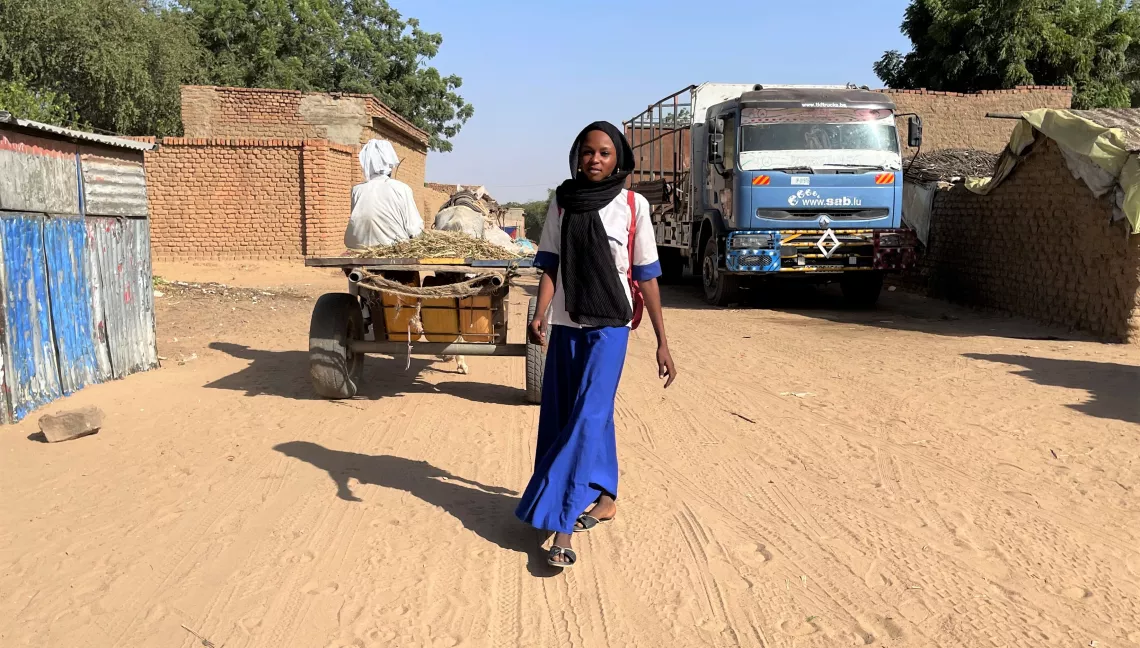
Zara Loksala, a 24-year-old Super Banat, travelled to the refugee camps of Adré, Farchana, Ourang and Mitché in eastern Chad to train young girls and teenagers to make reusable sanitary pads.
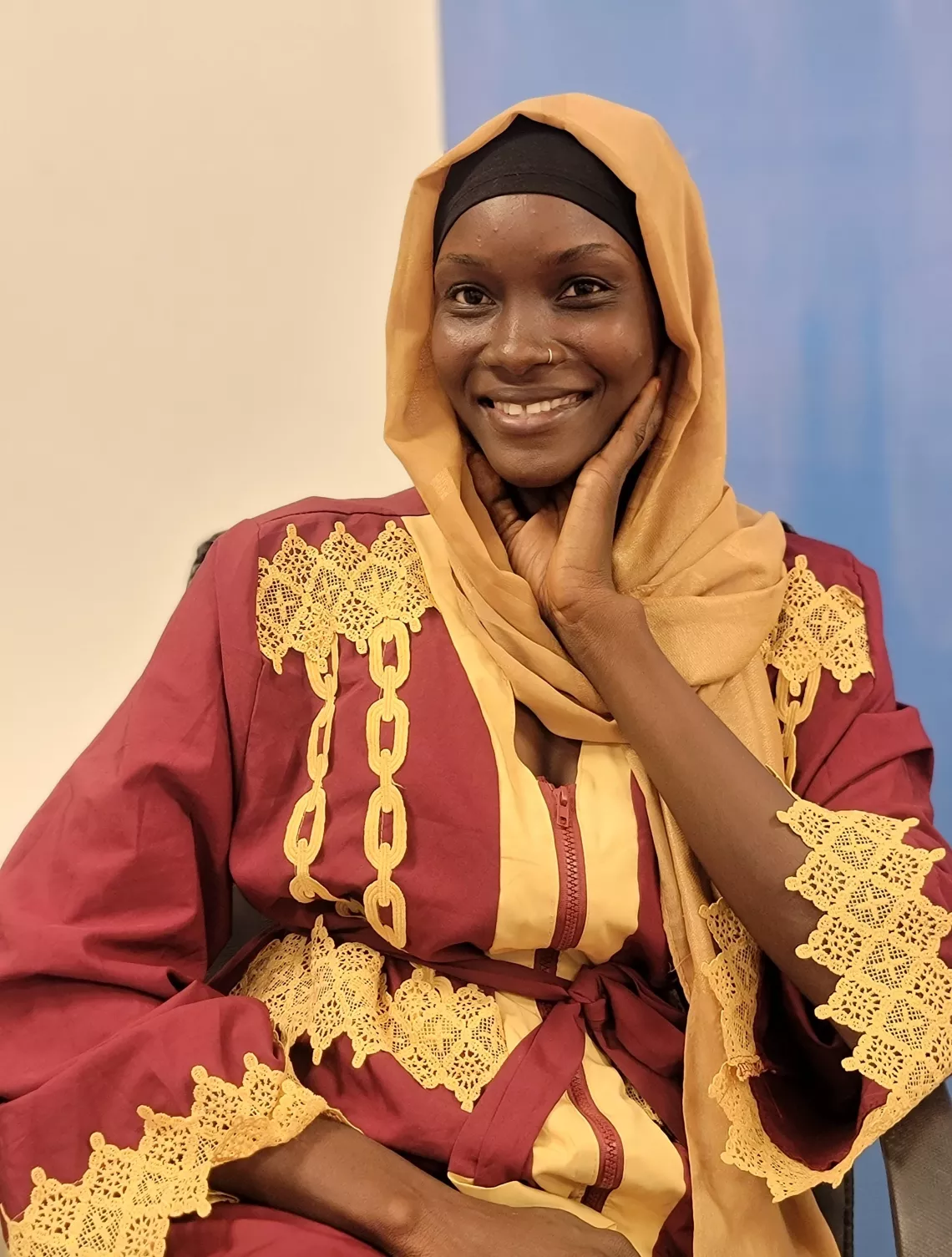
Meeting these girls was one of my best experiences. It was a moment of sharing. We learned about their lives, and they learned about ours. It's true they were forced to move because of the war, but we found girls who were courageous and determined to act. Among them were medical students, nurses and teachers who put their talents to good use. For example, in Ourang, a village near the camp, a Sudanese refugee decided to give Arabic lessons to children who were unable to go to school.
We met girls who had been victims of sexual violence and who had sexual health problems. We talked to them and gave them the opportunity to express themselves. We also shared with them the Super Banat experience in combating gender-based violence. The idea is to turn them into Super Banats in the camps and to act as spokespersons for girls and teenagers. I've heard from some of them who are already organising educational talks. I think they can easily make a positive difference. I am very happy because we have left a mark behind us.
In eastern Chad, in communities affected by the arrival of refugees from Sudan, UNICEF, with the support of the Ouaddaï Youth Delegation, has set up youth spaces called "Nadi Al Chabab". This space provides a safe and welcoming environment where young refugees and host communities can meet, exchange ideas and receive advice. Topics covered range from access to drinking water, to promoting hygiene in their living environment, to how to resolve conflicts without violence. Adolescent girls and young women also have concerns, particularly about the threat of sexual violence. The aim of these initiatives is to encourage dialogue and collaboration between these young people who were living in different countries, and to promote a culture of solidarity and mutual understanding in order to facilitate cohabitation.
Thanks to this initiative, 228 young refugees and local people, including 58 from Farchana, have been trained in community involvement, peacebuilding, gender-based violence and good hygiene practices.