The midwives at the heart of improving maternal health in the Central African Republic
With support from UNICEF's thematic funds and the Eleva Foundation, matrons save lives.
- English
- Français
The Central African Republic faces one of the greatest public health challenges in the world: how to reduce the neonatal and maternal mortality. The country has a maternal mortality rate of 882 per 100,000 living births and is the second worst country in the world for neonatal deaths: 28 per 1,000 living births. A dire lack of qualified medical personnel, limited access to health care services as well as a high rate of deliveries at home (esteemed at 42%), rank high among the main factors accounting for this tragedy.
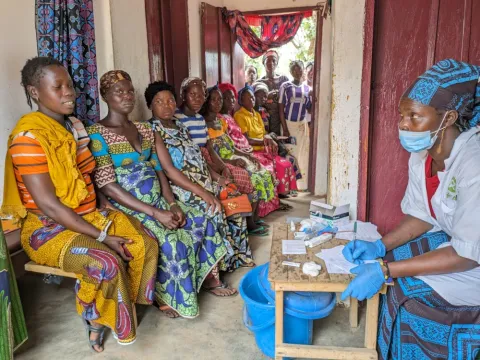
In order to improve access to maternity services, UNICEF provides an integrated support to five (out of 35) of the country’s health districts. The aim is to reduce delays in ante-natal consultations and to provide pregnant mothers and their new borns with a proper health care. One of the selected places of intervention, which faces many health challenges, is the district of Bossangoa, hosting 176,688 inhabitants, located in the North-West of the Central African Republic. The regional hospital, even though equipped with a maternity ward, is more than 90 kilometers away from the farthest villages. One of them is Ndokota, 60 kilometers from Bossangoa, with very limited access to maternity services.
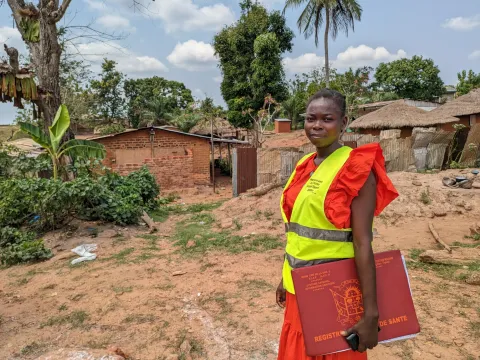
Adèle, a matron living in Ndokota, plays an essential role in her community’s maternal and neonatal health. As the first contact person for pregnant women, she offers advice as well as a precious helping hand during deliveries. Thanks to a partnership between UNICEF and the health thematic funds, complemented with other funds received from some other donors like the Eleva Foundation, a series of practical trainings were put in place to build better practical capacities in obstetric and neonatal care, using life-saving techniques and using dummies. Adela profited from these trainings, which endowed her with some practical knowledge and skills to improve conditions of delivery in her village.
I am so happy to have learnt better health practices to help mothers deliver safely
This programme is part of a larger initiative aiming at improving health care services to pregnant women and their new borns.
For the last few months, we have had an ambulance that saves the lives of women who arrive in a state needing urgent care
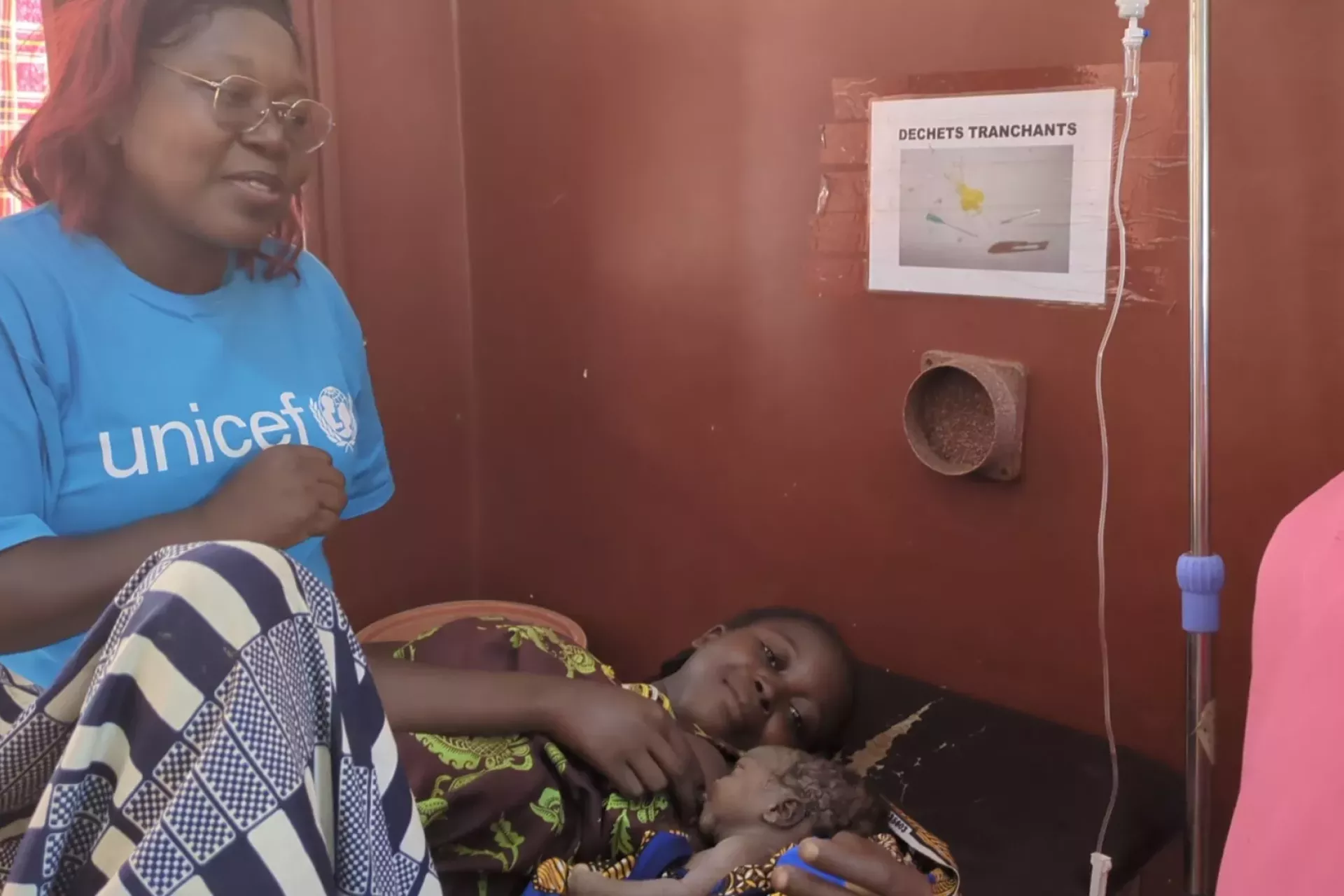
Cecilia, head of the maternity ward at the provincial hospital of Bossangoa, shares this same feeling of progress. Aged 58, with several decades of experience as a midwife, she has witnessed several positive changes.
My biggest frustration was to see women arriving at the maternity in a critical state because of bad roads. Some of them run the risk of losing their babies, even their own lives, during their difficult journey
In the villages around the Ndokota health centre, every month, a matron can assist to an average of five to ten deliveries, at times ever from eight to ten during high peak periods
A host of anonymous heroes, like Adèle and Cecilia, struggle daily in the most remote villages of CAR so that pregnancies do not become a serious health risk. Matrons, some of whom have between 15 and 20 years of experience, have benefitted of several practical trainings and have received essential kits to help them carry out antenatal consultations as well as deliveries.
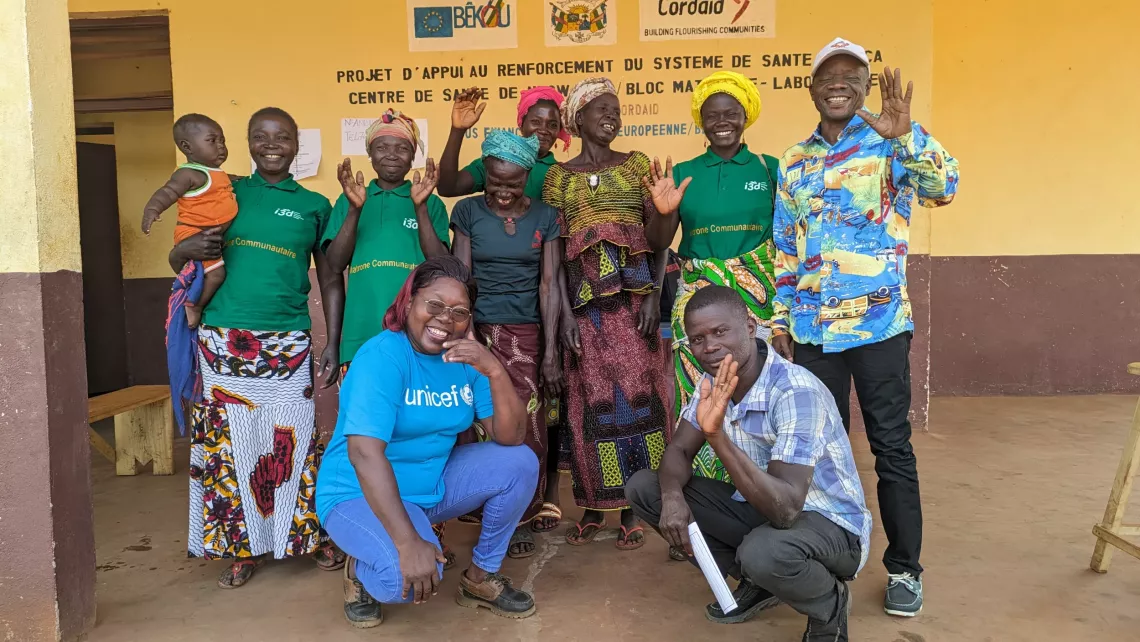
Even though they never went through any formal academic training, traditional birth attendants play a key role in remote communities, where access to health care is limited. Their know-how, handed over from mother to daughter, makes of them true actors in the network of pronatalism. They become often the first resort of reproductive health services in their villages.
The support from the Eleva Foundation and of the UNICEF Thematic Fonds has made it possible to train 260 matrons, of which 60 in Bouca, 84 in Bossangoa and 116 in Bouar, and to distribute several sets of essential medical kits to reduce the risks linked to pregnancy and delivery. These investments are having a deep impact, offering to every mother the opportunity of delivering in safe conditions, reducing the pregnancy-associated risks.
I am so happy to have learnt the best practices of health to help mothers deliver without any problems
The mothers who benefit from this improved health services share, no doubt, the same joy.