Child vaccination in the Central African Republic
In Bambari’s health centres, UNICEF and the Ministry of Health support child immunization thanks to funding from the King Salman Humanitarian Aid and Relief Centre.

- English
- Français
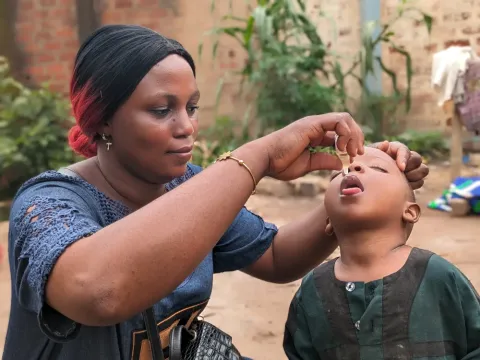
Every Friday and Saturday, the waiting room of the EVP section (Expanded Vaccination Programme) at the Samaritain health centre of Bambari, receives scores of parents -mostly mothers- who arrive with their children for immunization. Benicia Mayo, 31 years, nurse in charge of the programme, is all smiles every time she sees them coming:
We are definitely succeeding with the vaccination, and this is encouraging. We keep having more and more children who receive life-saving shots.
The Samaritain health centre is located near the Bambari taxi rank, a busy junction at the city centre. Boasting well-stocked markets, new buildings under construction and schools frequented by thousands of children, the town knows today an environment of peace which has progressively returned
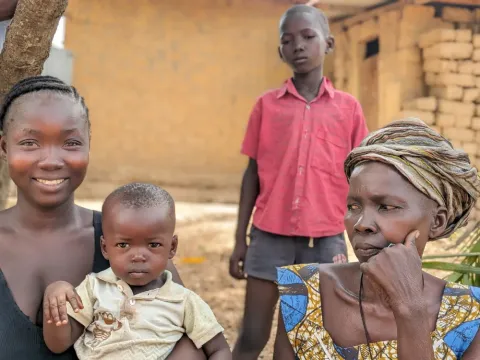
Nevertheless, a large part of the population is made up of displaced persons who fled the successive waves of violence that engulfed the zone between 2013 and 2021. Most of them settled in the neihbourhoods laying at the Western bank of river Ouaka, notably in areas close to the airport where they relied on the MINUSCA military bases that gave them a semblance of protection. Today, even if the guns fell silent, many of the displaced preferred to remain in Bambari rather than return to their original villages, some of which up to today are still hit by intermittent insecurity.
But most people still find it hard to survive day by day. Une of the biggest challenges is how to guarantee to the population of Bambari essential health services, notably for children. The Samaritain health centre, just like the other dispensary located at the Aviation neighbourhood, receives daily a constant flow of patients who come looking for medical services, including immunization for their children.

Solomon Toumba, head nurse of the Samaritain health centre, is satisfied with the progress made so far in the immunisation campaigns they carry out. According to him, this the community-based agents should be given credit for this :
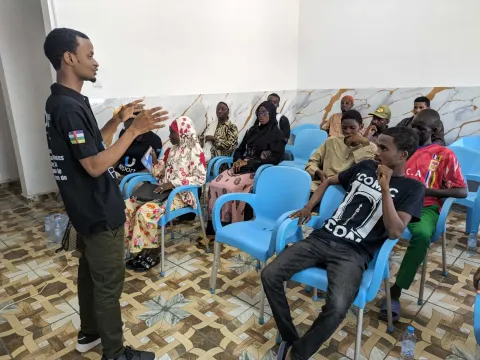
They reach every single neighbourhood on foot and, with the help of the quarter chiefs, they sensitize the population, door by door, about the importance of vaccinating all the children in order to protect them against many diseases. We are happy with the results we are seeing.
According to Mr. Toumba, there are still some people who show skepticism towards vaccines, but they are becoming fewer and fewer. He is convinced that most people understand the importance of immunization and act accordingly, taking their children to benefit from the EVP scheme, which is free of charge.
To respond efficiently to the the population’s needs and guaranteeing a complete vaccine coverage for all the children is still an uphill task, especially in a country like CAR where 86 % of children between 12 and 35 months have not been completely vaccinated, because of lack of proper means as well as of enough information.
The health centres in Bambari have enough doses of vaccines for measles and polio in stock, thanks to a generous funding from King Salman relief. This has allowed UNICEF, working in partnership with the Ministry of Health and Population, to implement an ambitious immunization programme in 24 of the 35 health districts of the Central African Republic. The goal is to facilitate a fair access to vaccination to all the country’s children.
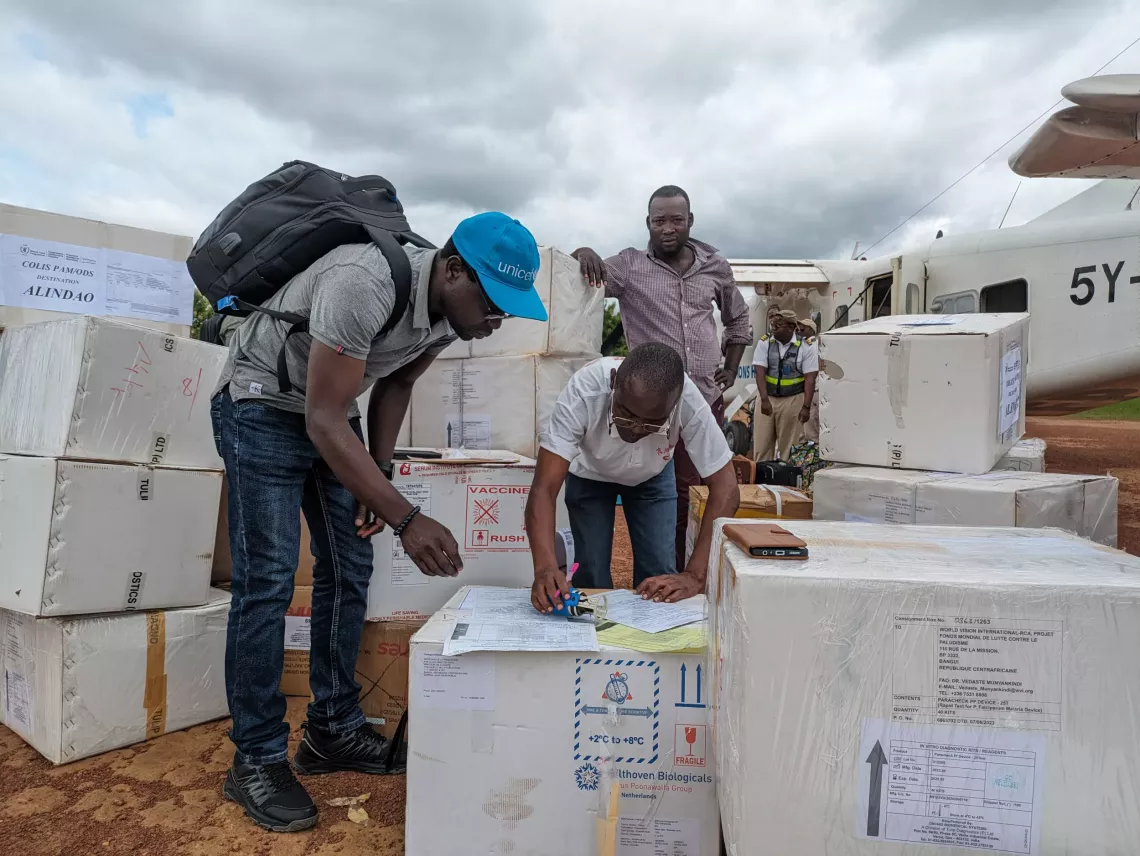
Thanks to the vaccines purchased with funds from the KSrelief, 84,241 children so far have received three doses of vaccine against polio (VPO3), and 93,780 children have been vaccinated against measles.
All available logistical means have been mobilized for the vaccines to reach even the more remote areas. Once they are in the different health centres, thanks to the commitment displaid by the community-based agents, as well as health personnel like Solomon and Benicia, the rate of non-vaccinated children shall continue to drop in the Central African Republic.