Seeing the Child, Not the Disability: How Inclusive Education Is Reopening Doors for Children
In crisis-affected communities where education has been under attack, UNICEF and partners are proving that inclusion is possible and essential.
In all crisis-affected contexts, children with disabilities face double consequences. When conflict disrupts education systems, these children are often the first to be excluded and the last to be reached. For every child who cannot access education, there is a child with a disability who also loses access to education, health services, protection, psychosocial support, and overall well-being. The prolonged crisis in Cameroon’s North West and South West regions, characterized by repeated attacks on education, has further deepened these inequalities, leaving many children with disabilities isolated and invisible.
The UNICEF Disability Inclusion Policy and Strategy (DIPAS) 2022–2030, aligned with the Convention on the Rights of the Child (CRC), envisions a world where all children, including those with disabilities, live and learn in barrier-free and inclusive schools and communities by 2030. This vision is grounded in a simple but powerful principle: inclusion starts with each of us. In crisis settings, realizing this vision requires intentional action to ensure that children with disabilities are not left behind when education systems are disrupted.
In the North West and South West regions of Cameroon, many children with different forms of disabilities have been unable to attend school for years due to insecurity, displacement, stigma, and the lack of adapted learning environments. In response, UNICEF, in partnership with the Cameroon Baptist Convention Health Services and the Presbyterian Community Rehabilitation Services, is working across affected communities to restore access to education through inclusive approaches.
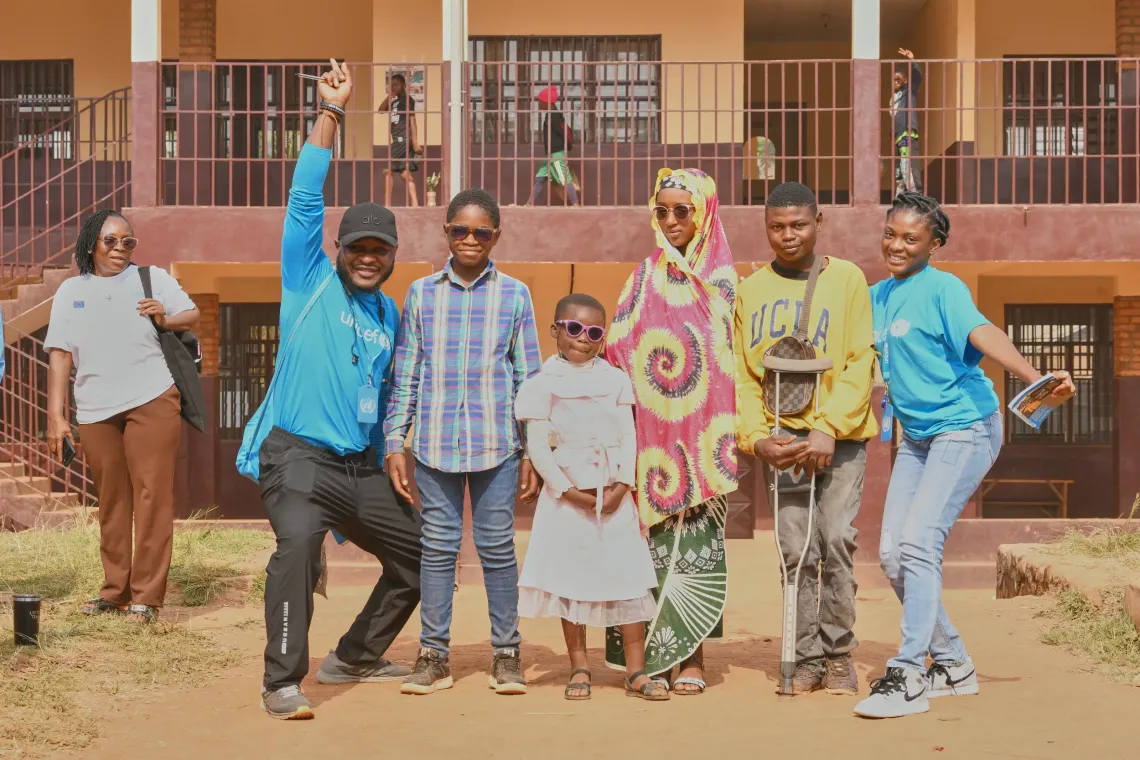
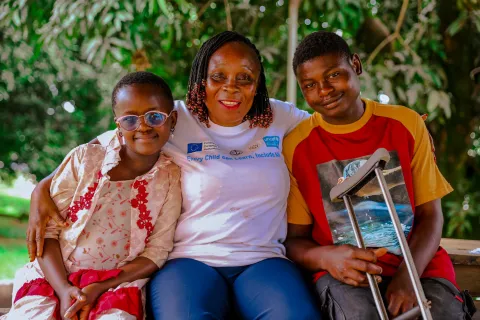
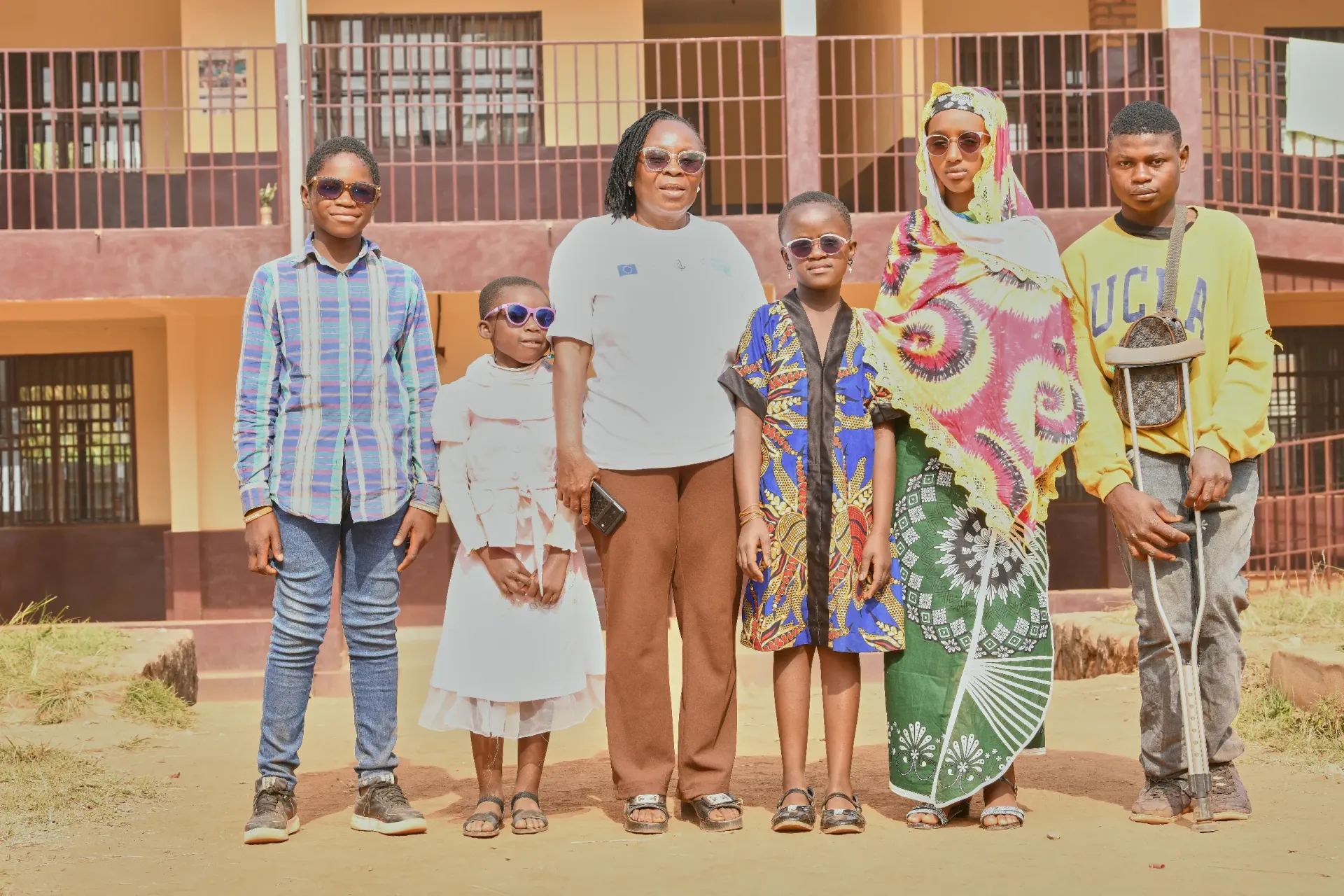
Beyond access to learning spaces, the project focuses on creating an enabling environment, strengthening family and community support, and improving service delivery. Over 3,000 of children have been screened in schools and Temporary Learning Spaces to identify disabilities and determine the specific support each child needs to learn. Through this process, children have received essential assistive devices, including stylus and slates for children with visual impairments, crutches and mobility aids for children with physical disabilities, glasses for children with visual difficulties, and hearing aids for children with hearing impairments. Reports from early 2026, show that, more than 100 children had already received such support, significantly improving their ability to participate in learning.
Teachers play a central role in making inclusion a reality. UNICEF has trained more than 82 teachers and facilitators working in schools and Temporary Learning Spaces on inclusive education practices, including Universal Design for Learning, basic Braille and sign language, and psychosocial support for children affected by conflict and trauma. These educators are not only teaching academic skills but also helping children rebuild confidence, resilience, and a sense of belonging.
For Madam Nakum Theresia Tita, a Facilitator at Temporary Learning Space Mulang 1 in Bamenda II with over 25 years of teaching experience, inclusive education has transformed both her classroom and her students.
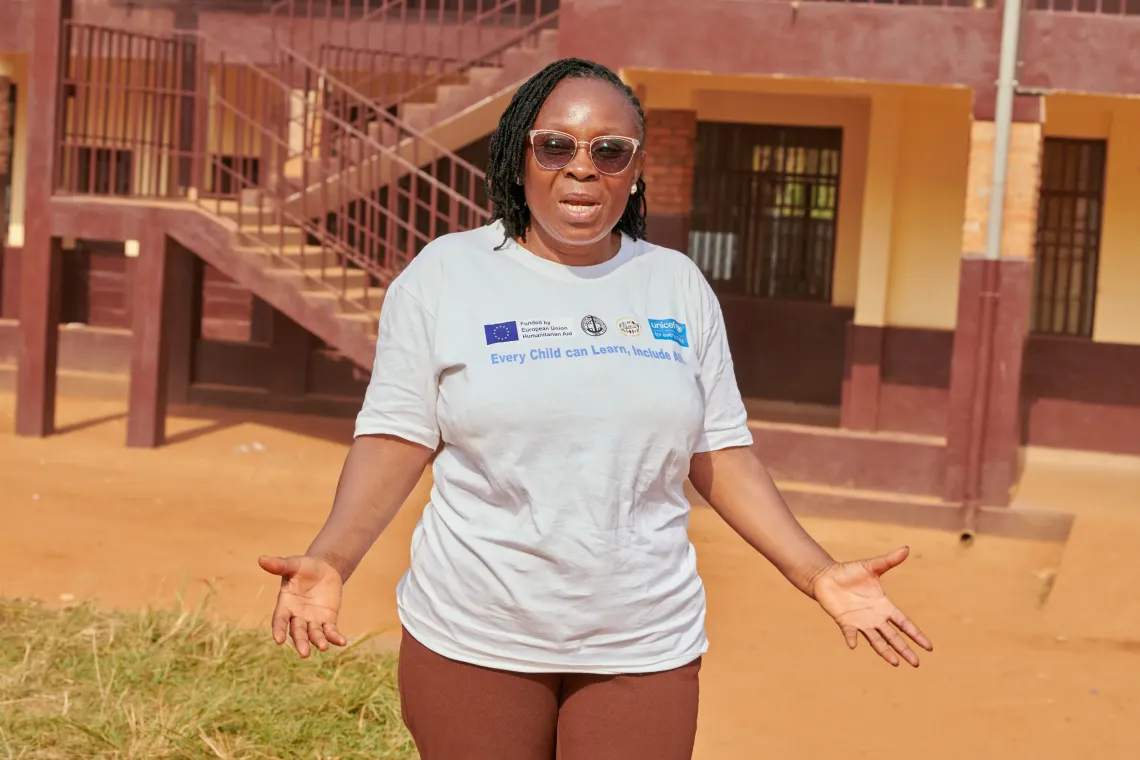
“We must see the child, not the disability. When a child is given the right support, you see happiness return, confidence grow, and the desire to learn come alive again.”
Teaching in an active conflict zone comes with daily challenges. Gunshots, ghost towns, and sudden displacement frequently interrupt learning. Madam Theresia recalls moments when classes had to be stopped abruptly to ensure children’s safety.
“There were times when we heard gunshots while the children were in school. Our first responsibility was to calm the children and guide them home safely. Even in fear, the children wanted to return, because school had become a place of hope for them.”
The impact of inclusive education is most visible in the lives of individual children. Madam Theresia speaks of a child who arrived withdrawn and isolated due to a physical disability. After receiving mobility support and learning in an inclusive environment, the child’s transformation was immediate.
“The day he received his support, he could not stop smiling, Today, he is always eager to come to school. Moments like that remind us why we must continue.”
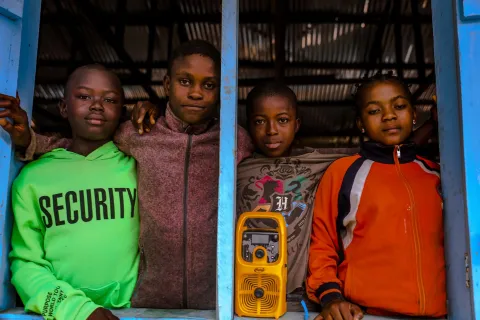
Inclusion extends beyond the classroom. Through community engagement, radio programmes, and direct outreach, UNICEF and its partners have reached more than 14,000 people with messages promoting inclusion and challenging stigma. Communities are increasingly encouraged to recognize that every child can learn and that disability should never be a reason for exclusion.
While progress has been made, the needs remain immense. Less than half of children with disabilities are currently accessing the services they require, particularly in crisis-affected settings. Inclusive education cannot be achieved by UNICEF alone. Sustained collaboration with the Government, local authorities, communities, and development and humanitarian partners is essential to ensure that children with disabilities are identified early, supported effectively, and included in education and other essential services.
Every child has the right to learn, to be protected, and to thrive. To make this, partners, communities, and families must work together to remove barriers, bring children with disabilities out of isolation, and ensure they can access education, health care, and protection services. Inclusion is not optional, it is a responsibility we all share, and it begins by seeing the child, not the disability.