Remedial classes boost education in crisis-hit regions
With support from UNICEF and EU Humanitarian Aid, remedial classes restore hope and learning in Cameroon’s crisis-affected regions.

Before my child started attending the remedial classes, she was not serious. She did not know how to read. She did not know how to write. But when she started attending the remedial classes, I started seeing some great improvement in her results. Mrs. Nkwain Marylin, a mother from the region, shares her daughter's story.
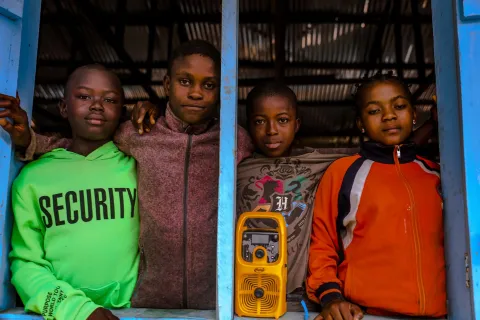
In the Northwest and Southwest regions of Cameroon, the right to education has been deeply compromised. Years of socio-political instability have led to the closure of more than half of the schools, leaving thousands of children without consistent access to learning. Many have dropped out entirely, while others remain in school but struggle to keep up due to disrupted schooling, displacement, and trauma.
In this context, children face significant learning gaps, especially in foundational subjects like English and Mathematics. These gaps not only hinder academic progress but also affect children's confidence, motivation, and ability to transition to higher levels of education.
To address this urgent challenge, the concept of remedial education was introduced as a targeted intervention by UNICEF. Remedial classes are specialised learning sessions designed to help children who are performing below expected standards catch up with their peers. These classes go beyond simply re-teaching content; they identify the root causes of poor performance and apply tailored teaching methods to address individual learning needs. The approach includes differentiated instruction, peer tutoring, small group learning, and individualised support, all aimed at improving literacy and numeracy skills.

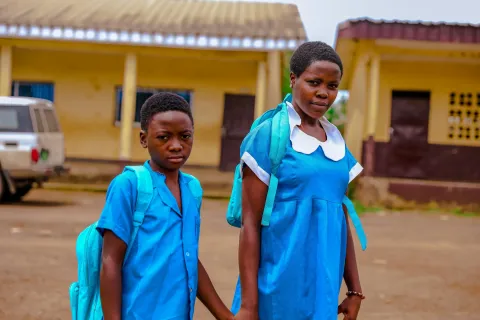
Recognising the importance of this intervention, UNICEF, in collaboration with the Ministry of Basic Education, launched a Remedial Education Programme in January 2025. The program targeted children in Classes 4, 5, and 6 who underperformed in their first-term assessments. It was structured to offer both in-class and out-of-class support, with sessions held in the mornings and afternoons during the school term, and more intensive sessions during holidays.
Teachers were carefully selected and trained by regional pedagogic inspectors to deliver these lessons effectively. Schools identified suitable learning spaces, and parents were actively engaged through meetings and WhatsApp groups to ensure consistent communication and feedback.
One of the most powerful testimonies comes from Mrs. Nkwain Marylin, a parent whose daughter participated in the program. She shared:
“Before my child started attending the remedial classes, she was not serious. She did not know how to read. She did not know how to write. But when she started attending the remedial classes, I started seeing some great improvement with her results.”

At the end of the remedial cycle, children underwent end-of-year assessments. The results were remarkable. Out of the 5,627 children (2,931 girls) enrolled in the programme, which exceeded the target of 5,000 and achieved 113% coverage, the vast majority successfully improved and transitioned to the next class. Specifically, 1,843 children (875 girls) participated in Class 4, 1,881 (928 girls) in Class 5, and 1,903 (909 girls) in Class 6. The classes were held three times a week, two hours per day, and taught by carefully selected teachers with multigrade teaching methodology skills.
This initiative has not only improved academic performance but also fostered inclusion, reduced dropout rates, and restored dignity to children who had been left behind. It has empowered teachers with new methodologies and strengthened community engagement in education.
The success of this program was made possible through funding from EU Humanitarian Aid. Their support continues to enable UNICEF and the Ministry of Basic Education to reach vulnerable children with quality education, even in the most challenging circumstances.
Through continued teaching and remedial support, children who were once at risk of academic failure now have a renewed chance of succeeding. The remedial education program is not just helping learners catch up—it is restoring dignity, building resilience, and opening doors to brighter futures. As more children, like Mrs Nkwain Marylin’s daughter, begin to thrive, the need to reach many more remains urgent. With sustained commitment and collaboration, we can ensure that every child, regardless of their background or the challenges they face, can learn, grow, and succeed.
For every child, a chance.