Reaching every child: life-saving vaccines for conflict-affected communities in Cameroon
Resilient Contributions of Community Health Workers in Wabane to Cameroon’s National Big Catch-Up

The ongoing sociopolitical crisis in the Northwest and Southwest regions of Cameroon has left over 350,000 children either unvaccinated or under-vaccinated. With displacement disrupting healthcare services and security concerns restricting movement, access to essential immunization remains challenging.
The impact is particularly severe in Wabane Health District, located in the Southwest region. Nestled 262 km from the regional delegation, this hard-to-reach area faces geographical isolation and insecurity, limiting the reach of health services. As a result, vaccination coverage in Wabane hovers at just 50%, with more than 1,281 children missing out on critical immunizations.

Despite these challenges, community health workers—often the backbone of healthcare in conflict-affected areas—have stepped up to ensure that children receive life-saving vaccines. With health facilities operating at reduced capacity and only two state-employed health personnel in the district, volunteers and community health workers have taken on crucial roles. Through UNICEF’s "Big Catch Up" initiative, these frontline workers are equipped with the training and resources needed to reach vulnerable children.

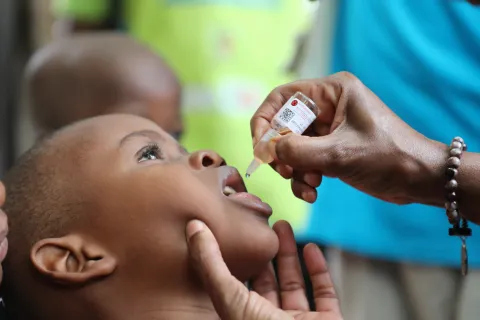
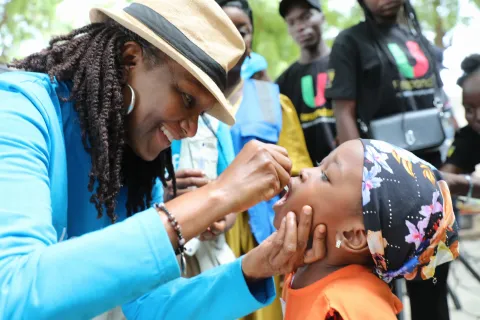
The initiative has not only provided logistical support, enabling health workers to travel to remote communities, but it has also strengthened the capacity of volunteers through coaching and on-site training. This approach has empowered community health workers to safely administer vaccines to children who would otherwise be unprotected against preventable diseases.
However, the mission is not without its risks. Insecurity remains a major concern, and health workers often need to adapt their strategies in real time. In some communities, outreach teams have had to employ a "hit-and-run" strategy—quickly delivering vaccines before leaving the area to avoid potential threats. In one instance, a planned vaccination session was unexpectedly secured by the presence of military personnel, allowing the team to proceed. While this was a fortunate outcome, it underscored the precarious nature of delivering healthcare in conflict zones.

Community acceptance is another challenge. Some parents, fearing stray bullets during clashes between state security forces and armed groups, choose to hide indoors or flee into the bushes when vaccination teams arrive. Additionally, the lack of visibility materials, such as aprons and identification badges, has led to mistrust, with some team members facing interrogation or being falsely labelled as spies. Ensuring that health workers are visibly recognized as neutral, life-saving agents is crucial for the success of the immunization campaign.
Despite facing significant challenges, the resilience and dedication of community health workers are making a real difference. Thanks to their hard work and support from partners like UNICEF, more children in Wabane are receiving the vaccinations they need to survive and thrive.
UNICEF is committed to ensuring that every child, regardless of their location, has access to life-saving vaccines. However, we cannot achieve this alone. Your support can help us reach more children in conflict-affected regions who desperately need healthcare. Join us in protecting the future—every child deserves a chance at a healthy life.
Donate now to support UNICEF’s work: https://www.unicef.org.au/donate/i-am