The Bakas pygmies children deprived of essential basic social services
Their schooling difficulties mirror their social exclusion in many areas.

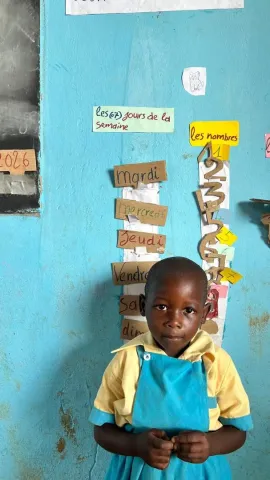
A small school, located in Payo, a small Baka village near Lomié in eastern Cameroon, would like children to attend school regularly. But the obstacles are many, for these little Bakas who are mostly deprived of access to basic social services. Their schooling difficulties mirror their social exclusion in many areas.
In this Baka village, schooling is a real issue. All children are expected to attend primary school. And most of them do, or at least at the beginning of the school year. But the dropout rate is alarming. Thus, for the 2018/2019 academic year, after one term, more than half of the Baka students had dropped.
Why? Simply because they are Bakas? Of course not. Those we interviewed were unanimous: these Baka children lack absolutely everything, most importantly food. But they are also deprived of birth certificates, proper infrastructure, school materials, health care and even easy access to clean water. Here, there is no borehole, but just a well at the end of a winding path in the heart of the forest.

Children deprived of health care
At the health level, mobile immunization campaigns certainly allow the youngest children to be vaccinated, but it’s not so straightforward for not those aged around 10. Services remain inaccessible to children given the poverty in which their parents live. François, a father of eight, explains that his youngest child, Robert, goes to school regularly, unlike his seven older children. They quickly gave up their schooling and François regrets not having realized earlier the importance of education.
Today his children, who are jobless, suffer daily. He encourages Robert, even though it is difficult for him to buy the equipment and impossible to take him to the hospital when a health problem arises, as was the case during our visit. The boy had injured his foot by standing on a tree stump two weeks earlier. And as the father could not afford to take him to the hospital or pay for medical care, the child was not treated despite a gaping wound that was struggling to heal. This situation prevented him from attending school every day, even though both he and his father desperately wanted this.
There is a similar situation concerning the birth certificate. The national standardization of birth certificates and the work of BUNEC certainly allows newborns to have a birth certificate, but this is not the case for those born several years ago.

Hungry children
Joseph, who has been head teacher of the school for five years, noted that “dropping out of school does not mean the children are not interested in school. It’s a lack of energy because they are hungry.” Moreover, he says, “these children come to school in the morning. When they get back home, at the break, and realize that there is no food, they do not come back. Simply because they no longer have the strength.”
Joseph, who has been head teacher of the school for five years, noted that “dropping out of school does not mean the children are not interested in school. It’s a lack of energy because they are hungry.” Moreover, he says, “these children come to school in the morning. When they get back home, at the break, and realize that there is no food, they do not come back. Simply because they no longer have the strength.”
To truly illustrate the degree of hunger of these children, he tells us about something he’s often witnessed. Sometimes, in small fields adjacent to the schoolyard, cassava and sweet potato residues remain after harvest. During school hours, a student sometimes asks him if they can go out. He has realized that the child had gone out digging the earth, with his bare hands, in search of a small tuber to eat on the spot.
“You see how hungry these children can get ... That's the real problem, hunger.” But it’s not the only problem.
Even if hunger isn’t an issue, children still have to buy notebooks and pens, which many families can’t afford. And this little school in Payo struggles so hard to keep going that it is unable to help the children with these supplies.
You see how hungry these children can get ... That's the real problem, hunger

A school that’s falling apart
Indeed, this school is really badly off, even though the teaching staff cope admirably despite the bad conditions. One of the big problems is the lack of infrastructure. Of the three buildings planned to accommodate the 182 pupils of the six primary classes, only one is built from blocks and still operational. The other two were built with temporary materials which are falling apart over time. One of them, open to any wind and with partially collapsed walls, has even lost some of the metal sheets that served as roofing. Those that are still in place threaten to fall down and make the place dangerous. The school also lacks benches and tables.
With regard to basic materials, such as notebooks and pens, they are scarce and many parents in this small village, whether Bantu or Bakas, are too poor to buy such items. So the students organize themselves, like this girl and boy who simply share the same notebook, the same pen and the same slate. Attentive and strong with an admirable motivation, they follow what the teacher writes on the board with great concentration.
In this small Baka village where children lack everything, the solution to the fight against dropping out can only be multiple and long-term, so that these pupils can finally enjoy what other children have.