Aid cuts threaten fragile progress in ending maternal deaths, UN agencies warn
Countries must recommit to ending deaths in childbirth amid major headwinds
- English
- Français
GENEVA/NEW YORK/YAOUNDE, 7 April 2025 – Women today are more likely than ever to survive pregnancy and childbirth, according to a major new report released today. Still, United Nations (UN) agencies highlight the threat of major backsliding as unprecedented aid cuts take effect around the world.
Released on World Health Day, the UN report, Trends in Maternal Mortality, shows a 40 per cent global decline in maternal deaths between 2000 and 2023 – mainly due to improved access to essential health services. Still, the report reveals that the pace of improvement has slowed significantly since 2016 and that an estimated 260,000 women died in 2023 as a result of complications from pregnancy or childbirth – roughly equivalent to one maternal death every two minutes.
The report comes as humanitarian funding cuts are having severe impacts on essential health care in many parts of the world, forcing countries to roll back vital services for maternal, newborn and child health. These cuts have led to facility closures and loss of health workers, while also disrupting supply chains for lifesaving supplies and medicines such as treatments for haemorrhage, pre-eclampsia and malaria – all leading causes of maternal deaths.
Without urgent action, the agencies warn that pregnant women in multiple countries will face severe repercussions – particularly those in humanitarian settings where maternal deaths are already alarmingly high.
The report also provides the first global account of the COVID-19 pandemic’s impact on maternal survival. In 2021, an estimated 40,000 more women died due to pregnancy or childbirth – increasing to 322,000 from 282,000 the previous year. This upsurge was linked not only to direct complications caused by COVID-19 but also to widespread interruptions to maternity services. This highlights the importance of ensuring such care during pandemics and other emergencies, noting that pregnant women need reliable access to routine services and checks as well as round-the-clock urgent care.
The report highlights persistent inequalities between regions and countries, as well as uneven progress. With maternal mortality declining by around 40 per cent between 2000 and 2023, sub-Saharan Africa achieved significant gains – and was one of just three UN regions alongside Australia and New Zealand, and Central and Southern Asia, to see significant drops after 2015. However, confronting high rates of poverty and multiple conflicts, the sub-Saharan Africa region still counted for approximately 70 per cent of the global burden of maternal deaths in 2023.
Indicating slowing progress, maternal mortality stagnated in five regions after 2015: Northern Africa and Western Asia, Eastern and South-Eastern Asia, Oceania (excluding Australia and New Zealand), Europe and North America, and Latin America and the Caribbean.
Pregnant women living in humanitarian emergencies face some of the highest risks globally, according to the report. Nearly two-thirds of global maternal deaths now occur in countries affected by fragility or conflict. For women in these settings, the risks are staggering: a 15-year-old girl faces a 1 in 51 risk of dying from a maternal cause at some point over her lifetime compared to 1 in 593 in more stable countries. The highest risks are in Chad and the Central African Republic (1 in 24), followed by Nigeria (1 in 25), Somalia (1 in 30), and Afghanistan (1 in 40).
Beyond ensuring critical services during pregnancy, childbirth and the postnatal period, the report notes the importance of efforts to enhance women’s overall health by improving access to family planning services, as well as preventing underlying health conditions like anaemias, malaria and non-communicable diseases that increase risks. It will also be critical to ensure girls stay in school and that women and girls have the knowledge and resources to protect their health.
Urgent investment is needed to prevent maternal deaths. The world is currently off-track to meet the UN’s Sustainable Development Goal target for maternal survival. Globally, the maternal mortality ratio would need to fall by around 15 per cent each year to meet the 2030 target – significantly increasing from current annual rates of decline of around 1.5 per cent.
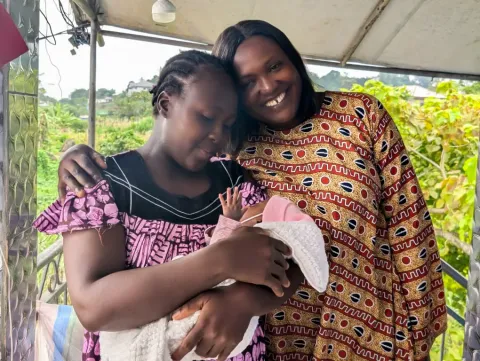
In Cameroon, maternal and child health remains a major challenge despite significant efforts to improve healthcare. In 2023, the maternal mortality ratio stands at 258 deaths per 100,000 live births (Trends in maternal mortality estimates 2000 to 2023), the newborn mortality rate at 25 per 1,000 live births, and under-five mortality at 67 per 1,000 live births (2024 Child mortality levels and trends). The country aims to achieve a ratio of 140 deaths per 100,000 live births by 2030 for maternal deaths, and 12 and 25 deaths per 1,000 live births for newborns and under-fives respectively, in line with the Sustainable Development Goals.
Cuts in humanitarian aid have severe impacts on essential maternal, newborn and child health services, particularly in the most vulnerable regions, the Far North, East, Adamawa, Southwest and Northwest. These regions are already facing complex humanitarian crises, including the Lake Chad Basin conflict and armed conflict.
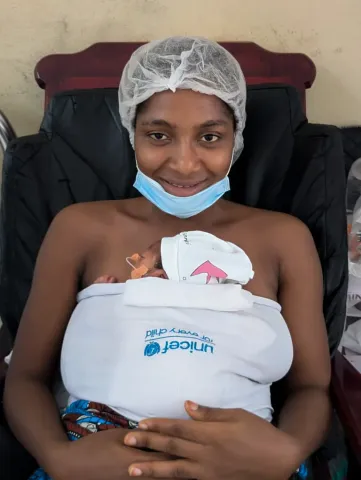
UNICEF Cameroon is actively working to strengthen health systems and ensure access to quality maternal, neonatal, and child healthcare. The support is focused on Primary Health Care and Community Health through the scaling up cost cost-effective high-impact health interventions. Through the thousand days approach, an integrated package of Maternal, Newborn and Child package is ensured at institutional and community levels with an emphasis on the most vulnerable (Internally Displaced Populations, refugees, difficult to reach and rural areas.
It is crucial to maintain and increase investments in maternal health to avoid a rollback of the progress made. UNICEF Cameroon calls for urgent action to ensure that every mother and baby has access to the necessary care to survive and thrive.
Thanks to the thousand days approach
While this report shows glimmers of hope, the data also highlights how dangerous pregnancy still is in much of the world today – even though solutions exist to prevent and treat the complications that cause the vast majority of maternal deaths. In addition to ensuring access to quality maternity care, it will be critical to strengthen the underlying health and reproductive rights of women and girls – factors that underpin their prospects of healthy outcomes during pregnancy and beyond.
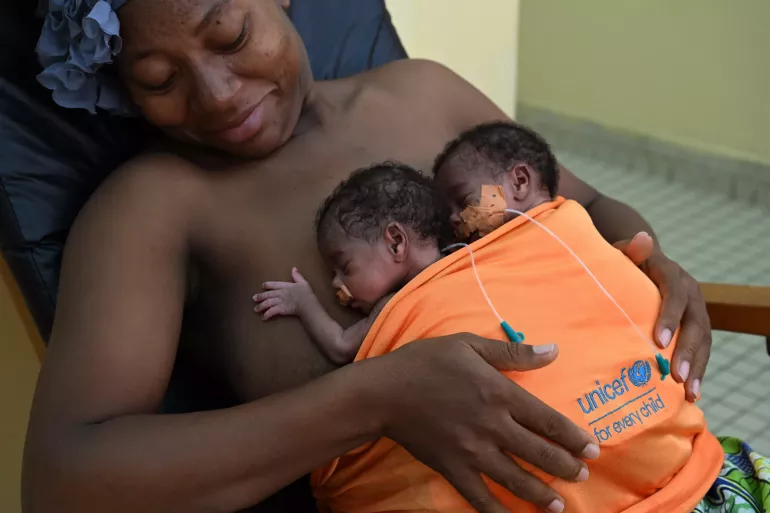
When a mother dies in pregnancy or childbirth, her baby’s life is also at risk. Too often, both are lost to causes we know how to prevent. Global funding cuts to health services are putting more pregnant women at risk, especially in the most fragile settings, by limiting their access to essential care during pregnancy and the support they need when giving birth. The world must urgently invest in midwives, nurses, and community health workers to ensure every mother and baby has a chance to survive and thrive.
Access to quality maternal health services is a right, not a privilege, and we all share the urgent responsibility to build well-resourced health systems that safeguard the lives of every pregnant woman and newborn. By boosting supply chains, the midwifery workforce, and the disaggregated data needed to pinpoint those most at risk, we can and must end the tragedy of preventable maternal deaths and their enormous toll on families and societies.
Media contacts
Additional resources
About the United Nations Maternal Mortality Estimation Inter-Agency Group
The report was produced by WHO on behalf of the United Nations Maternal Mortality Estimation Inter-Agency Group comprising WHO, UNICEF, UNFPA, the World Bank Group and the Population Division of the United Nations Department of Economic and Social Affairs. It uses national data to estimate levels and trends of maternal mortality from 2000-2023. The data in this new publication covers 195 countries and territories. It supersedes all previous estimates published by WHO and the United Nations Maternal Mortality Estimation Inter-Agency Group.
A maternal death is a death due to complications related to pregnancy or childbirth, occurring when a woman is pregnant, or within six weeks of the end of the pregnancy.
About UNICEF
UNICEF promotes the rights and wellbeing of every child, in everything we do. Together with our partners, we work in 190 countries and territories to translate that commitment into practical action, focusing special effort on reaching the most vulnerable and excluded children, to the benefit of all children, everywhere.
For more information about UNICEF and its work for children, visit www.unicef.org.
Follow UNICEF on Facebook, Twitter (X), Instagram, Linkedin , Youtube and TikTok