Living and learning on the Tonle Sap Lake
Teachers at floating schools face immense challenges to reach Cambodia’s most vulnerable learners. An early grade reading programme is helping them give young children the education they deserve
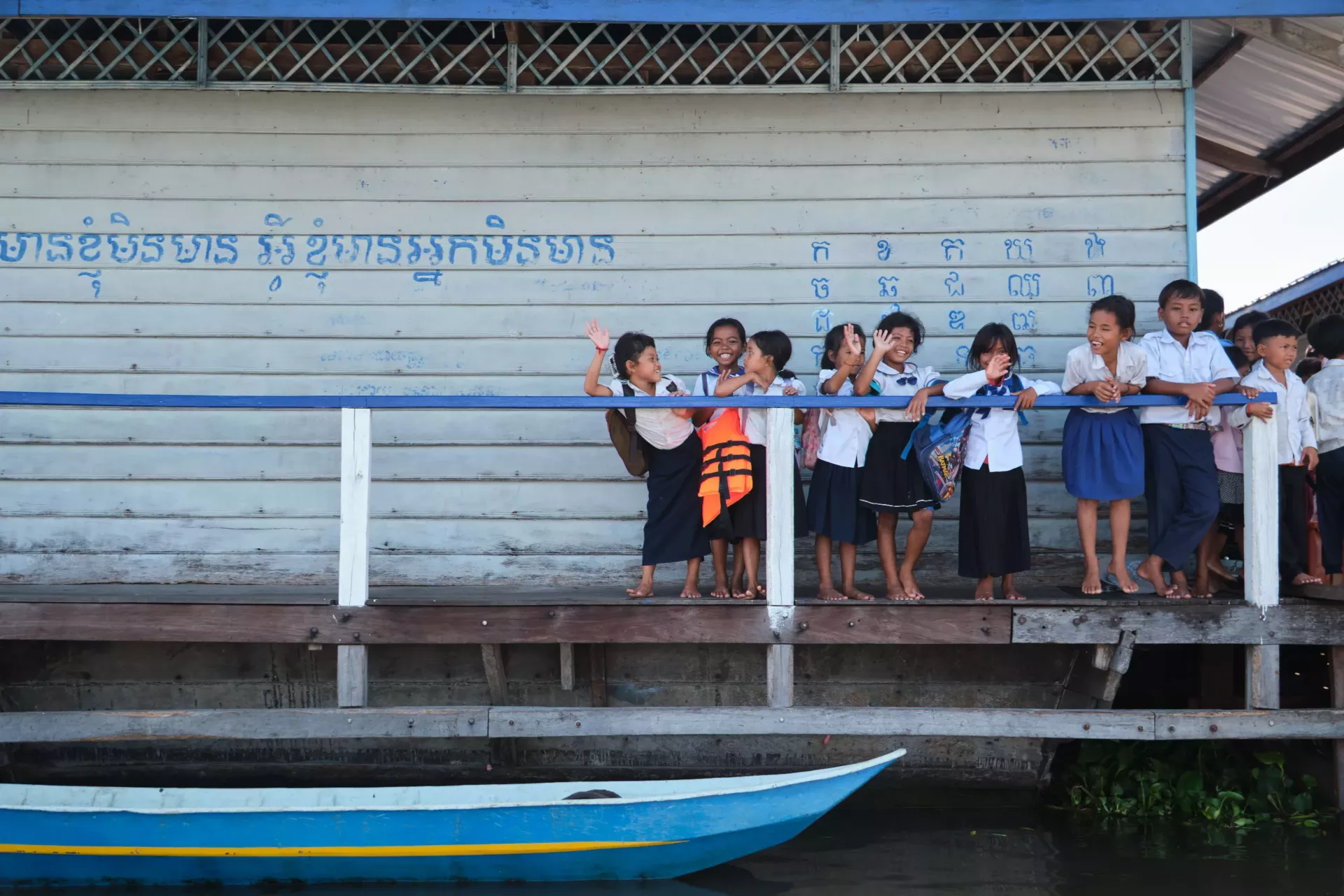
6 August 2024, Tonle Sap Lake, Pursat – On the Tonle Sap Lake, entire lives are lived and breathed on the water.
For the children on the lake, education is a hard-won battle. Every morning, children as young as six navigate small boats to their floating schools, a tiring journey they often make on their own. Some schools only let children attend class if they know how to swim, so many students enter Grade 1 a few years later than their peers. With the nearest secondary schools on the mainland, far from their floating homes, the prospects of reaching further than Grade 6 are slim, and many drop out early and never finish primary school.
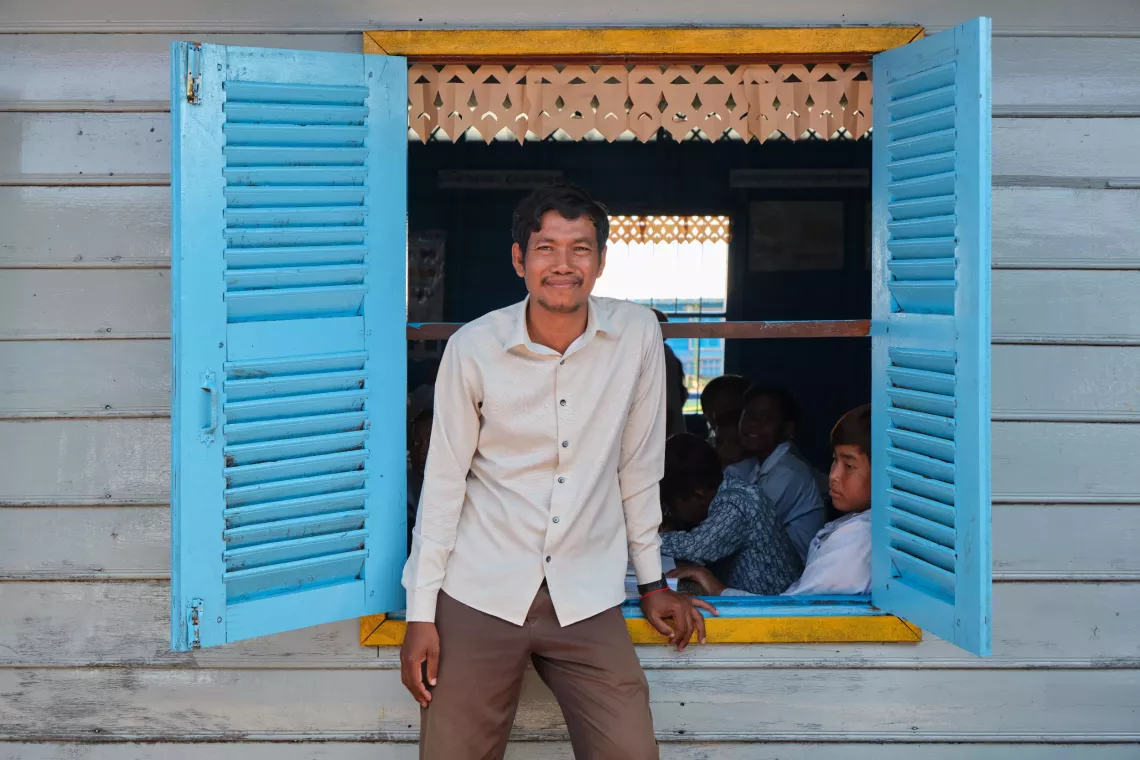
Like most teachers on the lake, 40-year-old Phon Soray didn’t grow up in one of the hundreds of fishing communities on the Tonle Sap. He first arrived back in 2008, confronted by challenges not every primary school teacher would be up to the task to face.
“In the past, this school was abandoned,” he says from the floating primary school where he spent 15 years before moving on to an even more vulnerable school nearby. “Nobody wanted to stay due to poor management and frequent storms.”
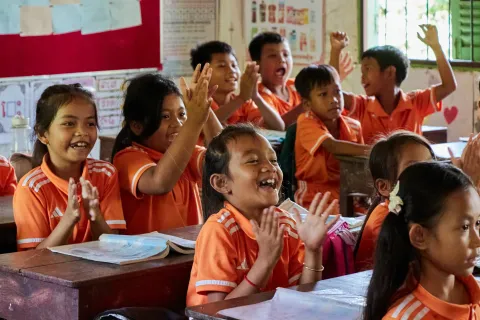
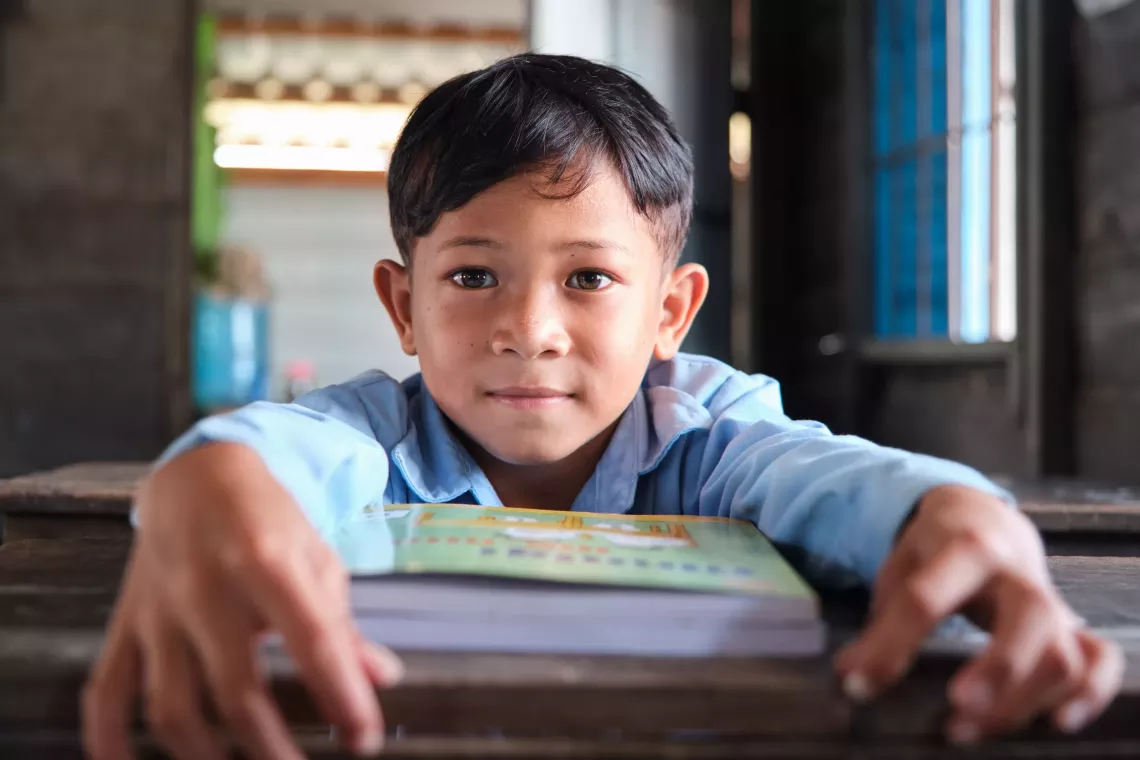
Today, the school is far from empty – classrooms are alive with curious students, colourful textbooks cover desks, and teachers know how to make sure that no one falls behind.
The decades-long improvement is thanks not only to the dedication of teachers but also the commitment of the whole community, says Soray – from the village chief and elders who encourage children to attend school, to the villagers who repair the school building whenever it gets damaged.
The school has come a long way in the past two years alone, he says. Since the Ministry of Education, Youth and Sport (MoEYS) roll-out of the early grade reading (EGR) programme, a nationwide package of support aimed at improving learning outcomes for Cambodia’s youngest learners, vulnerable children in even the remotest corners of the country have been benefitting.
“There are more students than before because the teaching is good now,” he says. “And the children can read more than before.”
With funding from the Capacity Development Partnership Fund (CDPF)*, transforming early grade and foundational learning has been a priority of UNICEF’s support to the MoEYS in Cambodia since the pandemic, with children across the country suffering devastating learning losses as a result of school closures. In 2021, a national learning assessment revealed that one in two Grade 6 children failed to meet basic literacy proficiency levels, up from 34 per cent in 2016.
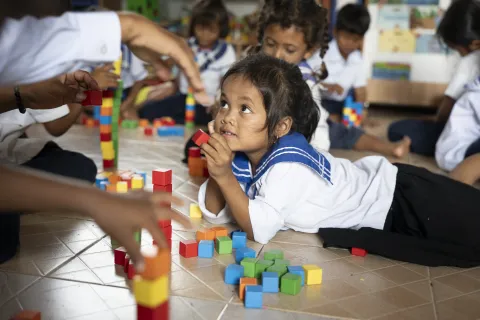
The early grade reading package offers teachers easy-to-follow, structured lesson plans that incorporate games, emphasise more student-teacher contact time, and provide classroom management techniques that positively address misbehaviour and support slower learners to catch up with lessons.
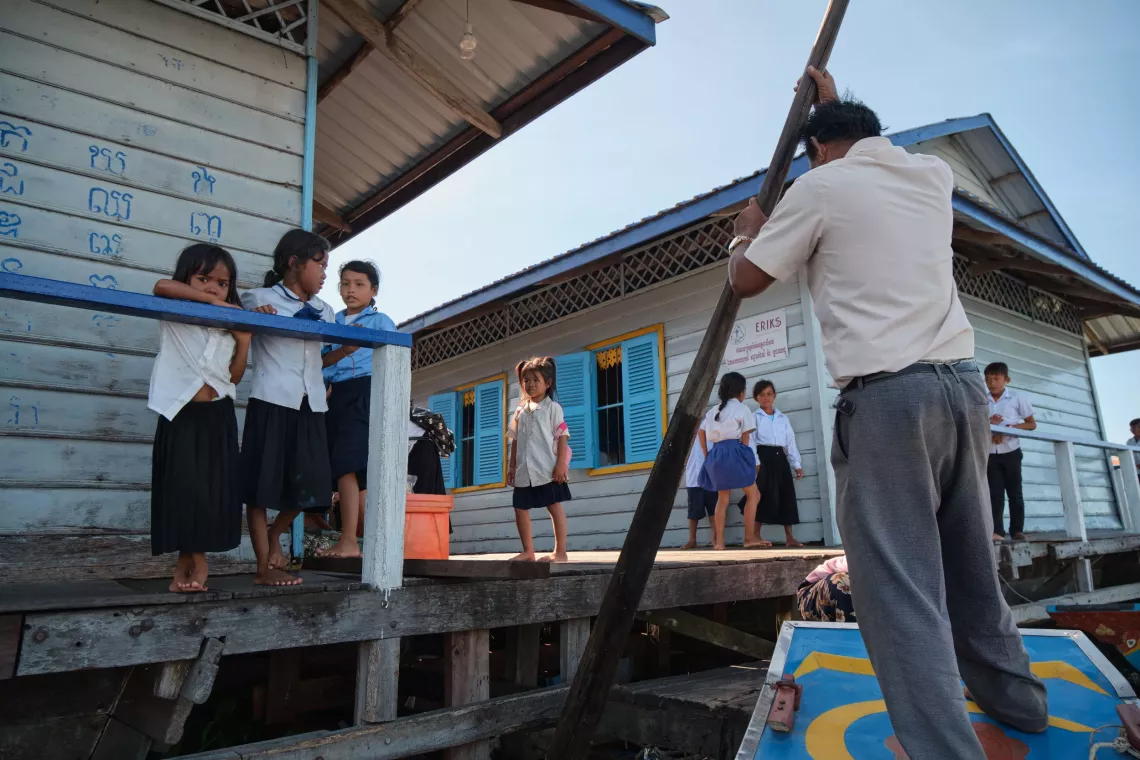
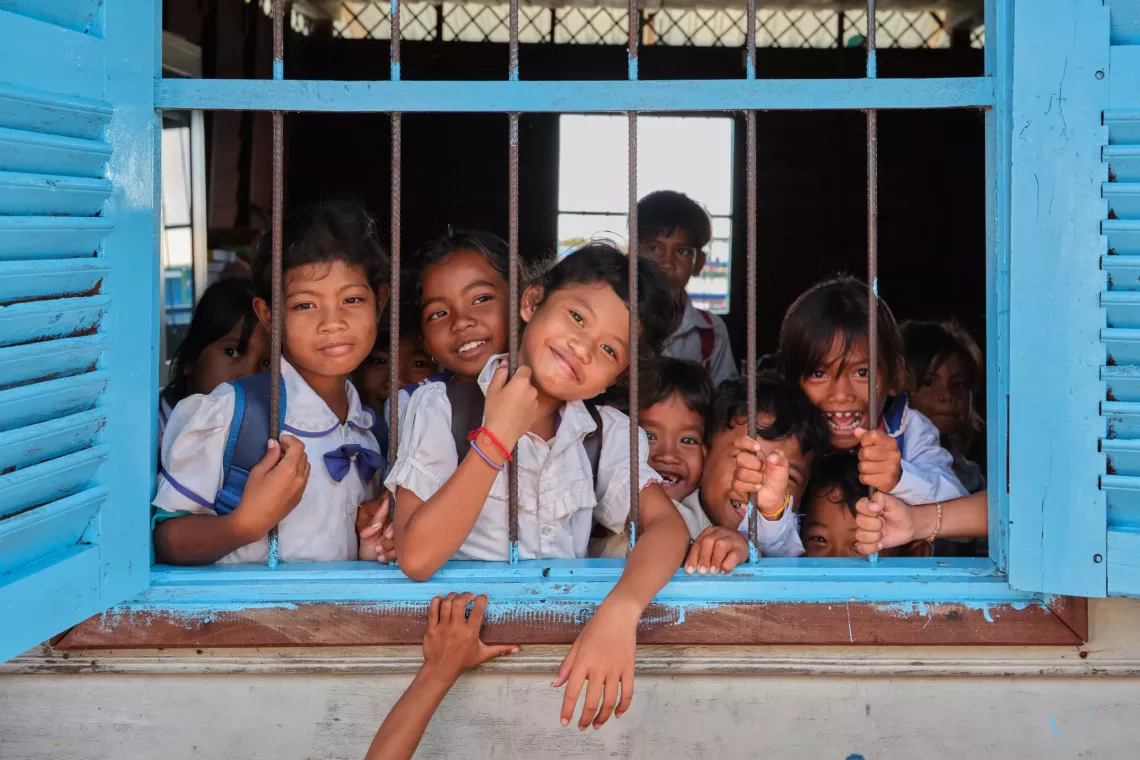
Today, Soray returns to the school not as a teacher but as a mentor. As part of the EGR roll-out, school-based mentors play crucial roles in supporting Grade 1 and 2 teachers implement the new techniques and materials in their classrooms and reach students with quality teaching.
He supports three schools in the area, observing lessons and giving one-on-one feedback. He knows that school-based mentors can be lifelines for teachers in remote, hard-to-reach schools, so he makes the effort to visit multiple times per month. He doesn’t have his own boat, so he borrows one from the school each time, using up to two and a half litres of gasoline.
“I try my best because I know this is a remote school. To have a good result, we need to build a relationship, to be willing to help,” he says. “I think it’s worth it. I help the teacher, and the teacher can help the children.”
Soray’s dedication echoes other, younger teachers’ stories of the lake – 26-year-old Samol Saven, Grade 1 teacher at another Tonle Sap primary school, chose to come to here after completing his teacher training as he knows floating schools struggle to recruit government teachers. His home is on the mainland, 200 kilometres away, but he knows if he wasn’t there to support the students, many would lose their chance at an education.
“When there are no teachers, the children cannot learn,” he says.
Saven’s mentor comes all the way from Pursat provincial town, an hour’s drive on land and another thirty minutes by speedboat, so he’s grateful for the extra support that helps him give his students everything they need to succeed.
“I’m happy because sometimes I don’t know things and then I can ask,” he says. “I’m a better teacher than before and I believe that the children learn better.”
MoEYS plans to expand the EGR programme to all Grade 1 and 2 classrooms by the end of 2025. Pursat is one of the eight provinces supported by UNICEF through CDPF Phase III.
Dr. Puthy Kann, Director of the Primary Education Department (PED) of the MoEYS, says the success of the EGR programme stems from the coordinated efforts of partners across the country to develop and roll out a single, unified package that reaches every teacher and mentor – no matter how remote – with the same materials and trainings and can benefit every student’s learning, no matter where they live.
“Before, we had many NGO partners, and they implemented their own package,” says Dr. Puthy. “But now, all of these NGOs support early grade learners just using our national package. So there is, you could say, one voice from the top to the bottom.”
But the challenges of teaching and learning on the lake persist.
While teachers depend on the support of mentors, the distance and cost of travel can make it difficult to regularly visit floating schools, especially during the rainy season when storms make the journey risky. This can also make it challenging for both teachers and mentors to attend EGR trainings. And while mentors receive a stipend to travel to assigned schools, the amount is standardised across the country and may not be enough to cover the cost of travel on water.
Learning can also be interrupted when families move their homes to more productive fishing spots on the lake, pulling their children out of school in the process, or when the school building is damaged by storms.
UNICEF is working with the MoEYS to address these issues by prioritising support to hard-to-reach areas.
With this support, Grade 1 teacher Saven hopes to see the children dare to dream big.
“If they study well here, they can continue their studies on the mainland and they can come back and teach the younger ones,” he says. “If the children learn well, they become a resource for their community.”
* CDPF Phase III is a pooled funding mechanism and partnership between the European Union (EU), the Swedish International Development Cooperation Agency (SIDA), the US Agency for International Development (USAID), the Global Partnership for Education (GPE), and UNICEF.