Breaking stigma, learning together
Inclusive classrooms are giving children with disabilities the support they need to learn and the chance to belong, connect, and thrive alongside their peers
- English
- Khmer
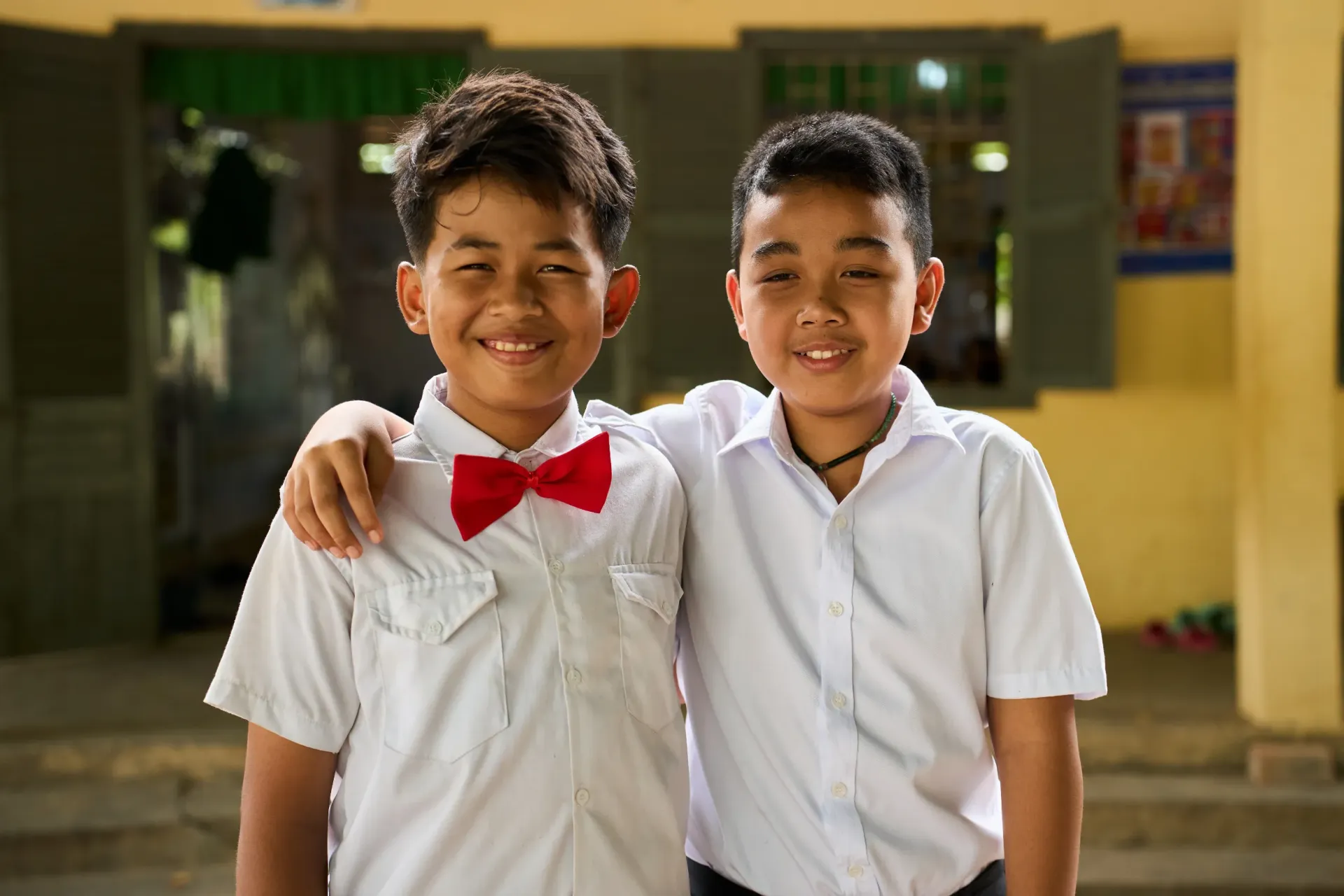
12 March 2026, Battambang – Twelve-year-olds Eang Tong and Menglay became close friends after they started sitting next to each other in class. They laugh and play together, share snacks together during break time, and help each other study. Eang Tong excels in science, while Menglay’s favourite subject is mathematics.
“We like to go over our lessons together,” says Eang Tong.
Their Grade 6 teacher, Ry Simon, had put them side by side so that Eang Tong could get a little extra help should he need it. He has a visual impairment and relies on braille textbooks for his learning—but that hasn’t stopped him from ranking top 10 in his class.
“He helps by reading the lessons and exercises out loud for me, and many other things,” says Eang Tong of his deskmate.
Simon learned the technique to seat the two boys together after she attended a UNICEF-supported training to help teachers in mainstream schools better support children with disabilities.
It’s not a burden to help out his friend, says Menglay.
“I am happy to [help],” he says. “After a while, we became friends.”
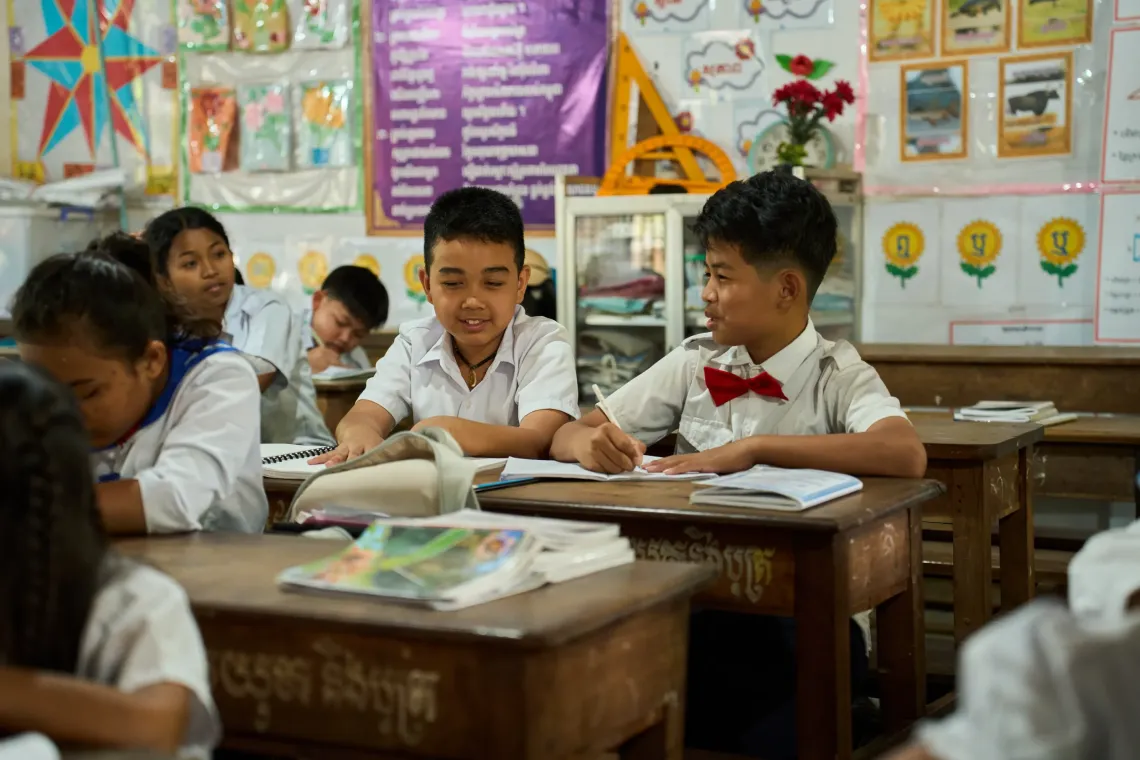
Eang Tong is one of 24 students at his school with a disability, where children with hearing impairments, visual impairments, and intellectual disabilities study alongside their peers, in the same classroom. The students spend half their time at the Battambang Special Education School a couple of blocks away, which offers specialised classes for children with disabilities, and the other half integrated into mainstream education. It’s a model of learning offered across the country to promote inclusion, reduce stigma and discrimination, and give children the chance to learn and
make friends within a regular school environment while still receiving specialised support.
Nationwide, more than 30,000 students with disabilities are enrolled in mainstream education, while around 1,200 children are enrolled across the six schools that offer a curriculum in special education.
Sadly, many more children are still missing out on quality education. Children with disabilities are three times less likely to attend school than their peers, and globally, Cambodia has one of the largest gaps in school attendance and completion between children with and without disabilities. The primary out-of-school rate for children with a disability in Cambodia is 61 per cent, compared to only 4 per cent for children without a disability.
The barriers to learning are multifold: children may be kept from school because of stigma, shame, or because their parents do not see the value or know that education is available. Most schools also lack specialised learning materials or accessible infrastructure, and many educators feel ill-equipped to adapt their lessons for diverse learners.
To ensure every child has a fair chance at quality learning, UNICEF is supporting the Ministry of Education, Youth and Sport to strengthen inclusive education across the country. With funding through the Capacity Development Partnership Fund (CDPF), 5,000 teachers from mainstream schools have received training in inclusive education since 2018, including 1,000 in the past two years, and 146 teachers have graduated from the country’s only accredited diploma course in special education. The year-long course from the MoEYS’ National Institute of Special Education offers three teaching specialisations—visual impairments, hearing impairments, and intellectual disabilities and autism—after which graduates are deployed to schools offering specialised support for children with disabilities.
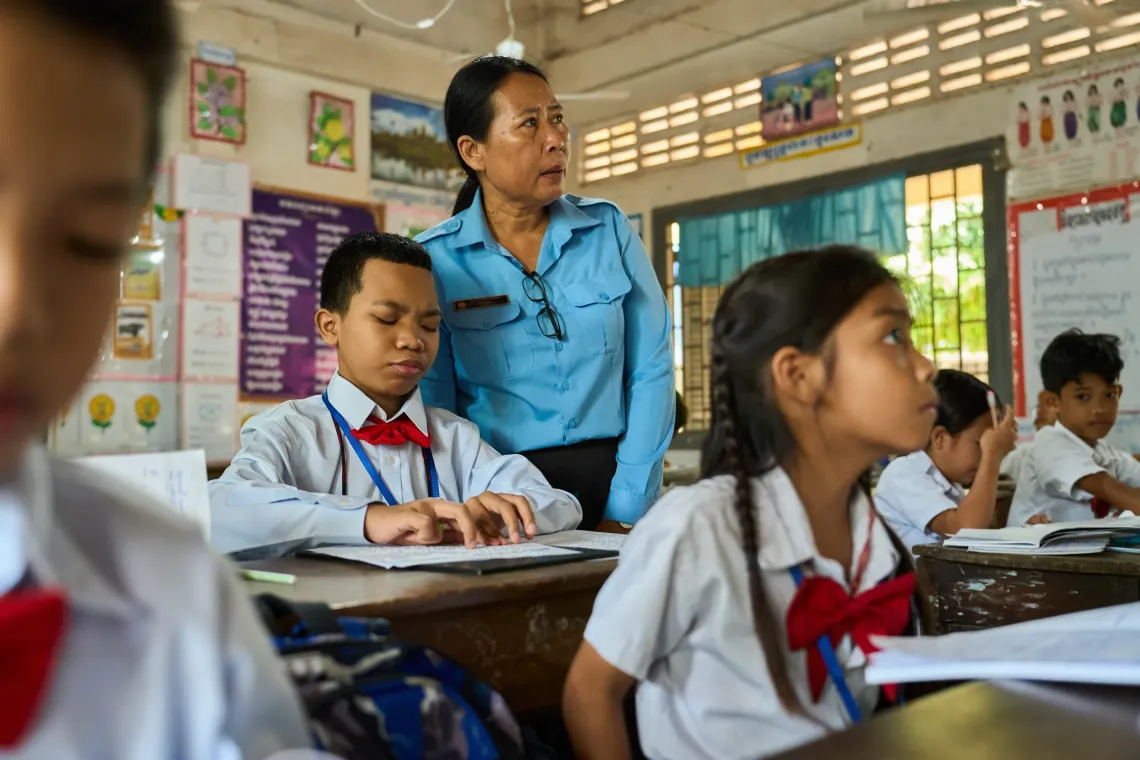
Simon has been teaching at Eang Tong’s school for over 30 years, but it’s the first time she’s had children with disabilities in her class. She admits that until now she’s been worried that she wouldn’t be able to give them the support they needed.
“It was difficult because I really wanted to help them, but I didn’t know how,” she says. “I wanted them to get good results like the other students, but our teachers don’t have that specific skillset.”
A couple of months later, her fears have eased. After applying some of the techniques she learned in the training, combined with accessible materials like braille textbooks, the welcoming attitude of her other students, as well as the extra support the children receive at their other school, Simon’s more than confident that they can keep up.
“In my opinion, they learn just as well as the other students,” she says. “For me, integrating students with visual impairments with other students is a good thing. Putting them together prevents other students from discriminating. They can play together.”
“I am happy to have him study with me” says Menglay of his friend. “Because he is a good person.”
Across the campus, similar stories unfold. In another classroom, children learn sign language from their classmates so they can communicate and play with their friends.
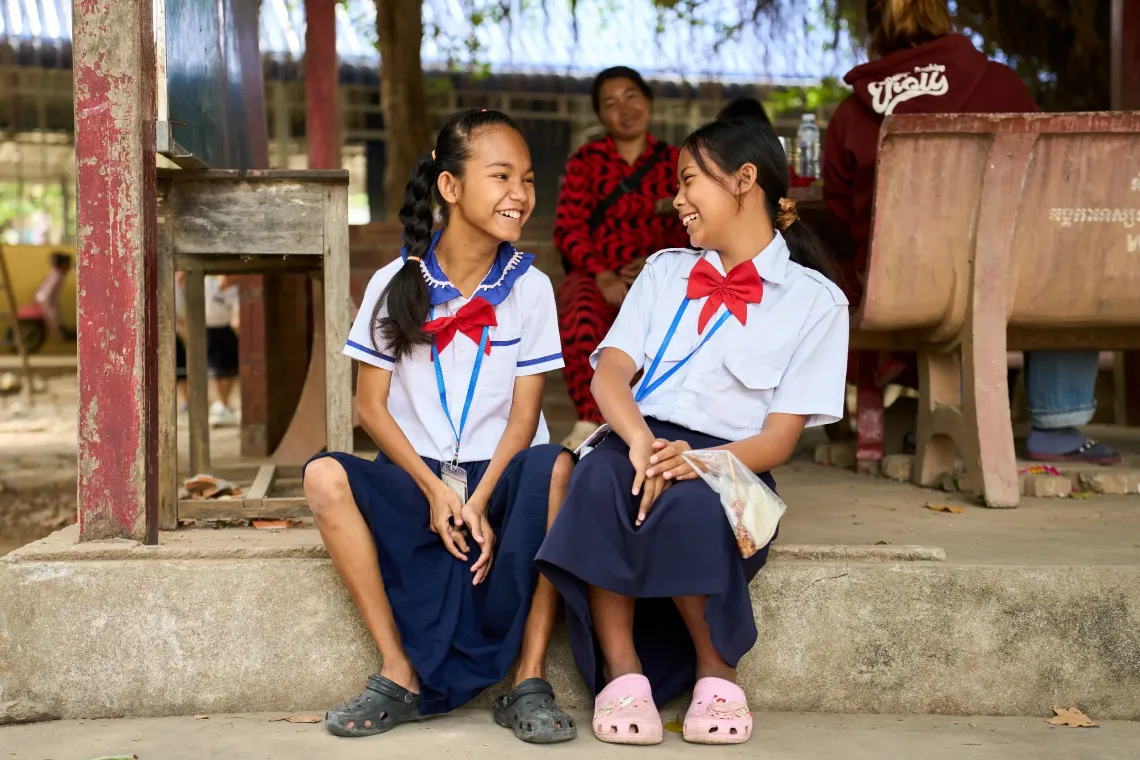
But despite progress, it’s a long path to changing mindsets and ending the stigma for good.
“Some people discriminate, and some don’t,” says Eang Tong. “They don’t want to read the lessons to me, and they don’t want to talk to me.”
Change starts by dismantling barriers—one by one—in the classroom, in the community, and at home. Parents and caregivers play a critical role in this shift: by supporting their children’s education, keeping them in school, and believing in their potential, they help create opportunities for children with disabilities to participate fully in society and pursue their ambitions.
“Initially, they were quite upset or discouraged that their child was born different from others,” says Simon. “But over time, as they see their child coming to play and study with other students, they don’t feel that way anymore. They become happy. This is because they see their child fitting in with others.”
She has no qualms about welcoming more children with disabilities into her classroom in the future.
“I would be happy to,” she says. “Seeing them learn together like this makes me happy too.”
When Eang Tong made top 10 in his class, he felt proud.
“I felt happy,” he says. “First, my parents praised me. Second, I’m happy with my own abilities.”
He wants to be a musician when he grows up, and already knows more than 60 songs on the keyboard and guitar. With the right support, dreams like this are well within reach.
The CDPF is a longstanding partnership between Cambodia’s MoEYS and partners including the European Union (EU), the Global Partnership for Education (GPE), and UNICEF.