A different start through early reading
Through the Early Grade Reading programme, young learners in Takeo are building confidence, strengthening literacy skills, and discovering the joy of learning.
- English
- Khmer
5 June 2026, Takeo – Seven-year-old Meng Hour loves Khmer class.
“Reading and writing are my favourite,” he says with a smile.
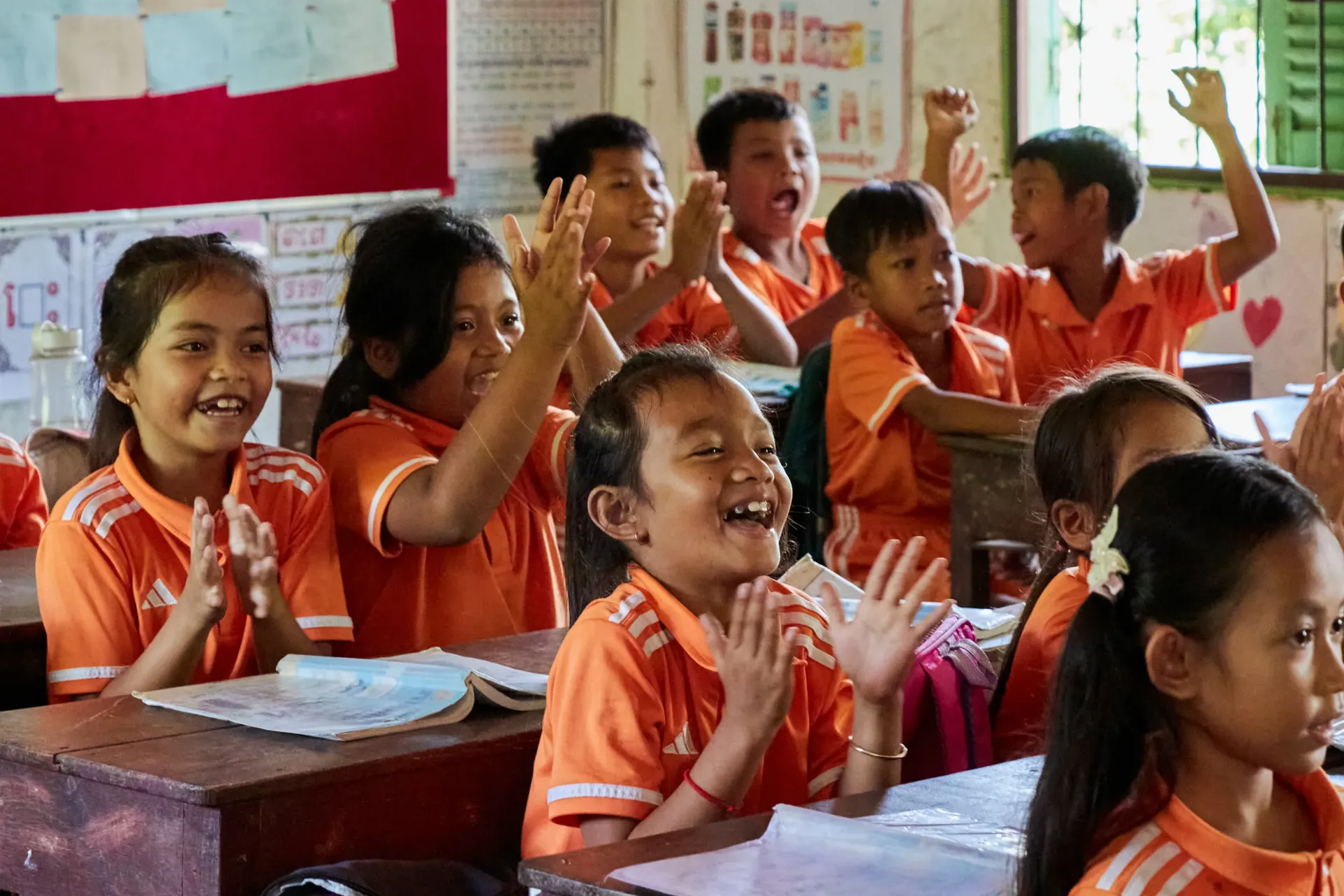
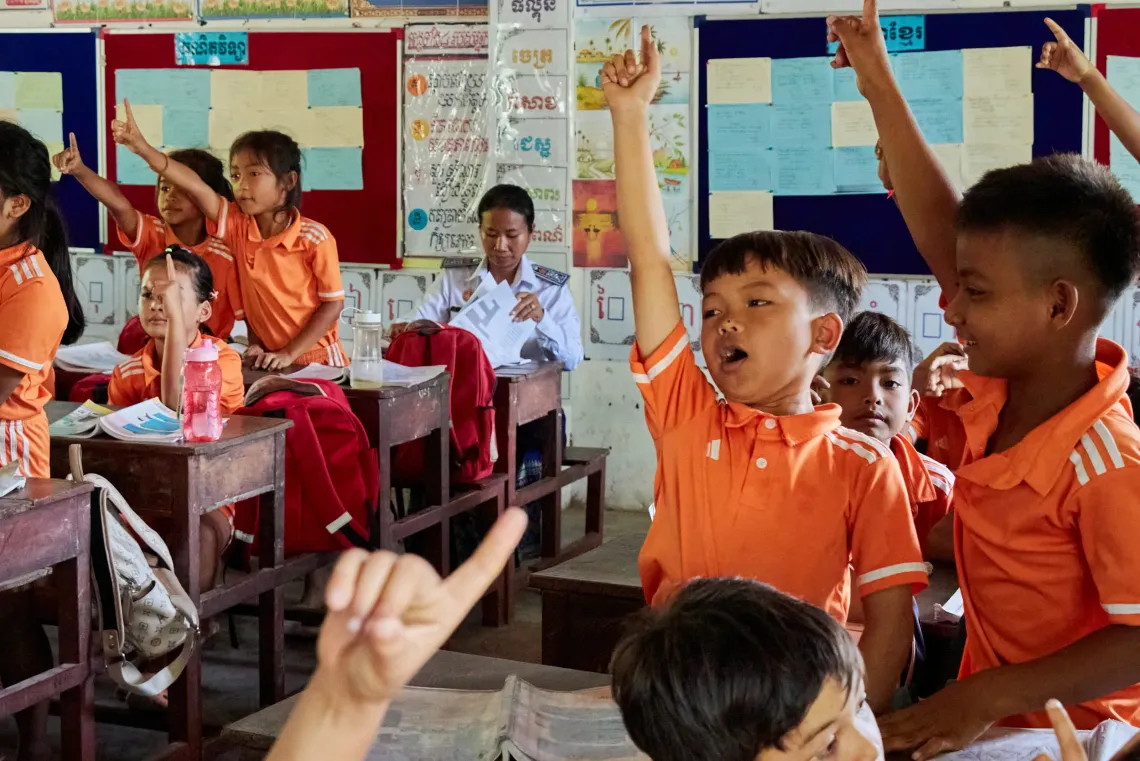
In his Grade 2 classroom in Tram Kok district, students eagerly raise their hands as their teacher asks a question. Several call out, hoping to be chosen first. Others lean forward in anticipation, ready to read aloud or share their answers.
“I like reading in front of the class,” says Meng Hour. “Everyone listens.”
His confidence is hard to miss. He enjoys reading with classmates, answering questions, and helping friends during pair activities. “I like working with my friends because I can explain things to them, and they can explain things to me,” he says.
For his mother, Sem Vanny, these moments represent a remarkable change. As a mother of three, she remembers how different learning looked for her older children. “His older siblings couldn’t read until Grade 3,” she says. “But he could already read and write in Grade 1. I was so surprised.”
Today, her son often picks up books on his own, practices reading aloud at home, and eagerly completes his homework.
“When I see him wanting to learn and wanting to read, I feel very proud,” his mother says. “He can do many things by himself now.”
Meng Hour is among the Grade 2 students benefiting from the Early Grade Reading (EGR) programme, implemented by the Ministry of Education, Youth and Sport (MoEYS) with support from UNICEF and other partners in 11 provinces across Cambodia. In Takeo province, the Early Grade Reading initiative is funded by COOP Sapporo through UNICEF Japan. Almost 750,000 learners and 16,000 teachers across 13 provinces are benefitting from UNICEF’s support to the Early Grade Learning initiative, including 9,600 students and 290 teachers in Tram Kok district, Takeo province.
Meng Hour’s story reflects broader efforts to strengthen foundational learning in Cambodia. Recent data shows that these efforts are beginning to yield results. The 2024 Southeast Asia Primary Learning Metrics (SEA-PLM) found that Cambodia achieved the largest improvement in reading outcomes among all participating countries since 2019, with the proportion of Grade 5 students meeting the minimum proficiency level rising from 27 per cent to 39 per cent.
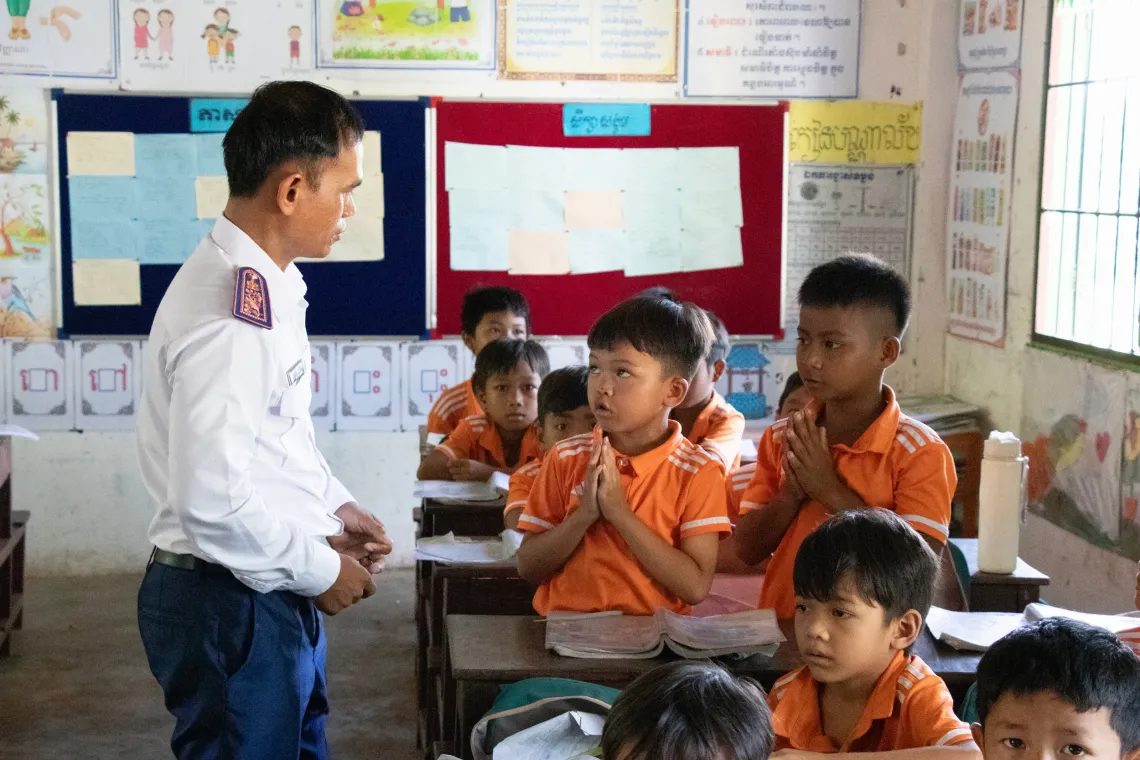
The expansion of the EGL programme is considered one of the contributing factors behind this progress. In classrooms across Tram Kok district, teachers are supported with structured lesson plans, learning materials, and interactive teaching approaches that give every student an active role in the learning process. Central to this is the “I Do, We Do, You Do” method – students first observe, then practice together, then apply what they have learned on their own.
According to Grade 2 teacher Tit Kongkea, the approaches have transformed the classroom atmosphere.
“Students are much more engaged now,” he says. “They don’t just sit and listen. They participate, read aloud, and work together.”
Pair learning has become one of the most consistent features of his lessons – stronger readers working alongside those who need more support, helping them build skills and confidence together. “Everyone has the opportunity to practice,” he says. “And when students support each other, they grow together.”
For school-based mentor Suong Sethyka, who regularly visits classrooms to observe lessons and support teachers, the change in students is unmistakable. “Students are reading much more confidently now,” she explains. “In the past, lessons felt less lively. Now you can see that children actually want to be there – they want to read, they want to participate.”
What strikes her most is how many students have begun reading independently, without being prompted. “Before they would wait to be told. Now they just pick up books and start.”
Learning does not stop when the school day ends.
To keep families connected to their children’s learning, teachers run a parent communication group where reading assignments are shared with parents throughout the week. Several times each week, Meng Hour’s mother sits with her son, listens as he reads aloud and records a short video to send back to the teacher. “We do these three or four times a week,” she says. “I think parents have an important role in supporting their children’s learning.”
For Meng Hour, none of this feels extraordinary. It is simply what he does. He reads. He participates. He helps his friends. And when his teacher asks for volunteers, he raises his hand.
For his mother, that moment – a son standing confidently in front of her class, unafraid – is the difference she never expected to see this early.