Family for Every Child
Project development status in the Vitebsk region
- русский
- English
Different words make people parents. Sometimes it is “you're pregnant,” and sometimes it is “you've got a girl.” Sometimes this is “meet Pasha” said at a meeting in an orphanage.
UNICEF in Belarus, together with its partners, has been working to ensure that every child hears important words from her/his parents: “I love you”, “You are important to me”, “I will take care of you.”
The Family for Every Child project was established for this purpose. The goal of the “Family for Every Child” project is to help children reconnect with their biological parents or find a new family, develop alternative forms of child-placement (including adoption, guardianship, foster family placement). In other words, the project promotes the idea of deinstitutionalization: creating conditions for children to live in families rather than in orphanages.
The project pays special attention to children with disabilities and young children.
The program started in Gomel Oblast four years ago. In 2021 alone, 41 children found a loving family.
Based on the performance of the Family for Every Child program in the Gomel region, the project began operating in 9 districts of the Vitebsk region in 2022, thus impacting the following boarding schools: Vitebsk Regional Specialized Children's Home, Bogushevsk Boarding Home for Disabled Children with Psychophysical Disabilities, Vitebsk Orphanage, and Begoml Auxiliary Boarding School. The project effectiveness period is 2 years.

How is the project developing?
The project has been implemented by UNICEF in Belarus together with the Ministry of Education. The Main Directorate for Education, the Committee on Labor, Employment and Social Protection, and the Main Health Directorate of the Vitebsk Regional Executive Committee have been project coordinators.
An interdepartmental working group was established immediately after the project was launched in autumn 2022. This Interdepartmental Working Group has included over 20 experts from education, healthcare and social protection systems: medical doctors, psychologists, social pedagogues, and other experts.
Engagement of so many professionals from various domains have allowed a large-scale and integrated approach and implemented a case management system. This means that a team of experts works individually with every family and every child. Case managers identify family or child needs and offer the support that is actually needed. The following scheme applies: situation assessment and challenge identification — situation analysis (what needs to be changed) — action (what can be done to change the situation).
“Usually, all departments only oversee their own challenges. However, there are cross-sectoral situations covering education, healthcare and social protection,” comments Dmitry Shilin, UNICEF Senior Child Protection Coordinator in Belarus. “For example, a child with a disability attends a kindergarten. This is a matter of education: the child needs medical care, and parents need advice on how to care for their child at home. This is a matter of healthcare. The family needs additional social benefits and services: this is a matter of social protection.
One of the project objectives is to support the family so that the child stays at home and does not end up in a boarding school. It is very important to understand that the family needs comprehensive assistance. In practice, case management looks like this. Specialists from various agencies conduct a detailed assessment of the needs of the family and the child in order to understand the cause of vulnerability. At that, they talk on the phone, share information about the child, and discuss assistance algorithms that will be optimal for bringing the family out of the crisis.”

At the first stage of the project implementation, this is the focus: supporting families at risk. It is important to support children in order to prevent them from becoming social orphans (for them not to end up in orphanages, if their parents are alive). These are families with children with disabilities, families with the SDS (Socially Dangerous Situation) status, large families, foster parents, etc.
“We have shortlisted families we want to meet and offer help. Polyclinics, Early Intervention Centers, TSPCs (Territorial Social Protection Centers) have helped with this,” says Marina Grigoryevna Fedorovna, Director of the Vitebsk Regional Intervention-based and Developing Education and Rehabilitation Center State Educational Institution and member of the Interdepartmental Team. “There are about 700 of them. Social workers have already met 200 families and did needs mapping.
We will also launch the needs map online. This has been done to measure our performance in wining over families and to find out whether we get the same data through anonymous questionnaires and when talking to families face to face. Thus, we will ensure a more objective needs’ identification.
At the same time, we have been studying the reasons for children entering boarding schools: which children, from which families, and for what reasons they have ended up, for example, at the Begoml Boarding School or the Vitebsk Orphanage. This will allow us to better identify problems that may exist in the family. And then, we can start working with them so that the kids stay with their parents.”
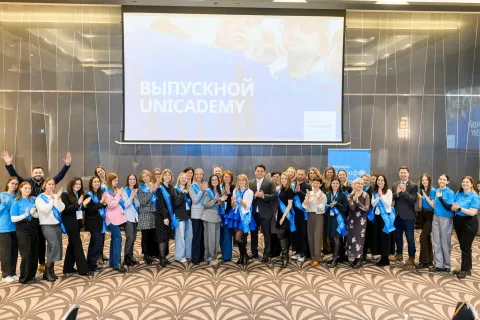
The project team has already undergone a series of trainings. This is also a priority working area at the initial stage. Trainings are needed to teach specialists how to help families in difficult life situations and in socially dangerous situations. To understand the peculiarities of case management. To learn about the deinstitutionalization arrangements enshrined in Belarusian legislation. To study approaches to working with children with disabilities and building relationships and communications with the family.
“Not every family lets them in: we need to establish a trustful relation in order to be able to help,” says Dmitry Shilin. “They're asking questions: do you want just to fill out the form and leave? Or will there be real help?
We want to establish such a level of trust that parents could call the case manager at any time to tell her/him what is going on and what support they need.”
The work under the Family for Every Child program has been financially supported by Priorbank, as well as through donations.
“Charitable assistance is an important part of Priorbank's operations, and we adhere to the following motto in this area: “Help those who can't help themselves.” We are very pleased that an organization such as UNICEF, which is respected all over the world, has invited Priorbank to become a partner of the Family for Every Child project, a project that enables children to grow up among their family members in love and care,” noted the bank.
UNICEF in Belarus calls on Belarusians to support the Family for Every Child program by making a donation on the website. You can also donate by sending an SMS with any text to number 2244 (if you are an MTS subscriber) and to number 888 (if you are an A1 subscriber).