Rebuilding Education for Climate and Disaster Resilience in Cox’s Bazar
After a devastating fire, UNICEF has built the first fire-resistant and climate-resilient school in the Rohingya refugee camps to support safe learning for children amid disasters and extreme weather.
- বাংলা
- English
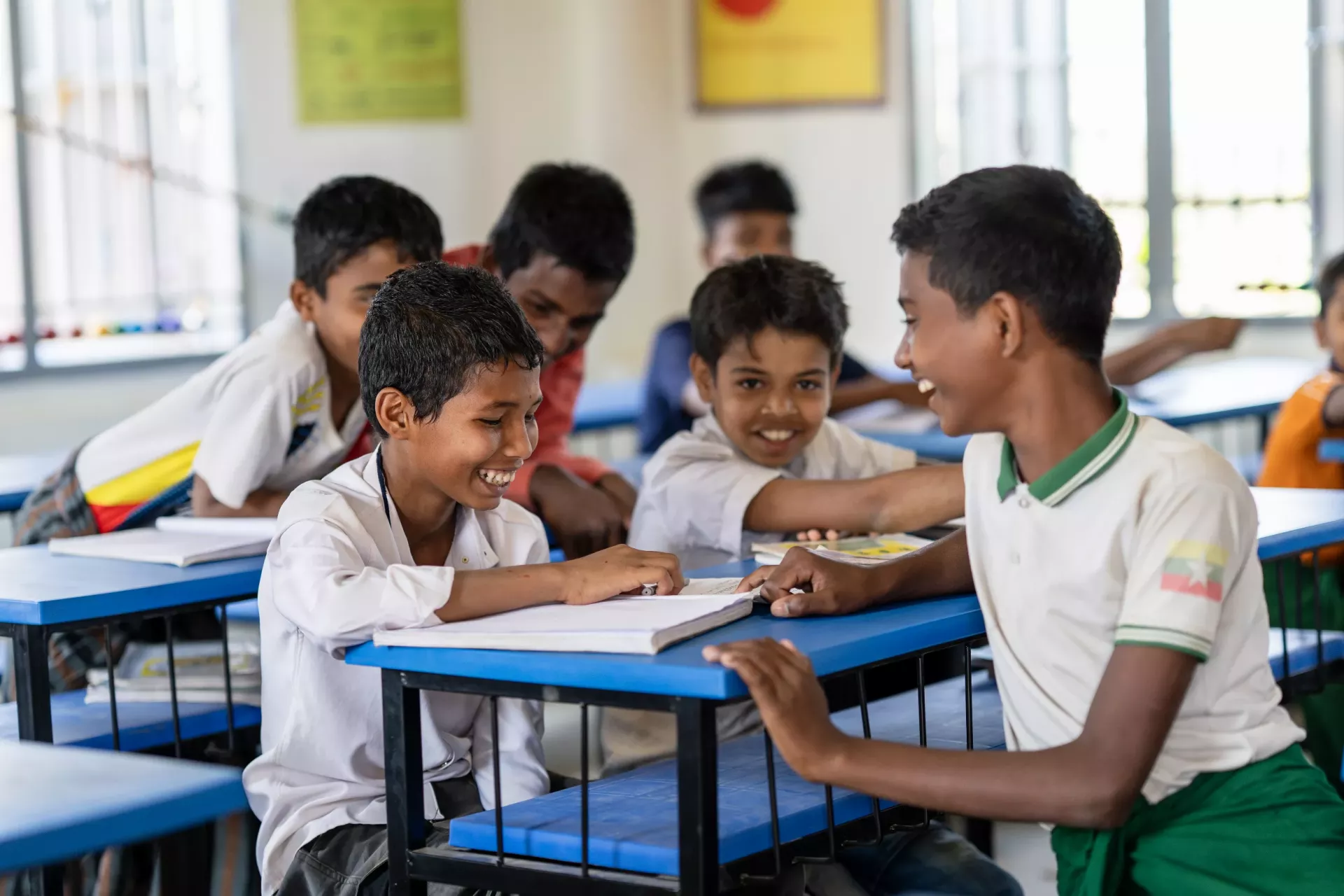
Rafik, 13, is no stranger to disaster. Over seven years ago, his village in Myanmar was torched during widespread violent attacks that forced him and his family to flee their home in search of safety.
They settled in the Cox’s Bazar refugee camps across the border in neighbouring Bangladesh, along with 700,000 Rohingya, in cramped bamboo shelters. Soon after, Rafik began attending classes at a UNICEF-supported learning centre in his camp, where he loves to study Burmese.
“When I study Burmese, it helps me remember my home country,” he says.
But Rafik’s life was upended again, this time by a massive fire that tore through his camp in the early hours of January 7 last year. In only a matter of minutes, over 5,000 Rohingya refugees – including 3,500 children – were displaced once more as their shelters burned. Fourteen UNICEF learning facilities were destroyed in the blaze, leaving 1,500 children without a place to learn.
For years, Rohingya refugee children in Cox´s Bazar have struggled to access quality education. Most learning facilities in the camps were built with bamboo as an immediate and temporary solution at the start of the Rohingya refugee crisis in 2017. Due to their fragile construction, they are often damaged or destroyed by fires as well as flooding, landslides and other disasters triggered by climate shocks, which are becoming more common and intense in Bangladesh.
In 2024, a total of 434 UNICEF learning facilities were either partially damaged or destroyed by disasters, disrupting the education of over 30,000 children – more than 1 in 8 children supported by UNICEF’s education programmes. Frequent repairs to these facilities are costly and have diverted dwindling resources needed for other education programming and humanitarian services.
For children like Rafik, the loss of classrooms not only means the loss of lessons, but also their sense of safety and hope for the future. The morning after the fire, he and his classmates ran to where their learning centre once stood but found only rubble.
“My Burmese textbook had pictures and stories from my country,” recalls Rafik. “I only had one page left from it.”
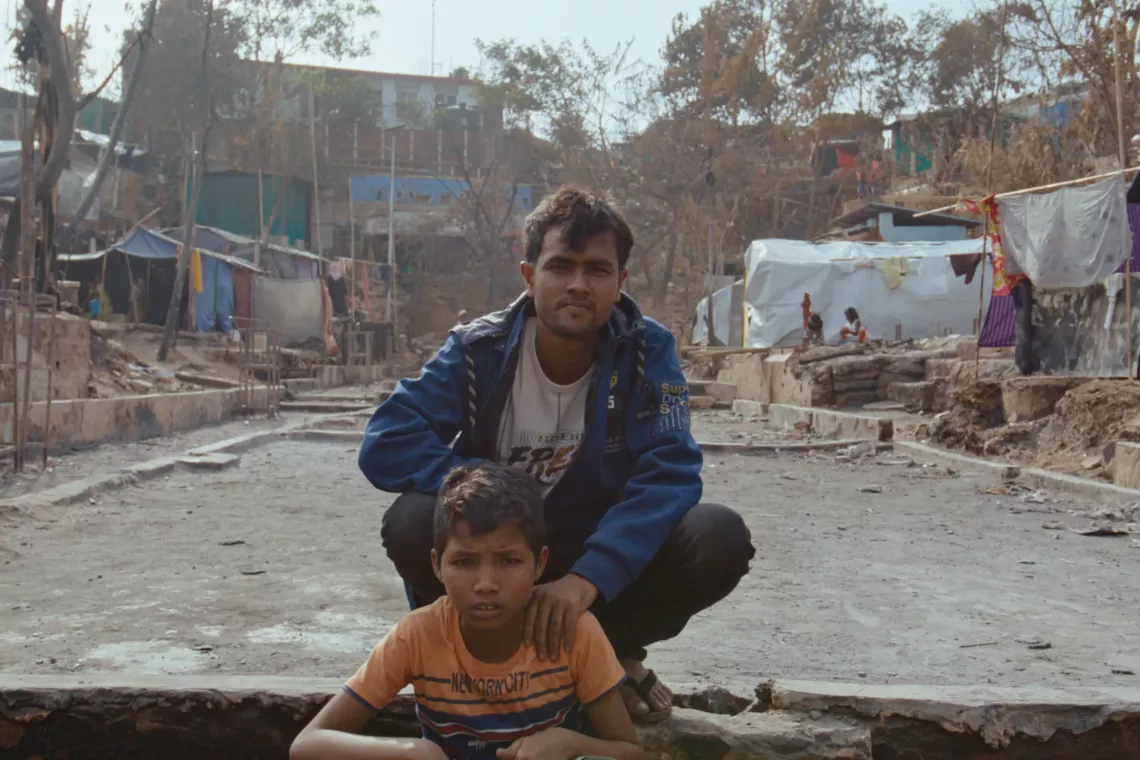
As he waited for his classroom to be rebuilt, Rafik and his peers spent seven months attending classes in a tarpaulin tent set up by UNICEF as an emergency classroom. Learning in this environment was challenging for them, especially during extreme weather.
“Our class was dark and flooded when it rained,” says Rafik. “It wasn’t a good place to learn.”
Building Back Better
As fires and climate shocks have become frequent in Cox’s Bazar, UNICEF has been calling for fire-resistant and climate-resilient structures in the camps to ensure uninterrupted access to essential services for children and families. Previous disasters have destroyed not only learning facilities but other critical UNICEF structures that provide safe water, nutrition, healthcare and immunization.
In 2024, UNICEF received approval from the Government of Bangladesh to build new durable, climate-resilient facilities in the camps. These included the first climate-resilient integrated nutrition facility and primary health centre, which opened last year, and the first fire-resistant and climate-resilient school.
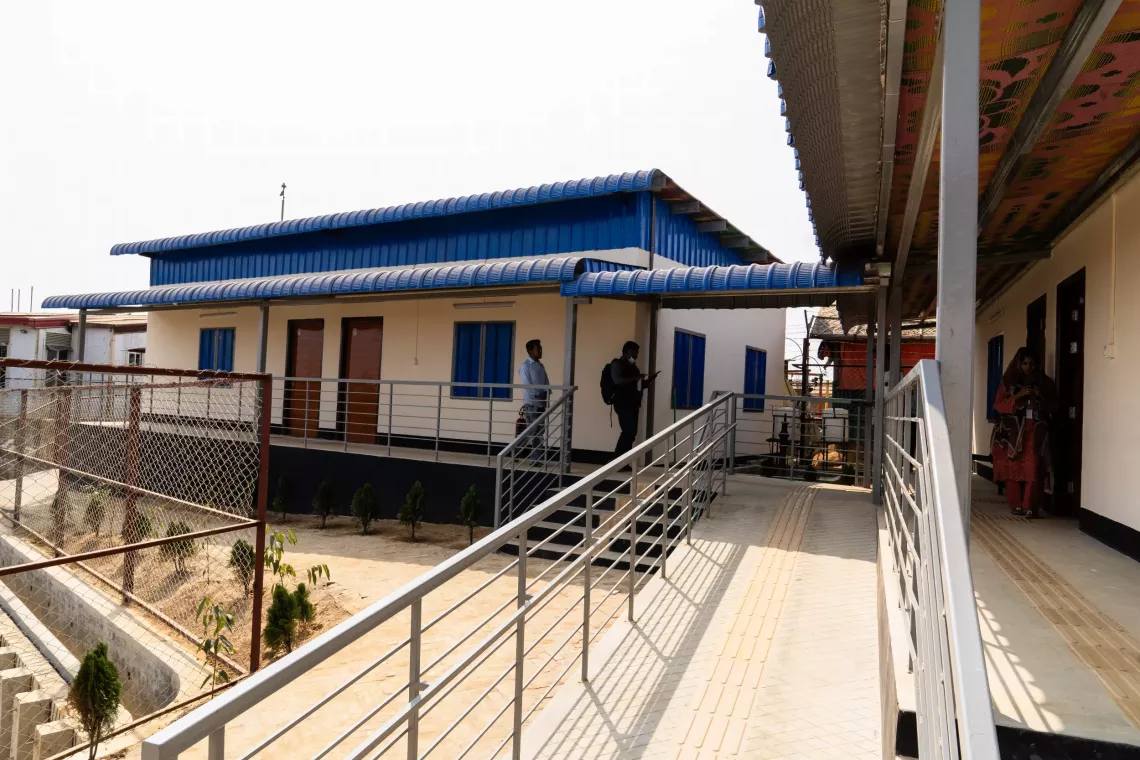
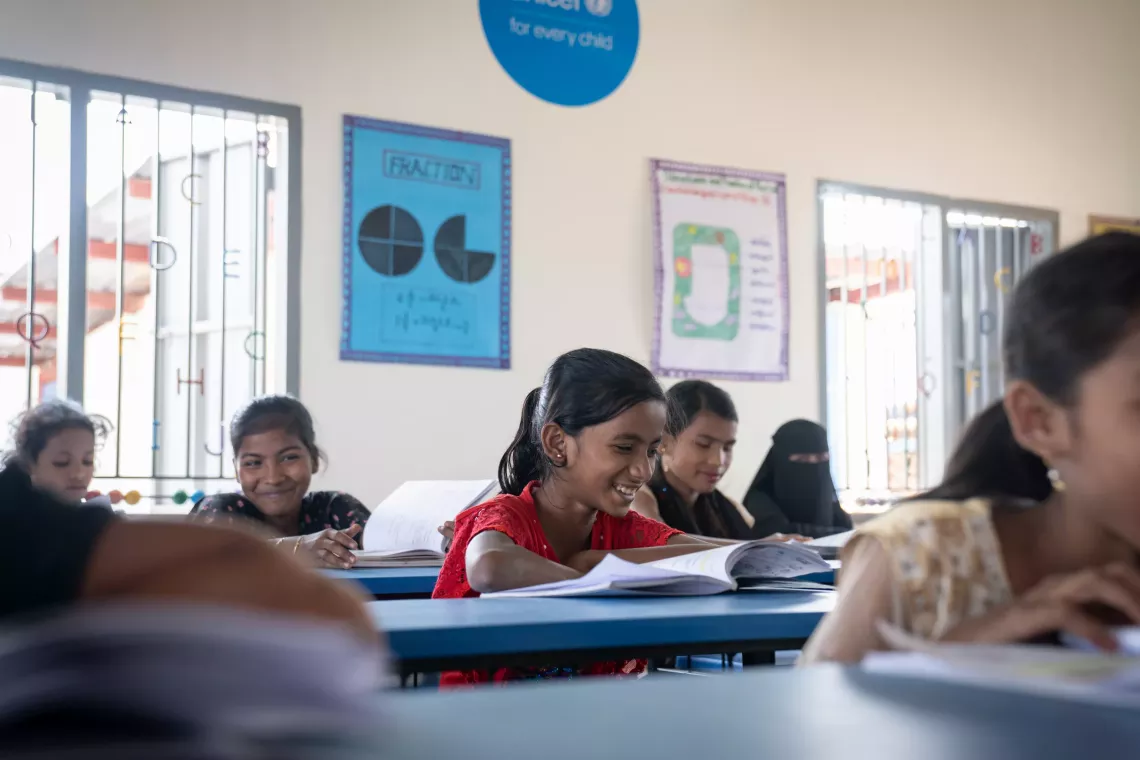
The school, named the Phoenix Learning Centre after the mythical bird reborn from its ashes, completed construction in February 2025, with classes starting soon afterwards. It has been built with steel framing and magnesium oxide boards that can withstand extreme temperatures, strong winds and flood damage. The school is fully powered with rooftop solar panels and has enough backup storage to power the facility for two days. With 10 classrooms, it is providing a safe and protective learning environment for over 700 children in Grades 1-8.
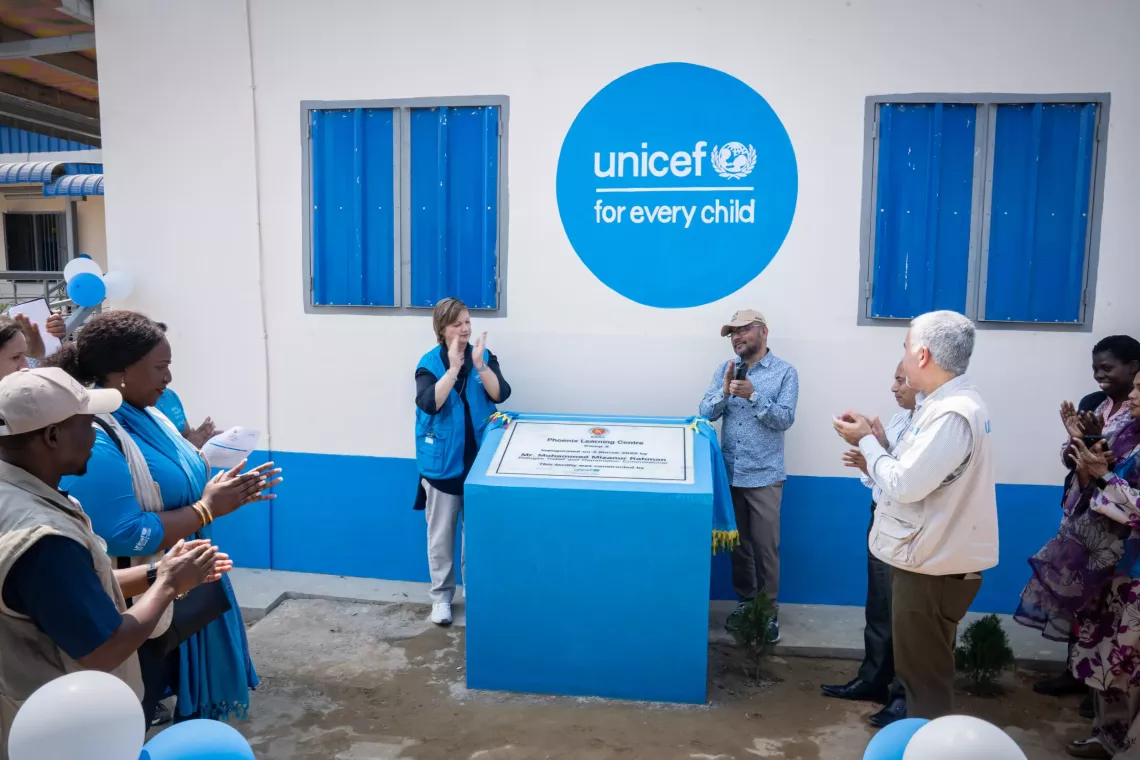
“This is a fantastic learning centre now,” said Mohammed Mizanur Rahman, Refugee Relief and Repatriation Commissioner (RRRC) during the inauguration. “It burned down to ashes and has been resurrected as one of the finest learning centres in the camp area.”
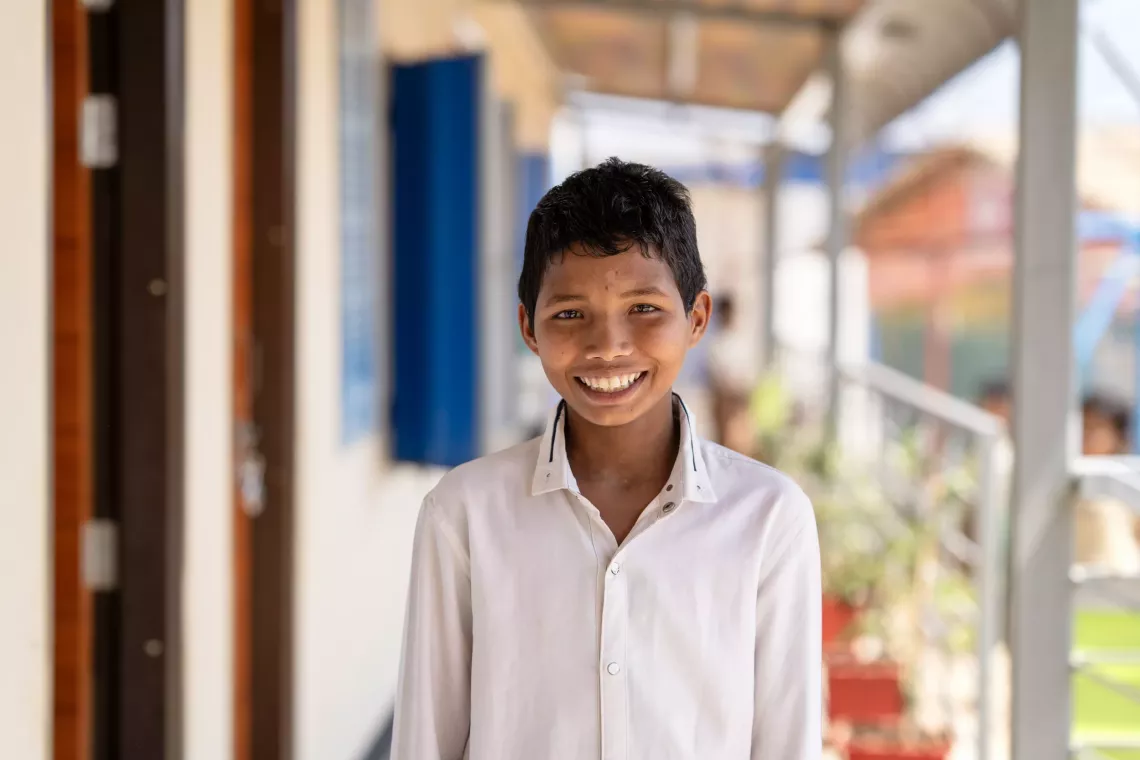
Rafik, now in Grade 7, has been attending the new school for several weeks and says that it is even better than his previous learning centre.
“I like the whiteboard, the light and the fans,” he says, smiling. “I can read my books and see what our teacher writes on the board better than before. It feels comfortable learning here.”
Unlike other learning facilities in the camps, which offer little ventilation, each classroom in the Phoenix Learning Centre has several ceiling fans that provide relief for children during periods of extreme heat. In 2024, a heatwave brought temperatures exceeding 40 degrees (104 Fahrenheit) and forced all schools across Bangladesh and all learning facilities in the camps to close for several days.
With Rafik’s education finally back on track, he has started to feel more hopeful about his future.
“I want to help other children to learn,” he says, describing his dream of becoming a teacher. “And I want my brothers and sisters to learn Burmese, English and other subjects just like me.”
Lawtif, a Grade 7 Rohingya teacher at the school, has noticed that attendance in his classes has been consistently higher. Adolescent girls, who are more likely to drop out of education due to gender norms and safety issues, have been particularly enthusiastic about the school, which has separate classrooms and toilets for girls.
“More girls are interested in coming to study here,” he explains. “They see the classrooms, the fence, and the latrines inside and feel secure.”
UNICEF remains committed to providing education to every child in the Rohingya refugee camps in the face of worsening disasters, environmental degradation and the climate crisis. To support this, UNICEF is calling for more durable, fire-resistant and climate-resilient facilities to provide education, health, nutrition, protection, and water, sanitation and hygiene services for children and families no matter what. For every $1 invested in climate-resilient infrastructure, the emergency response saves an estimated $4 on post-disaster reconstruction costs.
#