Bringing Nutrition Care Closer to Home
With support from the Government of Japan, UNICEF-supported nutrition services provide lifesaving care for children and mothers.

- বাংলা
- English
“He does not eat, does not play. Getting thinner day by day and keeps crying all the time. Where do we take him? How can we help?” shared Nur Kayes, 22, mother of 12-month-old Aziz Khan.
When Aziz and his family arrived at the Rohingya refugee camp in Cox’s Bazar in 2024, everything for them was new.
The small shelter, the narrow streets, and the new daily routines of life in the camp were all unfamiliar. Each day brought new struggles, yet gradually they discovered what support was available to them. Despite receiving food assistance, Aziz was not growing as he should have for his age. His mother Nur, 22, did not know where to go or whom to turn to for help.
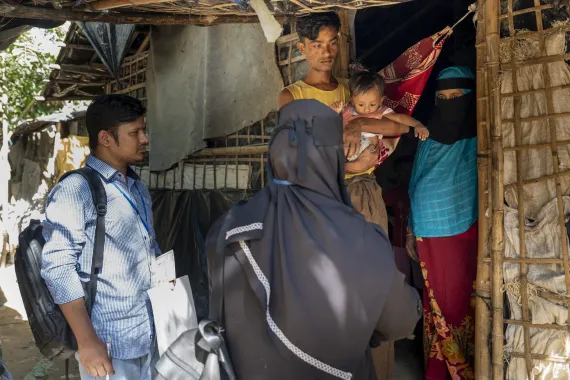
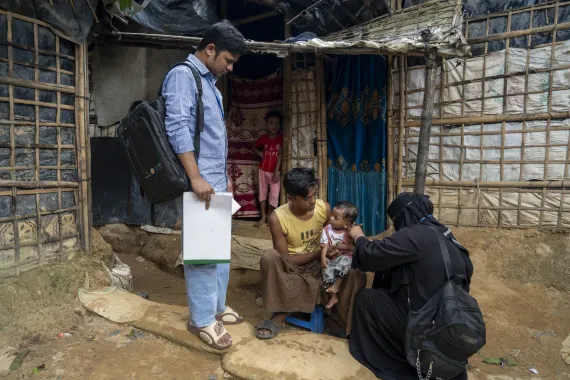
One day, there was a knock on the door of their small makeshift shelter. Two community nutrition volunteers, Shafiqa and Omar, stood outside, asking if there were any children between six months and five years old in the household. Nur brought Aziz to them.
Shafiqa carefully measured Aziz’s mid-upper arm circumference (MUAC). The measurement was 10.6 centimeters, indicating he was suffering from severe acute malnutrition. Without delay, Aziz was referred to the nearest integrated nutrition facility so he could receive the required essential support.
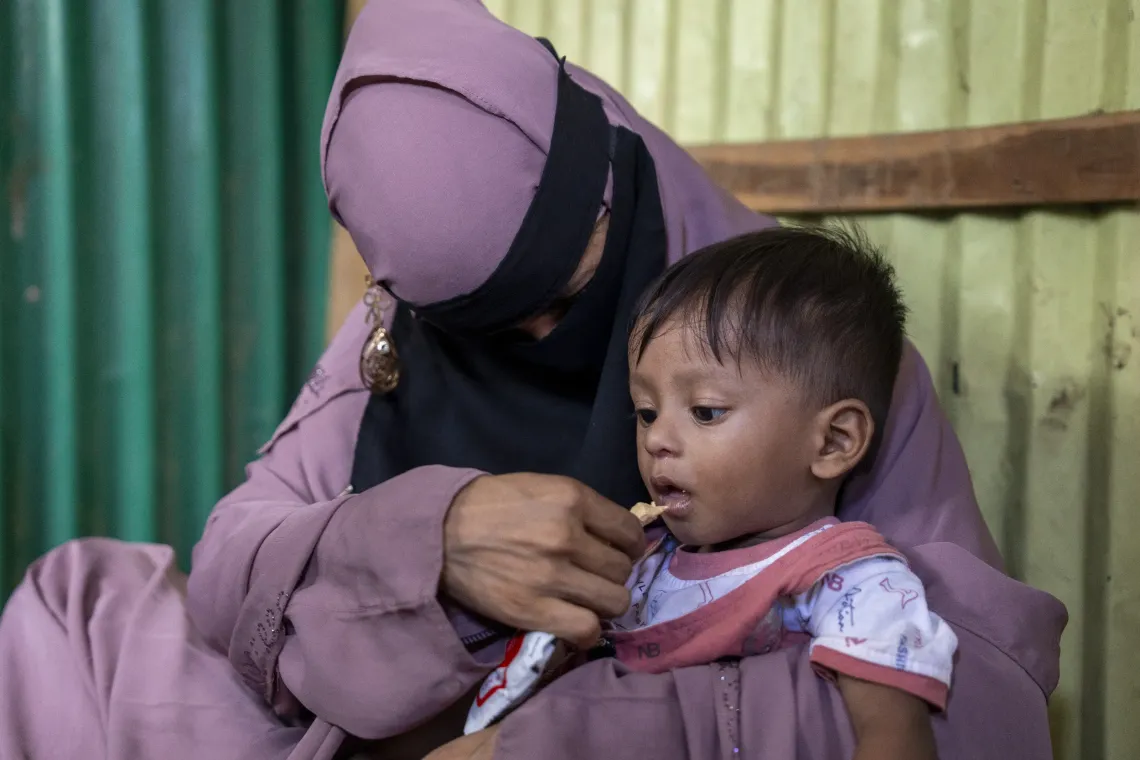
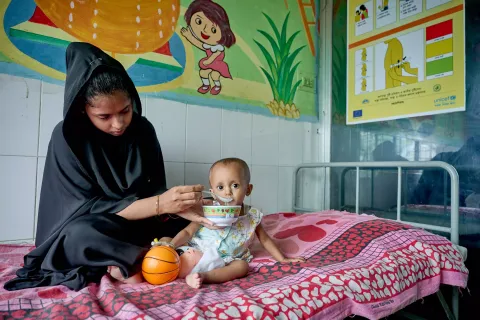
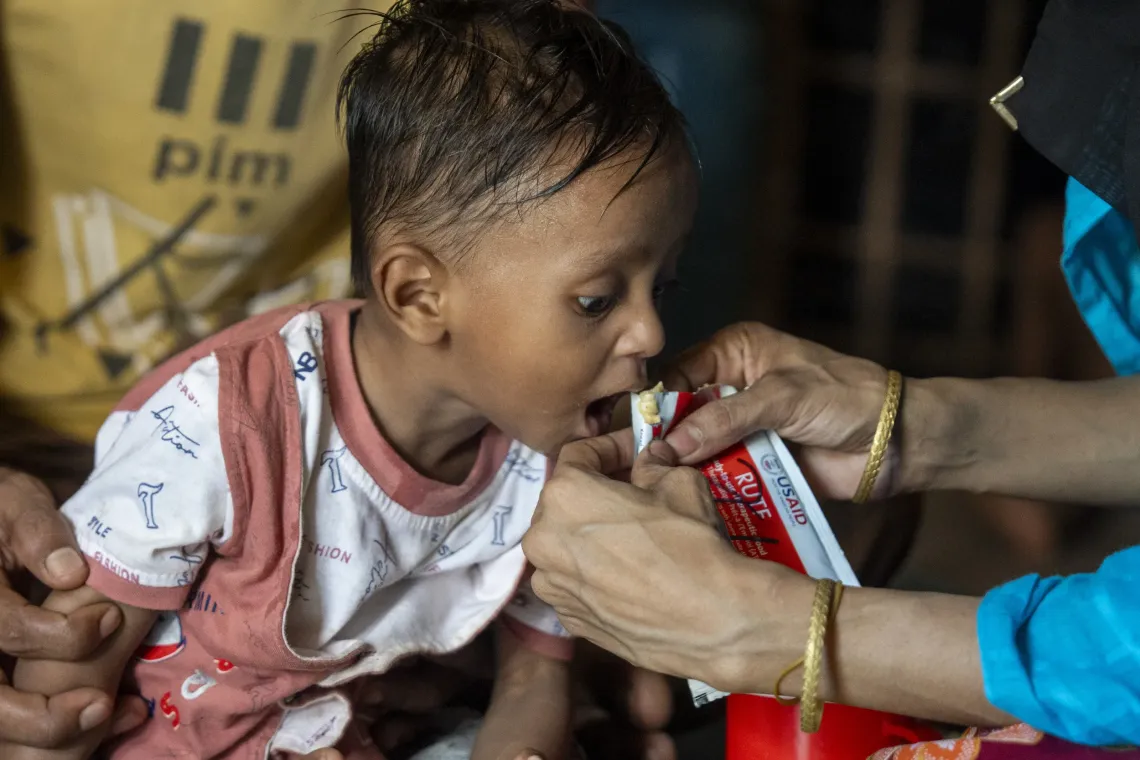
The next day, Nur brought her son to a UNICEF-supported integrated nutrition facility (INF) in her camp. She was anxious but hopeful. The nutrition team began assessing Aziz, measured his height, weight and checked his MUAC and edema. In another part of the facility, a nurse conducted a physical examination and an appetite test to see how Aziz would respond to treatment using ready-to-use therapeutic food (RUTF). To Nur’s relief, Aziz accepted the therapeutic food and reached for more.
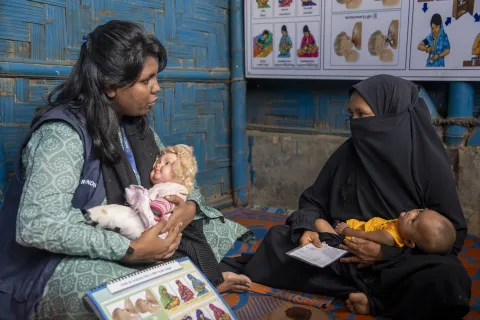
After the appetite testing, a nutrition counsellor sat with Nur to understand more about Aziz’s condition. She asked about his feeding and what he had been eating since his birth. And here the counsellor began to understand what had happened.
When Aziz was five months old, Nur had stopped breastfeeding him after she became pregnant.
“Many said to me if I continue breastfeeding, the baby inside my womb would grow thinner. So, I stopped feeding breastmilk to him,” Nur shared.
Believing the advice, Nur started feeding Aziz powdered milk and rice instead. For months these were the main sources of nutrition for the infant. The counsellor could connect the pieces and understand what contributed to Aziz’s malnutrition.
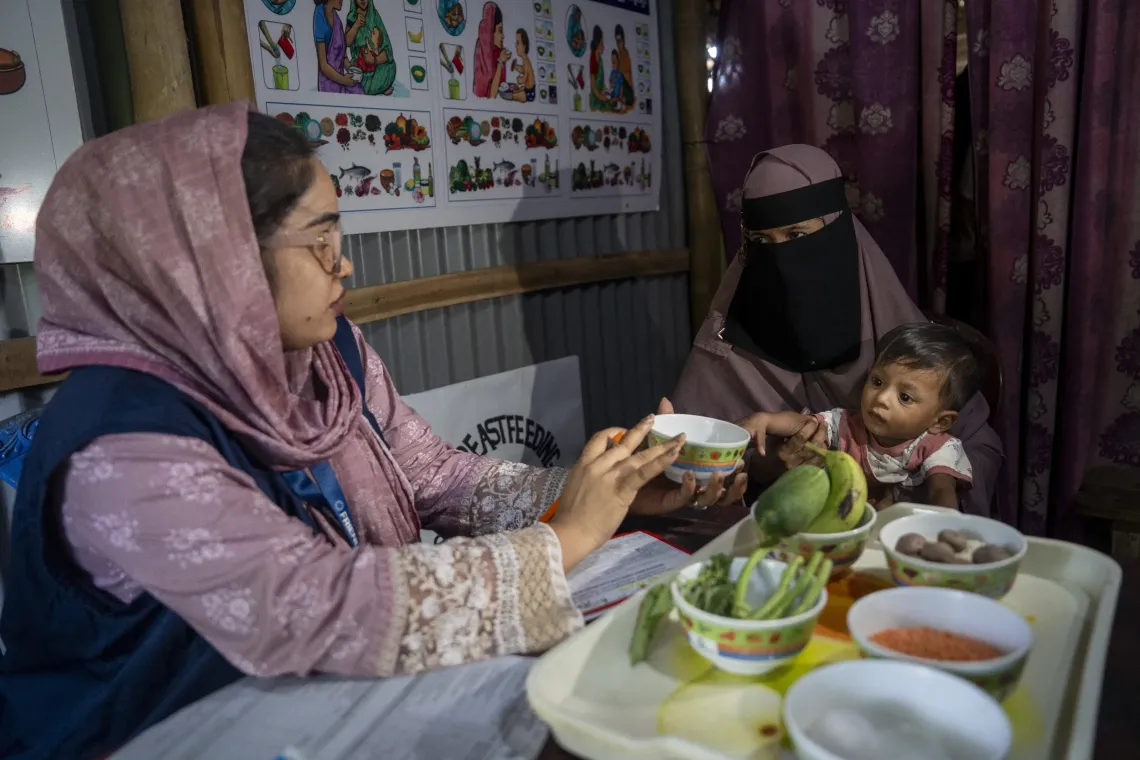
The counsellor gently explained to Nur that what she had been told about breastfeeding during pregnancy was not correct. She explained the importance of continued breastfeeding and how important breast milk is to Aziz’s growth and health. As he is now one year old, Nur was encouraged to introduce a variety of nutritious foods, such as pumpkin, sweet potato, eggs and leafy vegetables, along with rice.
After the counselling session, Nur received a bundle of ready-to-use therapeutic food (RUTF), a nutrient-rich paste, easy to feed, enough to feed Aziz twice a day for seven days. A date for the following week was already advised in his health card to return to the INF for a follow-up assessment.
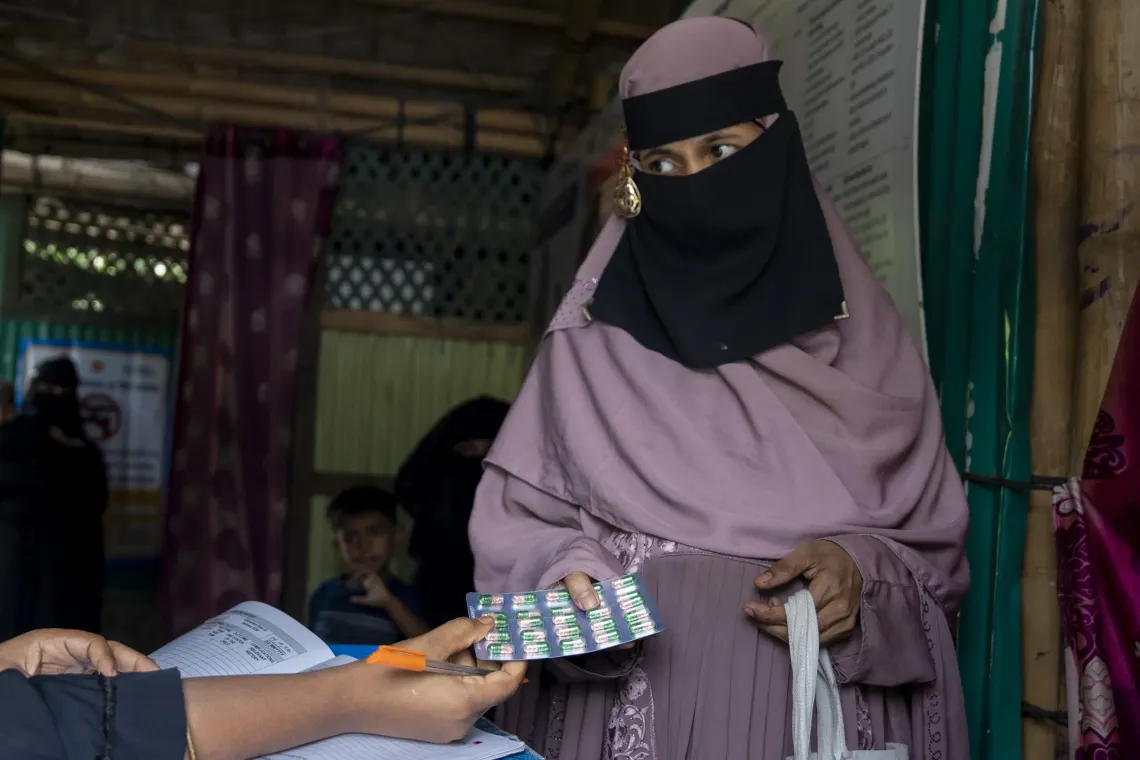
The visit to the INF also provided care for Nur. As a seven-month-pregnant mother, a nurse checked her physical condition, measured her weight and recorded it on her health card. She was also given iron and folic acid tablets to help prevent and treat iron deficiency and anemia during pregnancy.
“I came here to find help only for my child but received support for myself and my unborn baby too,” said Nur.
Nur had arrived at the INF with a malnourished child and many questions in her mind. She came seeking help for her son and left with support for him, herself and her unborn child too. She now knows which door to knock on and what support is available for her children and herself.
For a newly arrived mother, knowing that help is within reach can create a sense of assurance. With support from the Government of Japan and other partners, UNICEF-supported nutrition services are helping identify children like Aziz and connect them with lifesaving treatment, while mothers like Nur are supported with maternal care under the same roof. Together, these services help give the next generation of Rohingya children a healthier start in life.