In Cox’s Bazar, community clinics are a frontline defence against malnutrition
UNICEF-supported community clinics provide essential nutrition services for severely malnourished children.

- বাংলা
- English
Shabnoor is just 22 years old, but she has already found herself facing the daunting challenges of motherhood. Married as a child, and now with a 15-month-old daughter named Nusaifa, her life took an unexpected turn when she noticed her baby losing weight rapidly.
"My baby had a fever and was not eating properly,” says Shabnoor. “Nusaifa is my first child, and I was worried about her well-being.”
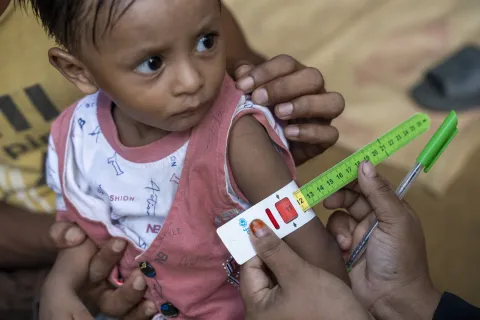
During a routine home visit, a community nutrition volunteer from the nearby Koyainchari Para Community Clinic measured Nusaifa's arm using a mid-upper arm circumference (MUAC) tape and assessed the severity of her nutrition status. Her reading was red, indicating that she was suffering from severe wasting – the deadliest form of undernutrition – so the volunteer advised Shabnoor to bring Nusaifa to the community clinic.
Despite significant progress in addressing malnutrition, millions of children in Bangladesh continue to suffer from wasting, meaning they are too thin and their immune systems are weak. In 2019 an estimated 1.6 million children under 5 suffered from wasting in the country and about 375,000 of these children suffered from severe wasting1.
Following the volunteer’s advice, Shabnoor took Nusaifa to the Koyainchari Para Community Clinic, which acts as a primary service point for the early screening, detection, counselling and post-treatment follow-up of severe wasting. Each month, around 250 children come to the clinic for check-ups and visits.
“We screen children during growth monitoring promotion sessions and other assessments at the community clinic,” explains Abdur Rahman, the Community Health Care Provider (CHCP) at the Koyainchari Para Community Clinic. “If they are found to be suffering from severe wasting, we then refer them to the Upazila Health Complex, where they receive comprehensive treatment.”
After assessing Nusaifa’s nutrition status, staff at the community clinic confirmed that she was suffering from severe wasting and referred her to the Teknaf Upazila Health Complex to receive specialized inpatient treatment in the Severe Acute Malnutrition (SAM) unit.
“[Nusaifa] had a high fever when she was admitted to the health complex,” says Senior Staff Nurse Sohana Akter. “Although she was born healthy and weighed 2.5 kg at birth, she has been lacking proper nutrition since birth.”

At the stabilization centre, Nusaifa received medicine and therapeutic food, which has helped stabilize her condition and minimize further medical complications. When she was discharged, her MUAC measurement had increased from 10.1 cm to 10.4 cm.
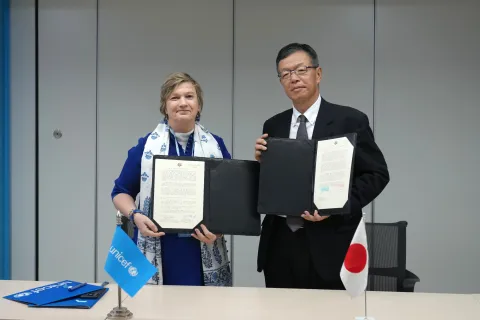
Thanks to support from the European Union, UNICEF is working with the Government of Bangladesh to support SAM units in health complexes and district hospitals in Cox’s Bazar, ensuring that severely wasted children like Nusaifa receive the emergency treatment they need.
“Nusaifa’s health has improved,” Shabnoor shares. “I will follow the doctors’ and nurses’ advice. I will feed my baby regularly, maintain proper hygiene and spend more time with her.”

Tackling the root causes of malnutrition
At the community level, poor diets and limited knowledge about child feeding and caring practices, such as breastfeeding, introducing complementary foods and feeding children age-appropriate food, remains a significant factor contributing to malnutrition. Prevention through raising awareness and promoting appropriate practices among new mothers and caregivers therefore is critical.
With funding from the European Union, UNICEF is working with the Government of Bangladesh to support the delivery of maternal, infant, young child and adolescent nutrition services in 192 community clinics across Cox’s Bazar District.
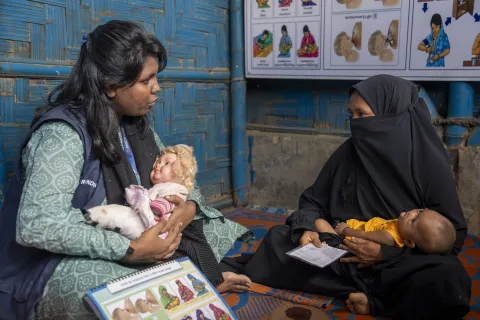
In the community clinics, staff emphasize the importance of a nutritious diet during pregnancy and the early initiation of breastfeeding within the first hour of life during pregnant and lactating mothers’ visits to the clinics and during community awareness meetings.

“I have been coming to the clinic since I became pregnant,” says Jasmine Akter, a 24-year-old mother with an 8-month-old baby son. “I received support when I was pregnant and after I gave birth. I have come to learn a lot about nutrition, hygiene practices and complementary feeding.”
During the visits to the community clinics, more mothers like Jasmine and Dildar Begum, 20, are learning about the harmful effects of inappropriate childcare and feeding practices. With this information, they are taking measures to improve their children’s nutrition and ensure they grow up healthy.
“We have a lot of superstitions and bad practices,” says Dildar, who was visiting the community clinic to have her healthy 8-month-old son vaccinated. “People in my community suggested putting honey in my baby’s mouth and said many other things. I think these practices are still happening because people are uneducated.”
“I visited [the clinic] when I was pregnant and followed all the advice that they gave me,” she adds. “I have been coming regularly to the clinic, so I know better.”
______________________________
1 Multiple Indicator Cluster Survey (MICS) Report 2019