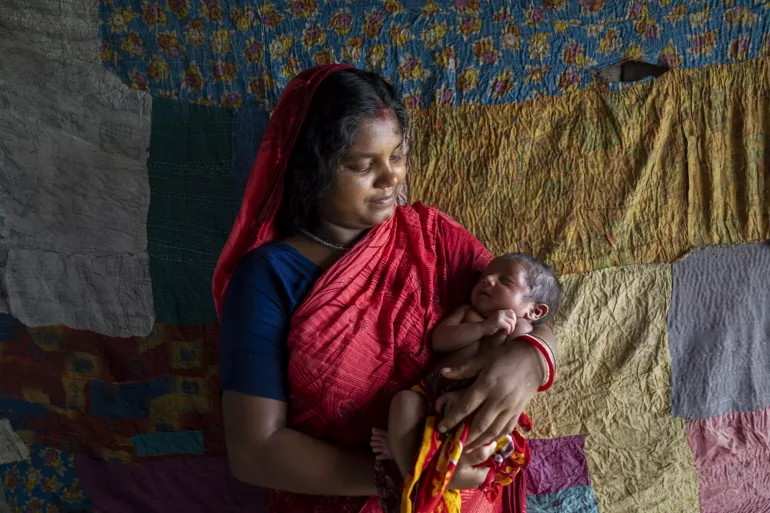
Bangladesh faces critical challenges in maternal and newborn care, with over 100,000 child deaths and 63,000 stillbirths annually
- বাংলা
- English
DHAKA, 3 April 2025 – Bangladesh is facing significant challenges in maternal and newborn care, according to new reports released by the United Nations Inter-Agency Group for Child Mortality Estimation (UN IGME). While progress has been made since 1990, the country continues to record the highest rate of stillbirths in South Asia, demanding immediate and scaled-up interventions.
The UN IGME child mortality report highlights that over 100,0001 children in Bangladesh died before their fifth birthday in 2023, with nearly two-thirds of these casualties occurring within the first 28 days of life. The second report, focused on stillbirths, indicates that Bangladesh records over 63,0002 stillbirths annually, equating to 1 in every 41 births resulting in a stillbirth.
To meet the Sustainable Development Goal (SDG) related target, Bangladesh must save an additional 28,000 newborns each year, underscoring the urgent need for enhanced maternal and newborn care.
"Over 100,000 newborns in Bangladesh die yearly from preventable causes such as premature birth, complications during delivery, and infections like sepsis and pneumonia, a violation of their basic right to survive and thrive,” said Farook Adrian Doomun, UNICEF Representative OiC in Bangladesh. “We can save millions of babies and mothers if we invest more in strengthening the health system, focusing in priority on primary health care, and increase the number of trained health professionals, especially midwife at all levels, providing them the right tools so that every newborn is in a safe pair of hands. UNICEF, in collaboration with WHO, is committed to working with the Interim Government of Bangladesh and partners to achieve quality health care to prevent maternal and child mortality."
Key challenges contributing to high newborn mortality and stillbirth rates in Bangladesh include a higher number of home deliveries (30%), limited access to small and sick newborn care, and the absence of midwives closer to their homes for normal vaginal delivery. In addition, other risks for mothers and newborns include inadequate 24/7 quality services at Upazila level, inadequate postnatal care at primary healthcare level and unregulated private sector, leading to preventable deaths from birth asphyxia, prematurity, and infections.
Additionally, poor antenatal and labor care, along with inadequate prevention and management of other disease conditions during pregnancy, perpetuate Bangladesh's high stillbirth rate, preventing the country from meeting its SDG targets. Funding and resource limitations exacerbate these issues, hindering progress towards reducing child mortality.
“Stillbirths and preventable child deaths remain a heartbreaking reality for millions worldwide. Bangladesh has made significant progress in maternal and child health over the past decades; yet disparities in access to quality and timely care persist. We must act now to reverse the trends and end these tragic losses. WHO’s recommendations on antenatal and intrapartum care, the WHO Labour Care Guide, and the Global Strategy for Women, Children, and Adolescents’ Health offer evidence-based actions for the government and stakeholders. With only five years left to achieve the Sustainable Development Goals, we need accelerated actions for improving maternal and child health. WHO, in collaboration with UNICEF, calls for immediate and collective action to end preventable child deaths and stillbirths. Through strong government commitment, sustained investment in primary healthcare-oriented systems, and guided by global evidence and best practices, we can prevent these tragic losses and build a healthier future for every child,” said Dr Ahmed Jamsheed Mohamed, WHO’s Representative a.i. in Bangladesh.
Bangladesh's achievements in maternal and child health are commendable; and yet, weakened health systems often lead to inadequate care. A coordinated and unified system is necessary to reduce preventable deaths of mothers and children. UNICEF and WHO urge the Interim Government of Bangladesh to increase facility births with skilled birth attendants, including at Union level, through midwives, expand newborn care units, boost trained nurses and midwifes, and improve antenatal, delivery, and postnatal care. Additionally, increasing funding for trained staff and medical supplies is crucial to reinforce maternal and child health care.
# # # # #
Notes to editors:
Download multimedia content here.
Read the UN IGME child mortality report here and the UN IGME stillbirth report here.
1 UN IGME child mortality report here
2 Report of the United Nations Inter-agency Group for Child Mortality Estimation, 2022
About UNICEF
UNICEF works in some of the world’s toughest places, to reach the world’s most disadvantaged children. Across 190 countries and territories, we work for every child, everywhere, to build a better world for everyone. For more information about UNICEF and its work for children, visit www.unicef.org/bangladesh/
Follow UNICEF on Twitter, Facebook, Instagram and YouTube
About WHO
Dedicated to the well-being of all people and guided by science, the World Health Organization leads and champions global efforts to give everyone, everywhere an equal chance at a safe and healthy life. We are the UN agency for health that connects nations, partners and people on the front lines in 150+ locations – leading the world’s response to health emergencies, preventing disease, addressing the root causes of health issues and expanding access to medicines and health care. Our mission is to promote health, keep the world safe and serve the vulnerable.
For more information about WHO and its work, visit www.who.int