UNICEF’s Support for Children’s Health Is Helping Families Facing NCDs Find a Way Forward
UNICEF is working to strengthen health systems so children living with noncommunicable diseases (NCDs), from Type 1 diabetes to thalassemia, can access consistent, quality care closer to home.

BAJITPUR, BANGLADESH – Samiul is eight years old, calm beyond his years, and unmistakably driven. He doesn’t just read books, he studies them, the way someone does when they already know where they’re headed. He is determined to be someone big, someone who can take care of all the people he loves.
Watching him lose himself in a book, or lean over to correct his older brother’s homework, you would never guess that his small body has spent most of his short life fighting to hold on to enough blood to survive. It is easy, in fact, not to notice at all, because those who know Samiul best describe him as an unusually calm, gentle child.
Noncommunicable diseases are chronic, non-contagious conditions that require lifelong management. Thalassemia, one of the most common inherited NCDs in Bangladesh, is a genetic blood disorder that leaves the body unable to produce enough healthy hemoglobin. Left untreated, it causes severe anemia and can be fatal. Managed with regular blood transfusions, children with thalassemia can survive, but the disease never fully let’s go.
Six Years of Not Knowing
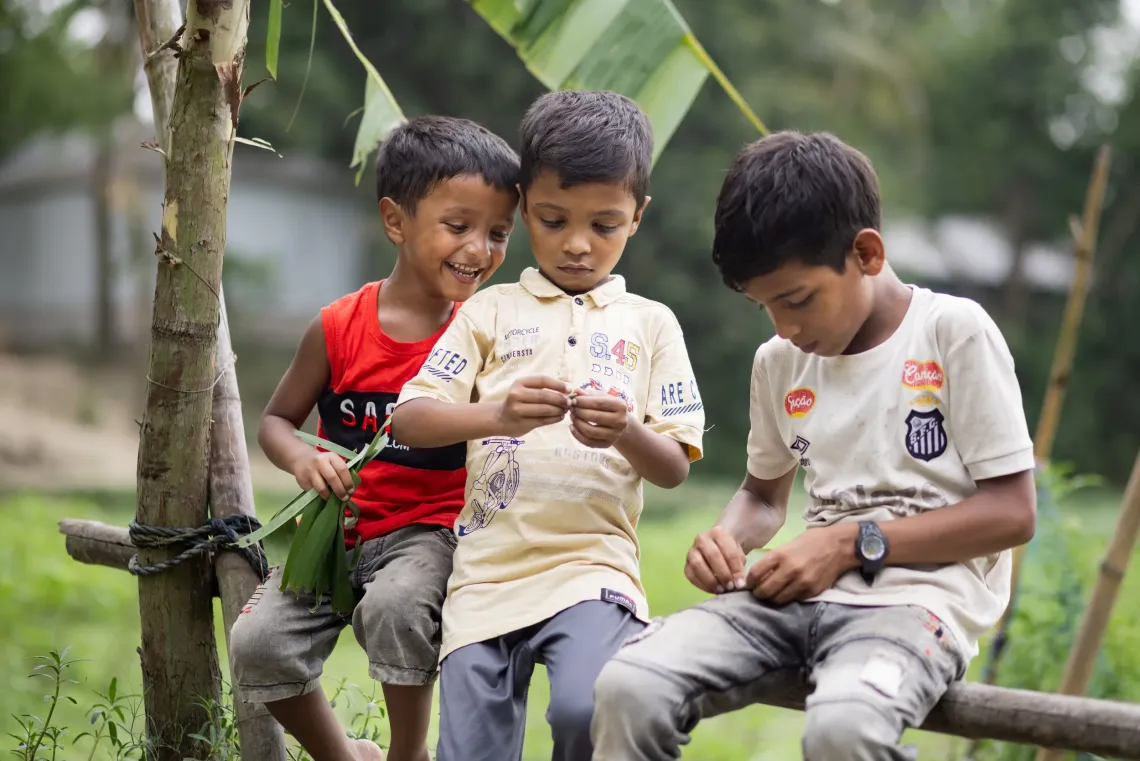
Samiul lives with his parents and two brothers: Tayyeb, now in class six, and Tausif, still in nursery. He was sickly from birth, says his mother, Shefali Akter. There was one unexplained illness after another. It wasn’t until he was six that a visiting doctor from Dhaka finally identified the cause after a long series of tests: thalassemia. He would need regular blood transfusions for the rest of his life.
Doctors recommended admitting Samiul to Dhaka Medical College Hospital, hours from home, so his treatment could be closely managed. The family couldn’t make the trip. Instead, they found a way to get him transfusions closer to home. This was the beginning of a routine the family has now managed, transfusion by transfusion, for two years.
A Common but Often Invisible Disorder
Samiul’s diagnosis reflects a burden that is widespread in Bangladesh, and widely unrecognized. According to Bangladesh's first National Thalassemia Survey, conducted by the Bangladesh Bureau of Statistics across 8,680 households, an estimated 11.4 percent of the population aged 14 to 35 carry a thalassemia gene, roughly one in ten people.
An estimated 70,000 children in the country are currently living with the disease, and as many as 6,000 thalassemia-related deaths occur each year, according to a Bangladeshi hematologist. Because the disorder is inherited rather than contagious, most parents like Shefali have no way of knowing their child is at risk until symptoms appear, often as a medical emergency already underway.
For families with limited income, emergency collides directly with cost. Regular monitoring, testing, and transfusions can run 10,000 to 15,000 taka a month, which is far beyond what many households bring in.
A Family Doing What It Can
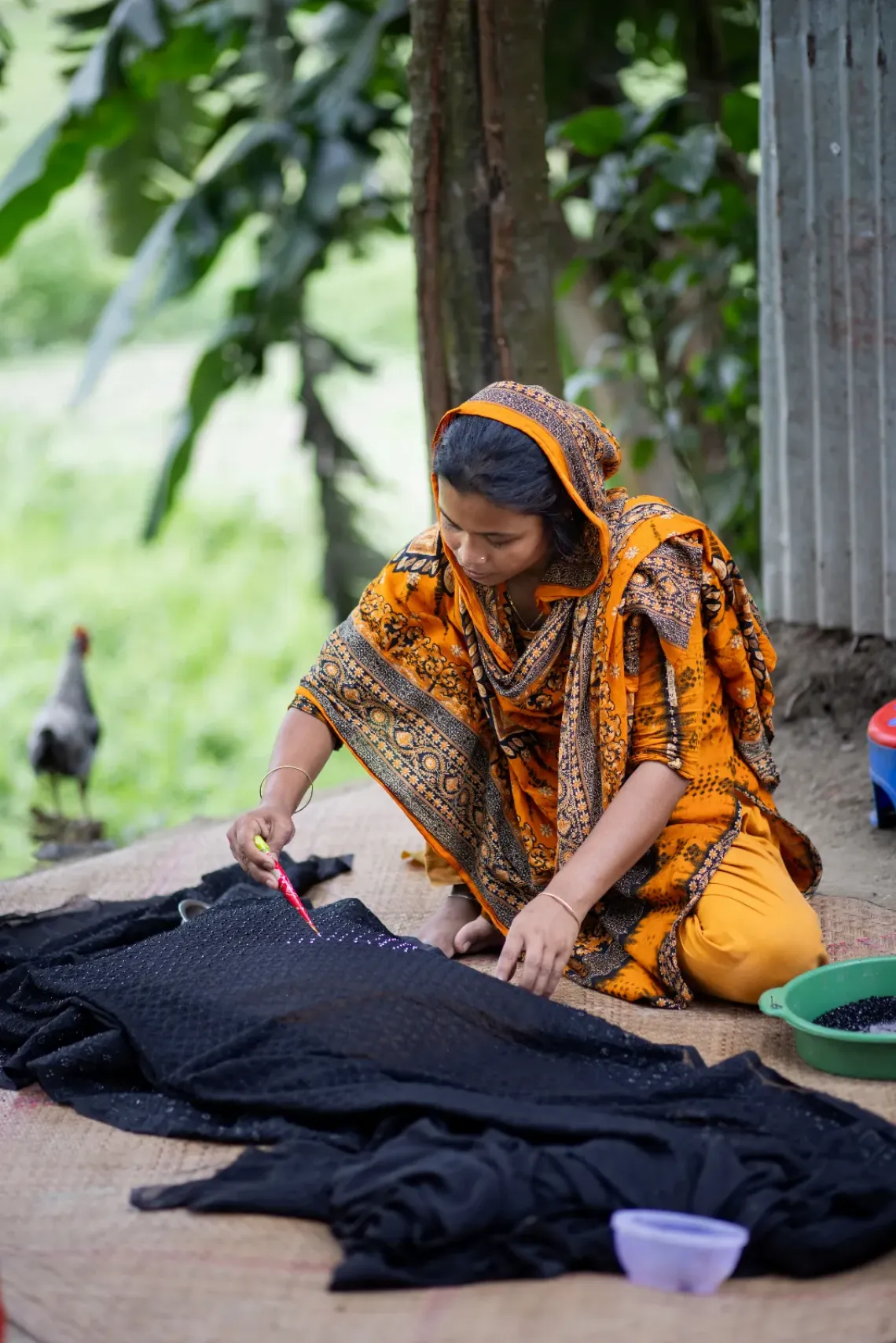
Much of what keeps the household running is Shefali’s own doing, and she is not just getting by. She studied through the 10th grade, and has built a small, steady patchwork of work around that education. She tutors 10 to 15 children, taking in sewing and embroidery commissions, and keeping a small farm of ducks, chickens, cows and goats. Her husband pilots a boat, often away from home for a month or more at a stretch. Between them, Shefali is building something of her own alongside covering Samiul's care.
Even so, full monitoring and regular transfusions can cost more than the family brings in, even with everyone contributing. That’s a gap few families can close on their own. Increasingly, they don’t have to.
What has changed is where the most essential part of that care happens. Pediatric NCD (PNCD) corners, dedicated spaces within local health facilities, set up specifically to screen for, diagnose and manage childhood NCDs, mean Samiul can now be monitored and cared for by trained providers near home, instead of his family facing the cost and distance of a trip to Dhaka every time.
It has made the most critical part of his care something the family can actually sustain, month after month, freeing Shefali to keep building her own small enterprises, and Samiul to spend his energy where he wants it most. Be it his books, his brothers, and the big future he’s already planning.
Between the Pages
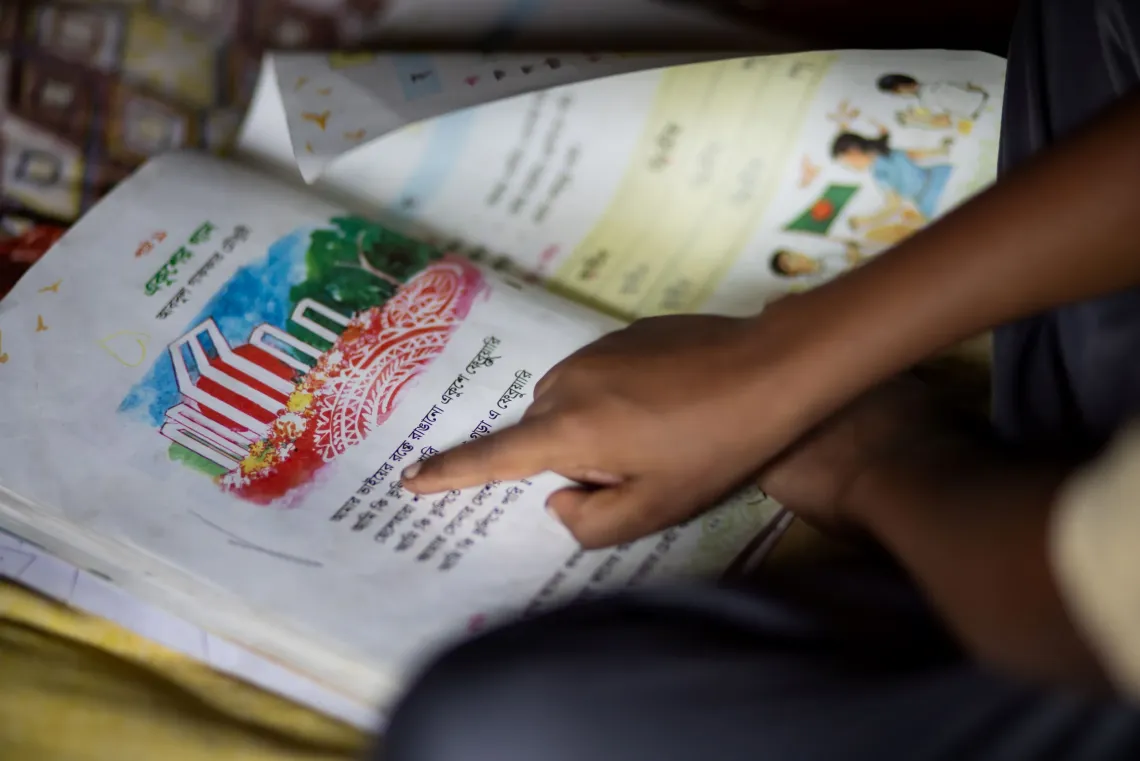
Despite it all, Shefali describes her son as remarkably calm, thoughtful for his age, and unusually determined. Now in class two, Samiul reads on his own, works ahead, and often ends up correcting the homework of his older brother, Tayyeb, three grades above him.
“He is very talented,” Shefali says, still sounding a little amazed by it. When she worries out loud, it’s often Samiul who reassures her, not the other way around. “Amma, I will get a huge job someday,” he tells her. “I will work a job that pays 1 lakh taka a month.” He talks about the house he’ll build her, the ways he’ll take care of the family, not as a child’s passing fantasy, but as something he has already, and in his own style, quietly decided.
His illness has never gotten in the way of that resolve. “He doesn't take it to heart,” Shefali says. “He remains very calm.”
Shefali's hope for her son is simple and yet enormous. That he gets every chance to become exactly who he already imagines himself to be. Her message to other parents looks forward, not back.
“If you do tests early, there are ways to manage the child's problems,” Shefali says.
“Everyone should get their children tested, so they know beforehand”, so more children get what Samiul has, the wonderful chance to grow up, get the education he’s determined to have, and reach the future he’s already planning for himself.