Vaccines for everyone
We have gathered the most necessary information about World Vaccination Week on one page.

- Հայերեն
- English
Vaccines are one of the greatest advances in modern medicine. They have cut child mortality rates in half, saving millions of lives.
The COVID-19 pandemic showed us what happens when we can’t prevent the spread of highly infectious diseases.
Thanks to vaccines, we now have an opportunity to end the COVID-19 pandemic and get back to our normal lives.
A return to “normal” isn’t enough, though. Unfortunately, even well before the COVID-19 pandemic began, more than 13 million children around the world had never received any vaccines.
No child should die of a preventable disease. We will not stop until we make deaths from preventable diseases a thing of the past.
If you have been infected, it doesn't necessarily mean you are immune. Beware of re-infection
Vaccines work.
They save millions of lives every year.
About COVID-19 vaccines
How to get a COVID-19 immunization certificate
About routine vaccinations
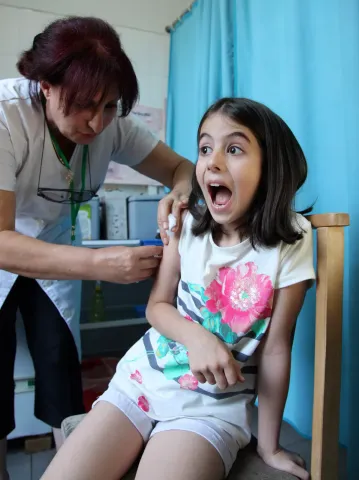
Protect your child. Get them vaccinated. It could save their life.
There are dangers you see, and dangers you don’t. You can do something about the dangers that get into our kids.
When, why, and which viruses should we vaccinate our children against?

#VaccinatedAndProtected
Vaccines are one of the miracles of healthcare.
In this booklet, you will find detailed information about common childhood infections and the need to get vaccinated against them.
You will also find the vaccination calendar provided by the Republic of Armenia’s national calendar.
Vaccinate your children and protect them!
We answer parents' questions about vaccines
With the support of the Armenian Parents’ Corner, we have collected parents' questions about vaccinations, and UNICEF and the Ministry of Health have joined forces to answer them.
Lilit Marutyan, the Head of the Pediatric Service of the Vardanants Medical Center, and Arman Badalyan, a Senior Lecturer at Yerevan State Medical University's Epidemiology Department, answer parents' questions about vaccinations.
This translation is made possible by the generous support of the American people through the United States Agency for International Development (USAID). The contents are the responsibility of authors and do not necessarily reflect the views of USAID or the United States Government