Statement by UNICEF Representative in Armenia, Christine Weigand
"This is a love letter to someone I’ve never met."

- Հայերեն
- English
"His name was James Phipps, and in 1796 when he was just 8 years old, Edward Jenner gave him the first modern vaccine.
This vaccine defended him against smallpox. It was inspired by centuries of innovation by the physicians of North Africa, the grandmothers of Constantinople and the doctors of Ming Dynasty China, all seeking ways to protect the next generation from sickness and death.
That’s a quest I know well. I work at UNICEF, and for 75 years we’ve been the world’s largest procurer of vaccines, responsible for immunising 45 per cent of children on Earth. But once upon a time, I was a child too, and there’s a good chance that I, like many of the kids we work with, wouldn’t be here without vaccines. So, this is a love letter from me, and from all of us here at UNICEF, on behalf of every child who is alive today because of vaccines.
Because we want to say... thank you.
Thank you, to virologist Jonas Salk for the vaccine against polio. Thank you, Kati Karikó whose life’s work on mRNA helped us fight COVID-19. Thank you, to Nobel Prize winner Max Theiler whose team fed mosquitoes their own blood to create the vaccine against yellow fever.
Thank you to the workers who fill vials at factories. Thank you to the designers who make the solar fridges that keep them cool. Thank you to the boat crews, pilots and drivers who brave flooded rivers in monsoon season, or trek for miles in the snow, to bring babies their very first dose.
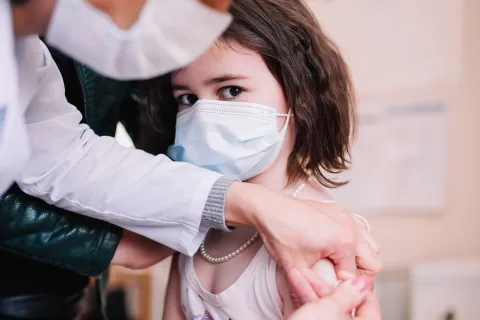
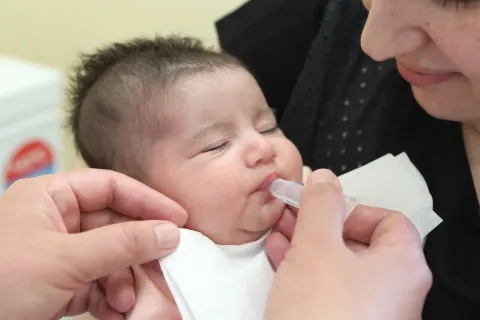
And when it gets to Armenia, thank you to our healthcare workers across this beautiful country for protecting children from preventable diseases through over 90 percent immunization. For eliminating polio and helping the country achieve polio-free status in 2002 or ensuring children’s health is protected with no measles cases registered since 2009. Thank you to the doctors and nurses who give needles with a funny voice so it doesn’t hurt too much. And thank you to ambulatory and polyclinic healthcare workers who make sure children have a doctor to go to in the farthest corner of Armenia with scarce resources.
This is a love letter to all of you because love is what it takes – To Elvis Presley, who in 1956 had his vaccine moments before going on stage to spread the word about polio, because that’s what kings do; to Jim Grant, the Executive Director of UNICEF who in the 1980s helped raise the global childhood vaccination rate from 20 per cent to 80 per cent; and to the World Health Organization, who in 1966 launched the Essential Programme on Immunization and in just 11 years, wiped smallpox from the face of the Earth.
Every year, vaccines save the lives of up to 3 million children. But there are still some kids who miss out. As we invest to recover from the pandemic, we have a once-in-a-generation opportunity to build health systems that reach every child. So this is a love letter to our leaders in government – the ones who take health care seriously – because the only way we’ve got this far, and the only way we’ll get further, is by investing in healthcare for all.
Now there’s just one person left to thank: you. This is a love letter to you, because if you’ve ever been vaccinated, or have had your children vaccinated, then you are part of the chain of linked arms that keeps every one of us safe. You are the living proof of what humanity can do through dedication, cooperation and love. So from all of us here at UNICEF, and from every child who is alive because of vaccines, thank you.
Thank you. Thank you. Thank you.
Let’s secure a #LongLifeForAll."
www.unicef.org/LongLifeForAll
Media contacts
About UNICEF
UNICEF promotes the rights and wellbeing of every child, in everything we do. Together with our partners, we work in 190 countries and territories to translate that commitment into practical action, focusing special effort on reaching the most vulnerable and excluded children, to the benefit of all children, everywhere.
For more information about UNICEF and its work for children, visit www.unicef.org.