Childhood vaccination rates lag in Europe – fueling further resurgence of measles and whooping cough
Vaccine complacency across Europe and Central Asia is threatening child health, reveals new data from UNICEF and WHO
- Հայերեն
- English
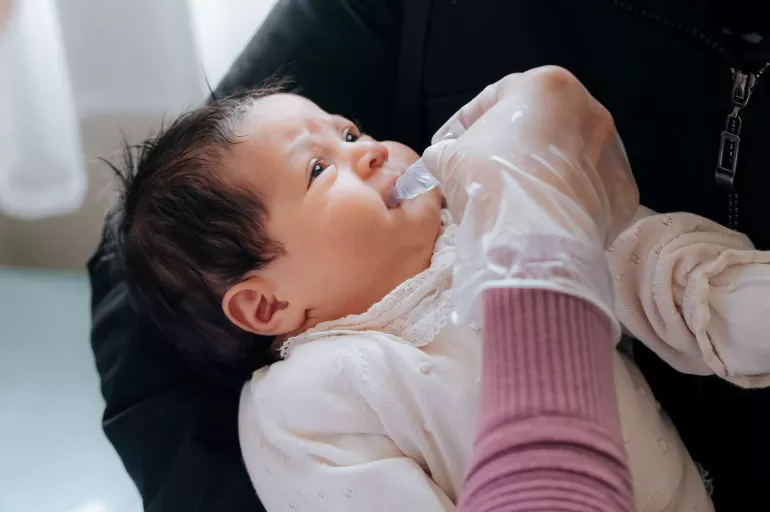
OPENHAGAN/GENEVA, 15 July 2025 – Childhood vaccinations against measles, whooping cough, and other diseases in the WHO European Region – comprising 53 countries in Europe and Central Asia – remained below pre-pandemic levels in 2024 adding to the number of children left vulnerable to disease and increasing the risk of outbreaks, according to the latest WHO/UNICEF coverage estimates released today.
Globally, 89 per cent of infants worldwide received at least one dose of the diphtheria, tetanus and pertussis vaccine, and 85 per cent completed all three doses. That’s 171,000 more children receiving at least one vaccine and one million more children fully vaccinated in 2024 compared to 2023 – modest progress amid growing global challenges.
Alarming declines
On average coverage of childhood vaccines in Europe and Central Asia remained the same or declined by 1 per cent in 2024 compared to 2023, revealing stagnated recovery of pre-pandemic levels. Between 2019 and 2024 coverage declined from:
- 92% to 91% with the second dose of measles/mumps/rubella (MMR) vaccine;
- 95% to 93% with third dose of diphtheria/tetanus/pertussis (DTP) vaccine;
- 95% to 93% with third dose of polio vaccine; and
- 92% to 91% with the third dose of hepatitis B vaccine.
Coverage ranged widely among countries in the region in 2024, with decreasing coverage rates of the first dose of the MMR vaccine and the third dose of the DTP vaccine overall, with some countries reporting a coverage rate of as low as 23 per cent for MMR1 and 51 per cent for DTP3. To achieve herd immunity and prevent outbreaks of many vaccine-preventable diseases, 95 per cent coverage is needed every year in every community. In 2024, more than half of the countries in the Region did not meet the herd immunity target for MMR and/or DTP, and almost a third reported coverage below 90 per cent.
“Last year alone, nearly 300 000 people got whooping cough in our Region – more than a three-fold increase on the previous year. Meanwhile, over 125 000 caught measles in 2024, twice as many as 2023. These are not just numbers – it’s hundreds of thousands of families in anguish because their children are sick, and it could have been prevented,” said Dr Hans Henri P. Kluge, WHO Regional Director for Europe.
“Vaccines save lives, and when coverage drops, disease spreads. That’s why countries must invest in strong local health systems, ensure vaccines are available and accessible in every neighborhood, and fight misinformation. Health workers need support to reach every family – especially in hard-to-reach areas. And communities must be empowered with trusted information so parents can confidently vaccinate their children," continued Dr Kluge.
“In many ways, vaccination has been a victim of its own success across Europe and Central Asia,” said Regina De Dominicis, UNICEF Regional Director for Europe and Central Asia. “Today’s generation has not witnessed the devastating impact of vaccine-preventable diseases – leading to complacency and making it easier for misinformation to take hold. Last year’s surge in measles cases – the highest reported in nearly three decades – is a reminder that unless governments invest in strong community health systems and address inequities in access to health care and information, more children will face preventable illness, lifelong complications, or even death.”
Promising gains
Despite this stagnation, uptake of newer vaccines, including against human papillomavirus (HPV), showed continued improvement, the data finds (37% to 40% for girls and 8% to 26% for boys with the first dose of HPV vaccine). The increase is the result of a number of countries introducing these vaccines and increased maturity of immunization systems to administer them.
Armenia continues to demonstrate strong commitment to providing immunization to its population, maintaining high childhood vaccination coverage at approximately 93%—even during the COVID-19 pandemic.
Notably, the country has made steady progress in increasing uptake of the HPV vaccine among girls in the primary target group. Despite initial hesitancy and misinformation, coverage has improved from just 8% in 2018 to 34% in 2024 and reaching 40% by June 2025 (as per reports from the Ministry of Health).
Yet another important milestone, guided by WHO’s evidence-to-recommendation methodology, Armenia has introduced in January 2025 varicella vaccine into its National Immunization Calendar reinforcing its commitment to evidence-based health policy. As per reports from the Ministry of Health, 30% of the eligible population have received the varicella vaccine by the end of June 2025.
Renewed efforts
UNICEF and WHO work together with health authorities across the Region to identify, understand and address inequities in immunization coverage at the local level. Ongoing projects, supported in part by the European Union, include triangulation of data sources to identify who is not being reached with routine vaccinations and behavioural insights research to identify barriers to high uptake, which can include lack of active screening, reminders or information to address common misconceptions, as well as other factors.
Media contacts
About UNICEF
UNICEF promotes the rights and wellbeing of every child, in everything we do. Together with our partners, we work in 190 countries and territories to translate that commitment into practical action, focusing special effort on reaching the most vulnerable and excluded children, to the benefit of all children, everywhere.
For more information about UNICEF and its work for children, visit www.unicef.org.