What are vaccines?
How do vaccines protect children from infectious diseases?

- Հայերեն
- English
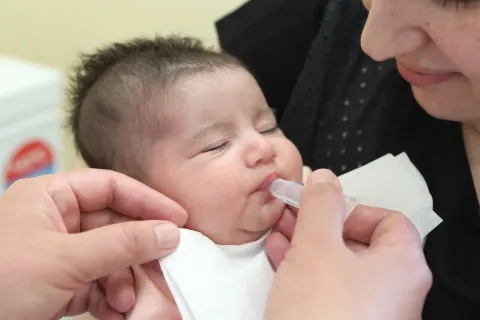
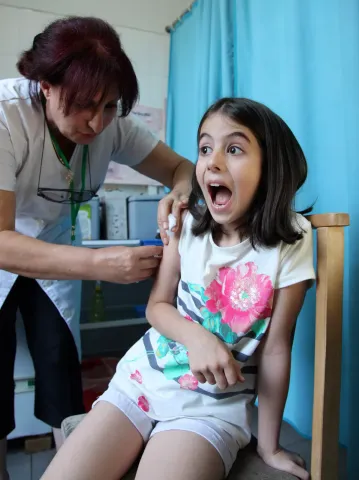
Vaccines are products that protect us against serious, often deadly diseases, by helping our body’s natural defense - the immune system - to fight them off. Vaccines mimic what happens in the body when it is attacked by a germ (usually a virus or a bacteria) without making us fall sick. Most vaccines contain killed or weakened germs and they do not cause the disease they prevent or put the child at risk. When vaccines are administered, the body triggers the immune system to naturally produce antibodies that will fight against the disease. The body will then memorize how to combat these germs. If, in the future, the body gets in contact with a very similar, but live and strong germ through a real infection, the immune system will remember how to quickly destroy it before letting us become unwell. Vaccines are therefore safe and effective at protecting the vaccinated children and the entire community.
Are vaccines safe?
Yes. Vaccines are safe. All vaccines go through rigorous safety and efficacy testing procedures, including clinical trials, before they are allowed to be used. Once they are in use, their safety is continuously monitored. Vaccines that do not meet quality and safety requirements are not approved and are not made available to the public. Vaccines prevent children and adults from severe diseases that can make us sick, and lead to complications, hospitalizations and even death. Children are far more likely to be seriously affected by a vaccine-preventable disease than by a vaccine. For instance, measles can cause encephalitis (an infection of the brain), blindness and even death. Most parents/caregivers worldwide vaccinate their children as they understand vaccines are safe and are the best tools to help their children grow healthy and protected against dangerous infections.
Is vaccination necessary when many diseases have become so rare now?
Yes. It is still extremely important that children continue to be vaccinated as even slight decreases in the number of immunised children could result in major epidemics of vaccine-preventable diseases in people who aren’t immune. Also with the ease of global travel, diseases can travel fast and may strike people in the country.
What are the contraindications and precautions for immunization?
There are very few contraindications to vaccines. Most contraindications are temporary, and vaccines can be administered later. The only contraindication applicable to all vaccines is a history of a severe allergic reaction (anaphylaxis) after a prior dose of vaccine or to a vaccine ingredient. Some live vaccines are contraindicated to severely immunocompromised persons (malignant diseases (cancer), children receiving chemotherapy and radiation). However, some of these contraindications are also temporary. Precautions are not contraindications but are events or conditions to be considered in determining if the benefits of the vaccine outweigh the risks. For example, the presence of a moderate or severe acute illness with or without a fever is a precaution to the administration of vaccines. However, vaccination might be indicated in the presence of a precaution if the benefit of protection from the vaccine outweighs the risk of a possible adverse reaction.
Be aware that the following conditions should NOT be a reason for putting off a child's vaccination. Remember that you can still vaccinate the child in the following cases:
- Mild acute illness without fever (runny nose, colds, mild diarrhaea)
- Mild-to-moderate local reaction (i.e. swelling, redness, soreness); low grade or moderate fever after previous dose
- Immunodeficient family member or household contact
- Recent exposure to an infectious disease
- Preterm birth (except for Hep B vaccine in certain circumstances)
- Current antimicrobial therapy.
There is a lot of misinformation and misconceptions about vaccines that contribute to the growing vaccine hesitancy among parents/caregivers. Here are the facts behind some of the most common vaccine myths.
FACT: Vaccines DO NOT contain toxic ingredients․
A common vaccination myth that is in circulation is that vaccines contain toxic ingredients.
Vaccines contain a dead, inactivated or killed germ which does not cause disease. In addition to it, there are other ingredients such as formaldehyde, mercury or aluminium. There is widespread concern about its usage, but they are used in very small amounts in the vaccines to help the vaccine work better and to stop the vaccine from becoming contaminated. E.g., formaldehyde is used to inactivate the germ, while mercury acts as a preservative and aluminium as an adjuvant to make the vaccine more effective by strengthening the immune response. These ingredients are already found in the body and tiny amounts do not pose a health risk.
FACT: Natural immunity is not stronger than immunity through vaccination.
Immunity, developed after an infection is not stronger than immunity through vaccination.
There is a misleading claim that naturally acquired immunity is strong and better than vaccination.
Natural immunity may work but the risks are far more dangerous, from having to go through a serious illness, to even a life-threatening situation. Many preventable diseases are dangerous and can cause lasting side effects. It is much safer and easier to get vaccines. Vaccination is an effective choice over naturally acquired immunity and can protect children from life-threatening diseases.
This article is made possible by the generous support of the American people through the United States Agency for International Development (USAID). The contents are the responsibility of authors and do not necessarily reflect the views of USAID or the United States Government.